




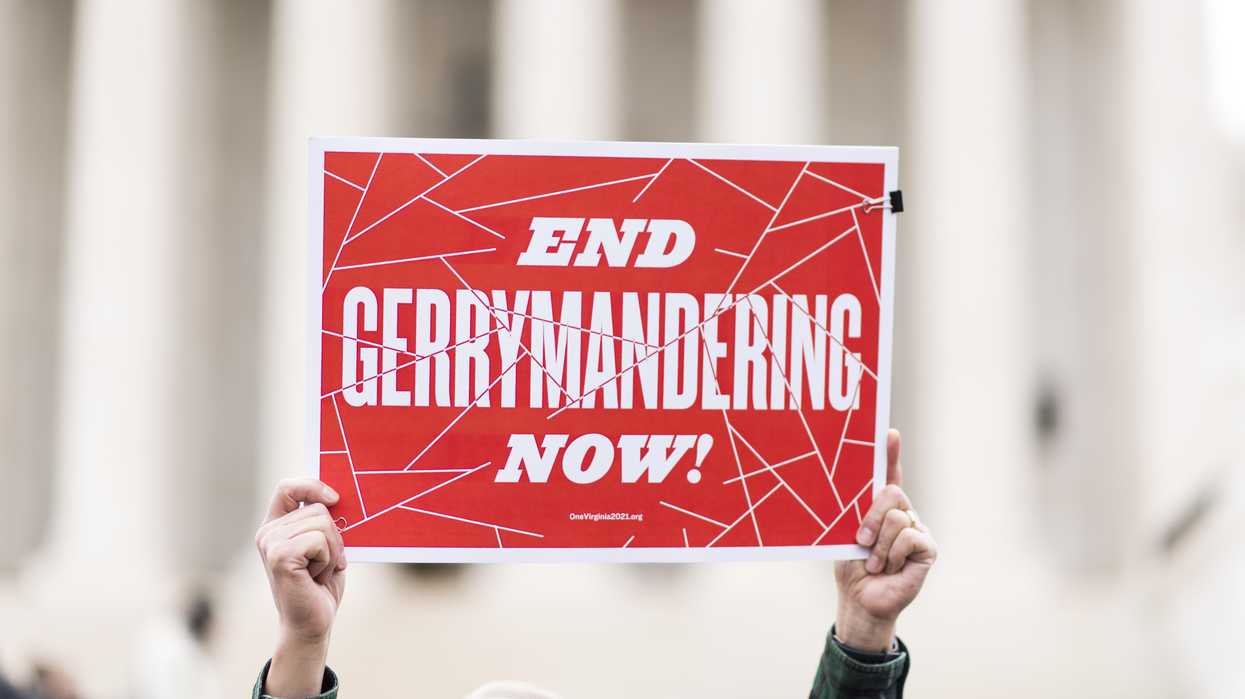

When the Lines Began Moving Faster Than the Law
On May 4, Governor Ron DeSantis signed Florida’s new congressional map into law. The Legislature had passed it five days earlier, 83 to 28 in the House and 21 to 17 in the Senate. The map redraws four districts in ways that election analysts project would shift them from competitive or Democratic-leaning to safe Republican, potentially expanding a delegation Republicans already control 20 to 8.
The same day the Legislature voted, the Supreme Court decided Louisiana v. Callais. The Court ruled 6 to 3 that Louisiana’s majority-minority district could not survive Equal Protection scrutiny under the standards applied by the majority. In her dissent, Justice Elena Kagan wrote that the ruling “renders Section 2 all but a dead letter” in redistricting.
Two things happened at once. A state redrew its lines. The federal tool often used to challenge racial vote dilution became harder, and riskier, to wield.
The familiar question today is which party gains.
That question has an answer.
The harder question for the future is what happens to democratic accountability when maps change at the same moment the mechanisms for challenging them are becoming increasingly uncertain.
The Constitutional Squeeze After Callais
Callais left Section 2 formally on the books.
It changed the legal standards plaintiffs must navigate to use it.
States can now argue that racially polarized voting reflects partisanship rather than race.
They can defend their maps by pointing to partisan objectives that Rucho v. Common Cause (2019) already declared nonjusticiable in federal court.
The Court continues to treat partisan intent and racial intent as constitutionally distinct categories, even where voting patterns overlap in practice.
That is what creates the squeeze: A district drawn to comply with Section 2 can now face a constitutional challenge, while the partisan objectives behind the same map remain beyond federal judicial review.
This follows a line.
Shelby County removed federal preclearance in 2013. Rucho closed the federal courts to partisan-gerrymandering claims in 2019.
Callais makes racial-dilution litigation more complicated by sharpening the constitutional tension between Section 2 compliance and race-conscious mapmaking.
Each ruling left state courts and state constitutions carrying more of the weight.
The Slow Unraveling of Florida’s Fair Districts Order
Voters approved the Fair Districts Amendments in 2010 with more than 62 percent of the vote.
Article III, Section 20 of the state constitution prohibits drawing congressional districts with the intent to favor a party or an incumbent.
It also bars drawing districts with the intent or result of diminishing minority communities’ ability to elect representatives of their choice.
On its face, that standard reaches further than federal law.
But the legal foundation under those standards has become increasingly unstable. In July 2025, the Florida Supreme Court held in Black Voters Matter Capacity Building Institute, Inc. v. Secretary, Florida Department of State that the Fair Districts Amendments’ non-diminishment clause must yield to the federal Equal Protection Clause when the two conflict, and that compliance with the non-diminishment clause does not constitute a compelling governmental interest sufficient to justify a race-conscious district.
Then, four days before the Legislature voted on the 2026 map, DeSantis general counsel David Axelman circulated a memo to lawmakers arguing that the race-based provisions of the Fair Districts Amendments are unconstitutional and non-severable from the partisan-intent prohibition.
His argument: because the racial-protection provisions cannot survive Equal Protection scrutiny, the entire voter-approved anti-gerrymandering package falls with them. If that argument is accepted, the prohibition on partisan gerrymandering, the provision Florida voters passed with 62 percent support, would be swept out alongside the racial protections it was never designed to replace.
The Calendar Is Already Deciding the Outcome
A coalition of voting and civil rights groups sued under Article III, Section 20. They pointed to Jason Poreda, the DeSantis aide who drew the map, testifying that he had reviewed partisan data. On May 26, Circuit Judge Joshua Hawkes, a DeSantis appointee, declined to block it. He found the testimony insufficient to establish impermissible intent attributable to the full Legislature. He invoked Purcell v. Gonzalez, the principle that courts should avoid disrupting elections already underway, writing that “the public interest weighs more in favor of certainty than a haphazard judicial mandate of discarded maps.”
He reserved the constitutionality of the Fair Districts Amendments for later proceedings. In a footnote, he acknowledged the merits timeline is “more geared toward the 2028 or 2030 election cycles than the 2026 election cycle.”
That footnote is the institutional problem in a single sentence.
Candidate qualifying runs June 8 through June 12. The primary is August 18. The general election is November 3. Plaintiffs have noticed an appeal. A ruling that arrives after 2026 arrives after the election it was meant to govern.
Florida as the Testing Ground
Florida matters beyond its own litigation. It holds the third-largest congressional delegation in the country. Its demographic complexity, combined with a fast-shifting electorate across Miami-Dade, Broward, and the I-4 corridor, makes it a leading-edge case study for how redistricting disputes unfold when federal remedies narrow. The legal reasoning emerging here is already appearing in redistricting disputes elsewhere.
Florida’s sequence is already replicating.
Tennessee enacted a new map on May 7 that breaks apart a majority-Black Memphis district, using arguments about partisan intent that Callais strengthened.
Alabama, which the Supreme Court ordered in 2023 to draw a remedial majority-minority district, is now seeking emergency relief to reinstate its original maps, pointing to Callais as changed circumstances that reopen the question.
The legal pathway being constructed in Florida is not merely local.
It is an early iteration of an argument other states are watching and borrowing.
Institutional Lag and the Hollowing of Accountability
A map changes in a single legislative session. Litigation moves across cycles. A challenge can be correct and still be slow. And when a judge tells you in a footnote that the merits belong to a future election, the calendar has already decided something the courts have not.
The asymmetry runs past timing. Drawing a map takes a legislature and a contractor. Challenging one takes expert witnesses, mapping analysis, and years of funded litigation, usually carried by nonprofits against state attorneys general with public resources. A legal protection that exists on paper depends on someone with the capacity to enforce it.
Accountability has a concrete meaning here.
It is whether communities whose representational weight is restructured have a legal path that resolves before the map becomes the baseline for the next redistricting cycle. When district lines, legal standards, and election calendars move in the same direction simultaneously, that path narrows for everyone, regardless of which party benefits this cycle.
Why the Courts Keep Waiting
The case for judicial restraint is real.
Legislatures hold the constitutional power to draw districts. Courts that redraw maps invite the charge that judges are choosing winners. Purcell exists because election administration requires predictability. And the constitutional risk embedded in race-conscious mapmaking is genuine, not invented, which is why Callais is not easily dismissed.
None of these arguments is partisan.
Each survives scrutiny.
They also share one consequence. Each one counsels waiting, and in a system built on fixed election cycles, waiting is the variable that determines whether a remedy arrives in time to mean anything.
Representation Does Not Wait for the Verdict
The courts will rule eventually.
The harder thing to see is what carries accountability in the years before they do.
When the lines move faster than the law that governs them, representation does not wait for the verdict.
Ethan J. Martinez is a Miami-based independent political analyst and founder of The Fourth Turning Point, a publication covering electoral systems, institutional legitimacy, and political realignment with more than 66,500 cumulative views across readers in all 50 states and 67 countries.











The President Invited Iran to Bomb My Home