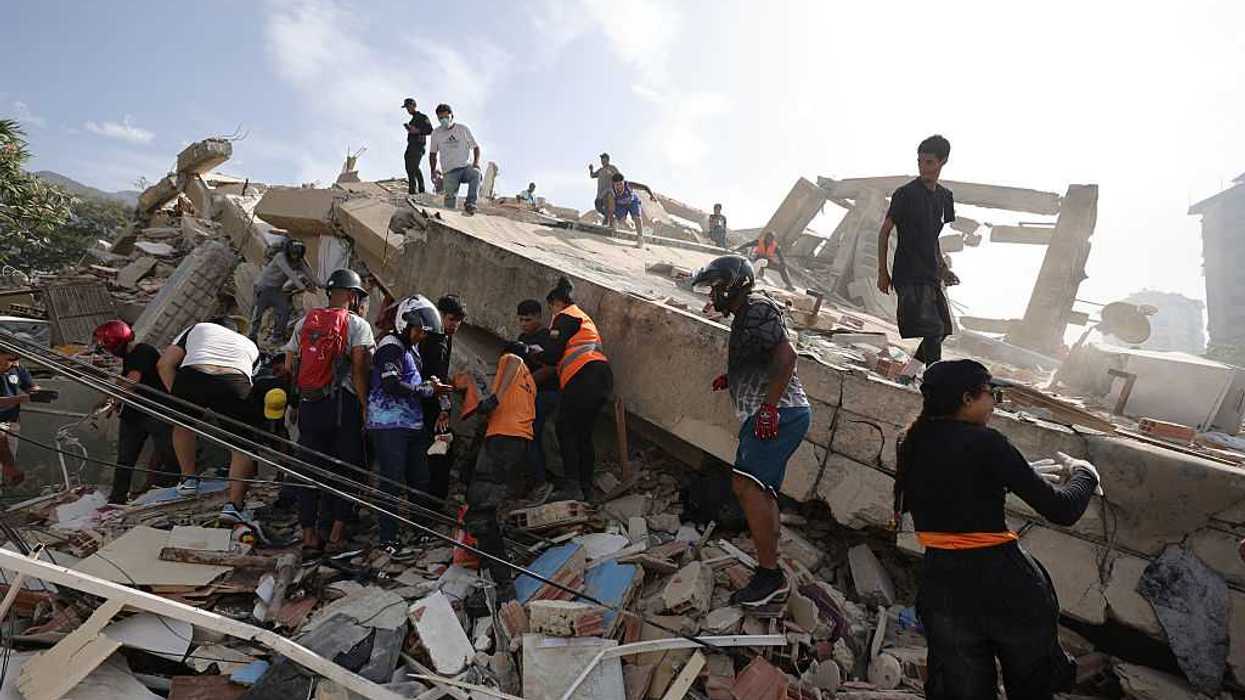

Venezuela is reeling after a series of catastrophic earthquakes that collapsed buildings, triggered landslides, and overwhelmed emergency responders across multiple states. The strongest quake, a 7.3‑magnitude event, sent residents fleeing into the streets as aftershocks rippled through Caracas, Sucre, Miranda, and Bolívar. Entire neighborhoods have reported severe structural damage, blocked roads, and hospitals struggling to treat the injured as rescue teams work to reach communities cut off by debris and power outages.
The U.S. Geological Survey (USGS) and Venezuela’s National Seismology Foundation confirm the scale of destruction and warn that more aftershocks are likely. International humanitarian organizations, including the Red Cross and the UN Office for the Coordination of Humanitarian Affairs (OCHA), say the disaster has intensified an already dire humanitarian crisis marked by food shortages, failing infrastructure, and mass migration.
As images of devastation spread, the Hispanic Federation issued a statement mourning the lives lost and urging the Trump administration to immediately redesignate Venezuela for Temporary Protected Status (TPS), which would allow Venezuelans already in the United States to remain legally due to unsafe conditions in their home country.
Frankie Miranda, President and CEO of Hispanic Federation, said the earthquakes strike a nation already destabilized by years of political turmoil, economic collapse, and state‑sponsored oppression — conditions that alone justify TPS. He said the new destruction has deepened an ongoing humanitarian emergency and makes returning Venezuelans unsafe.
Miranda criticized the previous termination of TPS for Venezuela, arguing it removed vital protections from hundreds of thousands who fled the country’s collapse. He emphasized that TPS exists for precisely these situations, when war, environmental disaster, or extraordinary crises make return dangerous. Venezuela, he said, meets all these criteria, and the United States has both the legal authority and a moral responsibility to act.
“Hispanic Federation urgently calls on Department of Homeland Security Secretary Markwayne Mullin to redesignate Venezuela for TPS. Hundreds of thousands of Venezuelans have built lives in the United States, working and contributing to local economies, and now they face expiring protections,” Miranda said. “Requiring their return to a country during a humanitarian catastrophe would be contrary to the spirit and intent of the law, to our values as a nation, and would put thousands of lives at risk.”
Even before the earthquakes, Venezuela was experiencing one of the largest mass displacements in the world, with more than 7.7 million people having fled due to economic collapse, political repression, and deteriorating living conditions, according to the UN Refugee Agency (UNHCR). The earthquakes have now worsened infrastructure failures, caused widespread power outages, created shortages of clean water and medical supplies, and displaced tens of thousands more. Humanitarian groups warn that the country’s weakened emergency response system — already strained by years of underfunding — cannot meet the scale of the disaster.
The debate over TPS redesignation comes as the U.S. Supreme Court recently allowed the Trump administration to end TPS protections for thousands of Haitian and Syrian immigrants. The Court declined to hear challenges to the administration’s termination of TPS for Haiti and Syria, effectively permitting the policy to move forward and leaving many long‑settled immigrants at risk of deportation. Advocates say the ruling underscores the urgency of swift executive action for Venezuela, especially in the wake of the earthquakes.
Immigration and human rights organizations across the U.S. have echoed Hispanic Federation’s call, arguing that returning Venezuelans to a country facing both political turmoil and natural disaster would be unsafe and inhumane. Under U.S. law, TPS can be granted when a country is experiencing ongoing armed conflict, environmental disaster, or extraordinary and temporary conditions — criteria advocates say Venezuela clearly meets.
The Department of Homeland Security has not yet announced whether it will redesignate TPS for Venezuela. Meanwhile, rescue operations continue across the country as aftershocks complicate recovery efforts. International aid groups warn that without rapid global assistance, the death toll could rise and long‑term displacement could worsen.
Deadly Venezuela Quakes Spark Renewed Calls for U.S. to Restore Temporary Protected Status was first published on Latino News Network and republished with permission.
Hugo Balta is the executive editor of The Fulcrum and the publisher of the Latino News Network, and twice president of the National Association of Hispanic Journalists.