
Even before Trump’s actions against DEI, many in the academic community and elsewhere felt for some time that DEI had taken an unintended turn.
What was meant to provide support—in jobs, education, grants, and other ways—to those groups who historically and currently have suffered from discrimination became for others a sign of exclusion because all attention was placed on how these groups were faring, with little attention to others. Those left out were assumed not to need any help, but that was mistaken. They did need help and are angry.
Another problem with DEI is that it maintains, if not amplifies, a sense of victimization and anger toward the broader society. It supported a us-versus-them perspective. There was no effort in DEI to bring minority and majority groups together to help change the current dynamic. The assumption was that if you were going to protect your rights, you had to fight for them. And so it unintentionally further polarized an already polarized society.
Because of these problems, some in academia and state government have adopted the concept of pluralism to replace DEI. The concept of pluralism, broadly stated, is that everyone is recognized as part of the whole, that all voices are allowed to speak and be heard, and that opposing groups learn to talk to each other with respect and, hopefully, find a way to bridge historical animosities.
This is a good thing; polarization is very harmful for all concerned. But from what I’ve read, it appears that the baby has been thrown out with the proverbial bathwater.
Discriminated-against groups still need their own space, their own support group, because the rest of society is so lacking in understanding of their history and nature. And of the discrimination that they have not only suffered from historically, but are still suffering from today, despite all the laws that have been passed, and the impact of that discrimination.
If the dominant culture truly comes to accept pluralism—with all minority groups respected—then there might be less need for such identity groups. However, I think there would still be a legitimate need. I have never understood, for example, why the gay ghetto, which was such a wonderful, nourishing experience, was felt by gays to no longer be necessary once society became more accepting of gays. We have truly lost something that was not necessary.
We may be accepted, but we have a rich culture, and it can only thrive when we’re living together. And regardless of how much accepted, we will never feel the belonging bond we felt living in the gay ghetto. The same is true for other groups. Society is a large, cold, amorphous body; everyone benefits from belonging to a group where they feel they truly belong. That does not have to lead to conflict with the larger society if one is treated with respect and truly accepted for who they are.
Further, it should not be seen as destructive of or inconsistent with pluralism for groups to speak out against current discrimination, racism, or misogyny in our country. Pluralism requires respect for everyone by everyone. It’s the equivalent of the classic lawyer’s statement that “Reasonable men may differ.” It’s about coexisting with civility regardless of differences.
If that is not the current status—and that is certainly not the status now with racism, discrimination, and misogyny being widespread—then not only should it be ok to call out such violations of the spirit of pluralism, but this must be done. Otherwise, pluralism will be a delusion.
In the 90s, multiculturalism was given a bad name, just as DEI has now, and for much the same reason—for emphasizing our differences, rather than our commonality.
What America needs at this point in time is a combination of pluralism and DEI; it's not one or the other, as I've stated. Through this combination, we will both emphasize our commonality—the fact that we are all Americans and human beings—and support the vitality and equality of the subcultures within our midst, fostering a sense of respect, home, and belonging.
But we cannot have a reasoned discussion of this matter—or better put, not implement it—because Trump and his MAGA allies are not only against DEI efforts, but they don't support pluralism. Trump provides ample evidence of his lack of respect for women. Still, perhaps the most unvarnished example of the growth on the far-right of nativism and an anti-everything other than the white male perspective is the rise of podcaster Nick Fuentes, who has said that "women should shut the f* up," that Blacks "need to be in prison for the most part," and "white men should run everything."
There can be no effective DEI or pluralism while Trump and MAGA-adherents hold the reins of power in our government and have the support of almost half the population.
Ronald L. Hirsch is a teacher, legal aid lawyer, survey researcher, nonprofit executive, consultant, composer, author, and volunteer. He is a graduate of Brown University and the University of Chicago Law School and the author of We Still Hold These Truths. Read more of his writing at www.PreservingAmericanValues.com










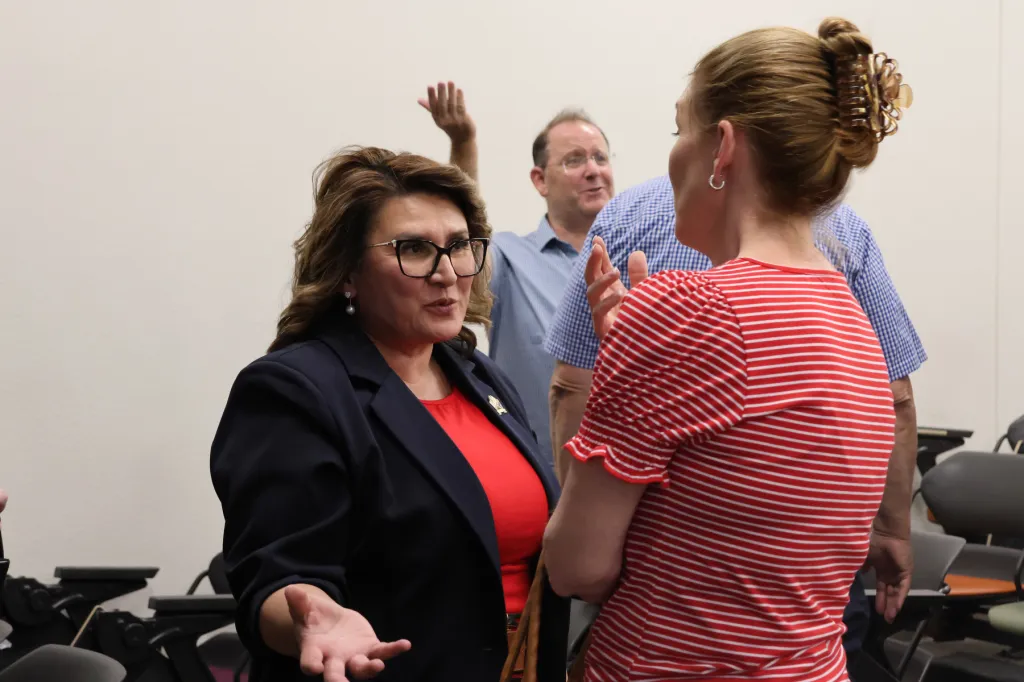 Congressional candidate JoAnna Mendoza has leaned into her working class background as she runs for a seat in the U.S. House to represent Arizona’s 6th congressional district. (Courtesy JoAnna Mendoza campaign)
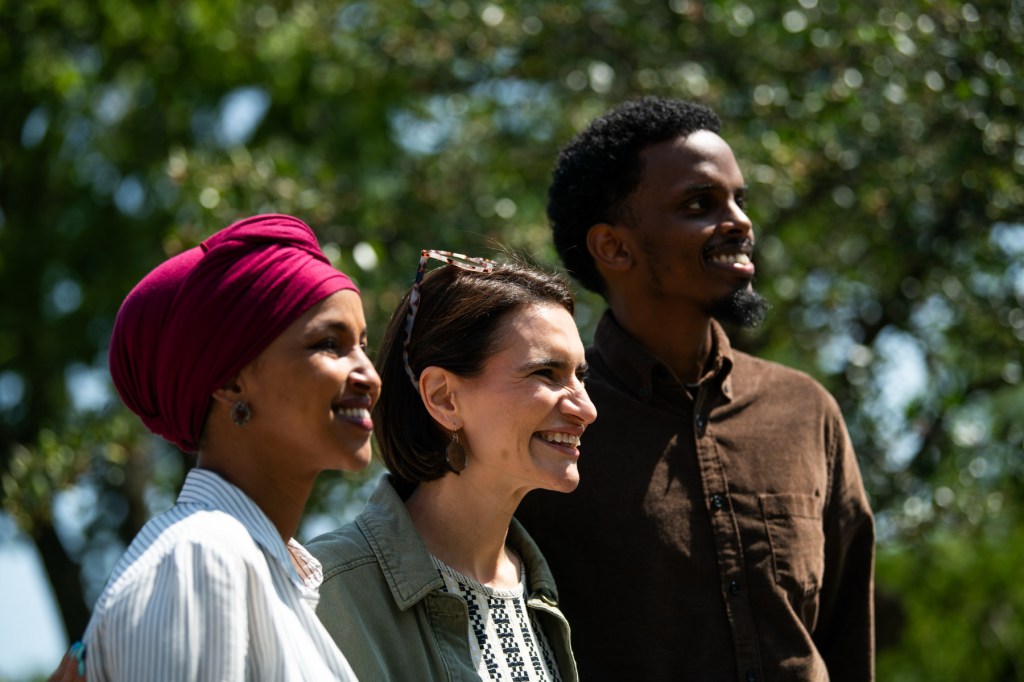 Politicians who come from working class backgrounds, like Minnesota Lt. Gov. Peggy Flanagan (center) and Minnesota state Sen. Omar Fateh (right), are resonating with voters during a particularly challenging economic period. (Stephen Maturen/Getty Images)