



Skip to content
Search

Latest Stories

Follow Us:
Top Stories

Border Patrol surveillance network expands across Michigan highways

News

Border Patrol surveillance network expands across Michigan highways

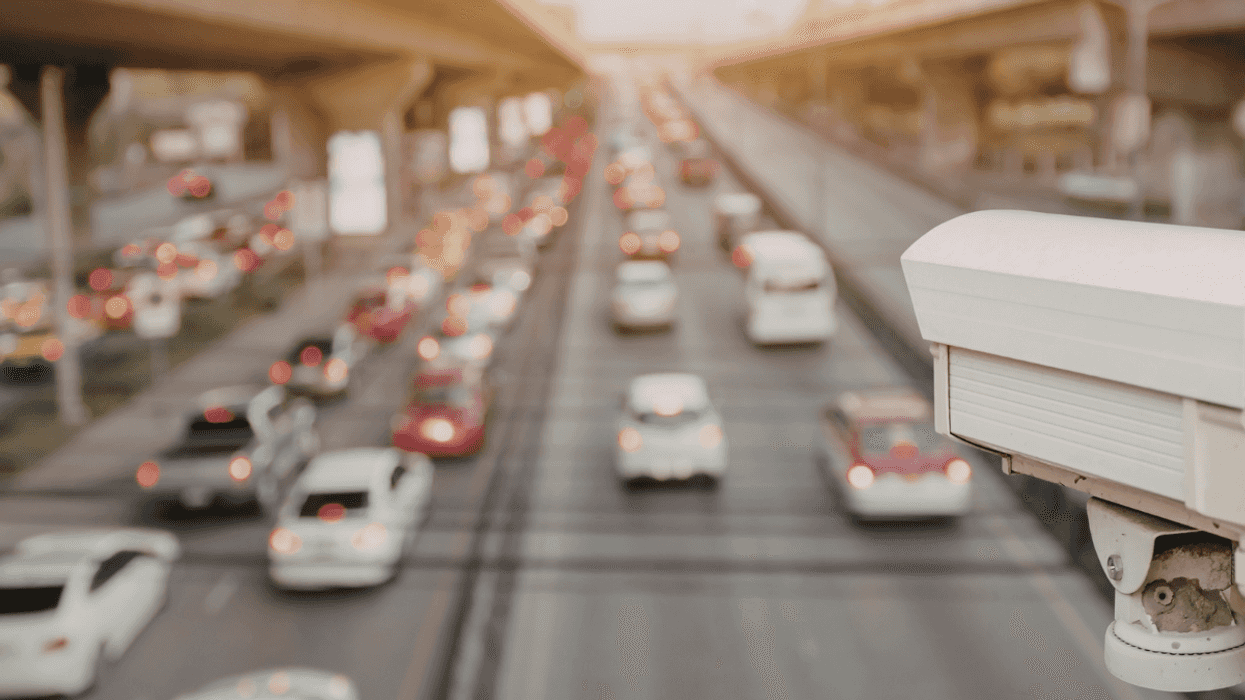
Surveillance camera

Canva

The U.S. Border Patrol and Department of Homeland Security have installed automated license plate reader cameras on Michigan highways as part of a nationwide surveillance network, according to reporting by MLive and the Detroit Free Press.

The cameras are part of a nationwide Border Patrol surveillance network first revealed by an Associated Press investigation and later examined in Michigan by the Detroit Free Press and MLive through a review of state records.


The systems scan and record license plates and use algorithms to flag vehicles considered suspicious.

Installation of the surveillance cameras began under the Biden administration in 2024 and was approved by Michigan state officials.

U.S. Customs and Border Protection officials told MLive the agency relies on a combination of personnel, technology and infrastructure to identify illegal activity and protect national security.

“As part of that approach, CBP uses license plate readers — often the same systems employed by state and local law enforcement nationwide — to help identify threats and disrupt criminal networks,” a spokesperson said in a statement to MLive.

Border Patrol’s use of license plate readers comes as the technology has become increasingly common among law enforcement agencies.

A Congressional Research Service report found all police departments serving populations of more than 1 million residents and nearly 90% of large sheriff’s offices rely on automated license plate reader technology during investigations.

According to the report, the systems can also collect information such as a vehicle’s make, color, location, and the date and time it was recorded. The technology can then compare that information against law enforcement databases and alert authorities when a vehicle matches one associated with vehicles of interest.

The Michigan Department of Transportation told MLive it does not operate the cameras or have access to the data collected. The agency said permit applications are evaluated based on highway operations and design requirements and are not approved or denied based on the agency submitting the request.

According to the Detroit Free Press, Border Patrol declined to publicly disclose the locations of the cameras, citing security concerns. However, records reviewed by the newspaper confirmed cameras had been installed in Wayne and Macomb counties.

The surveillance network has drawn increased scrutiny as immigration enforcement efforts have expanded.

In Michigan, concerns about privacy and government surveillance prompted lawmakers to introduce House Bills 5492 and 5493 earlier this year. The bipartisan legislation would regulate the use of automated license plate reader systems and establish standards for handling the data they collect. The bills have not yet been approved by the Michigan Legislature.

Immigrant rights advocates have also raised concerns about the Border Patrol surveillance network.

Christine Sauvé of the Michigan Immigrant Rights Center told MLive that many residents may not realize they are being monitored by federal immigration authorities.

“Michiganders going about their business may not realize they are being surveilled by federal immigration agents,” Sauvé said.

Sauvé also questioned the impact the technology could have on drivers who are never informed that a camera may have contributed to a traffic stop.

“Most people will likely not know the camera was the initial cause. This kind of widespread surveillance does not make our communities safer, but it does raise the serious possibility of unlawful searches and constitutional violations,” she told MLive.

Border Patrol surveillance network expands across Michigan highways was first published on Michigan Latino News and was republished with permission.

Angeles Ponpa is the Managing Editor of Latino News Network Midwest, overseeing Illinois Latino News, Wisconsin Latino News, and Michigan Latino News. She is based in Illinois.



Read More

“I’m still under attack:” Karla Toledo, relief and fear after case dismissed

A community member rests on the sidewalk, shielding herself from the sun with a banner outside the Tucson Immigration Court. People show their support for Karla Toledo with banners and petitions, and by wearing pink — a color representing solidarity with communities affected by mass deportation policies.

Credit: Summer Williams

“I’m still under attack:” Karla Toledo, relief and fear after case dismissed

Karla Toledo — the DACA recipient detained by masked immigration agents at her own home in mid-May — celebrated the dismissal of her case by a judge in Tucson. The 31-year-old Latina immigrant expressed both relief and caution.

About 30 people gathered Wednesday outside the Tucson Immigration Court building for what was expected to be Karla’s first hearing after her arrest and confinement at Eloy Detention Center. Family and community members carried signs with Karla’s image that read: “Stand with Karla. Protect Dreamers.”

Keep Reading Show less
 Shadow on a wall of Judge hitting gavel in court, concept of justice, law, and legal protection

The Trump Justice Department faces scrutiny over alleged prosecutorial misconduct, political pressure, and threats to the rule of law and judicial integrity.

Aitor Diago / Getty Images

Is There Anything That Trump’s Justice Department Lawyers Won’t Do?

There was a time when working for the United States Department of Justice might have been a lawyer’s dream. Speaking on behalf of the United States, working with people who were dedicated to preserving the rule of law and upholding the highest standards of professionalism, not a bad gig.

As Harvard Law School once explained, the department offered lawyers an unparalleled “opportunity to serve the public in a meaningful way while carrying out the Department of Justice’s (DOJ) mandate to ‘pursue justice’ every day…” Not a bad gig.

Keep Reading Show less
One Year After Arrest, Pressure Mounts on El Salvador to Free Ruth López

Ruth Lopez

One Year After Arrest, Pressure Mounts on El Salvador to Free Ruth López

Human rights organizations across the Americas are intensifying pressure on the Salvadoran government to immediately release Ruth Eleonora López, a prominent anti‑corruption attorney who has now spent more than a year in pretrial detention under what advocates describe as arbitrary, retaliatory, and rights‑violating conditions. López, who leads the Anti‑Corruption and Justice Unit at Cristosal, was detained on May 18, 2025, and has remained behind bars ever since. Her case has become a flashpoint in the region’s debate over democratic backsliding and the criminalization of civil society under President Nayib Bukele.

According to Amnesty International, López’s first hours in custody amounted to a short‑term enforced disappearance, as authorities refused to reveal her whereabouts to her family or legal team. The organization reports that she has since been held under an incommunicado regime, with sharply restricted access to counsel and relatives, while her case remains sealed under judicial secrecy — preventing any public examination of the evidence against her. Over the past year, the charges have shifted without explanation, moving from alleged embezzlement tied to advisory work more than a decade ago to illicit enrichment. Human Rights Watch notes that no evidence has been presented in open court, and a judge extended her pretrial detention in December 2025, with the current order set to expire this month. The Human Rights Research Center adds that López’s imprisonment reflects a broader pattern in El Salvador of criminalizing human rights defenders, journalists, and anti‑corruption advocates.

Keep Reading Show less
Judicial Independence Over Judicial Sycophancy
a judge's gaven on a wooden table

Judicial Independence Over Judicial Sycophancy

While the President of the United States has the power under Article II, section 2 of the United States Constitution to appoint justices of the Supreme Court and other federal judges, all of whom have lifetime tenure, the President must exercise this power with the “Advice and Consent” of the Senate. The Senate’s advice and consent cannot be meaningfully exercised without the chance to question judicial nominees. Thus, a key component of the Senate’s evaluative process is the confirmation hearings during which senators question the President’s nominees.

Many nominees are alert to efforts to discern their views on disputed legal issues and unsettled law and decline to answer such questions or answer them in a manner that avoids violating the prohibition against opining. Nominees of both parties who were appointed to the Supreme Court rightly refused to answer such questions.

Keep Reading Show less