



Skip to content
Search

Latest Stories

Follow Us:
Top Stories

Video: Entrepreneurship as a vehicle for building inclusive, multigroup democracy

Panel: Entrepreneurship as a Vehicle for Building Inclusive, Multigroup Democracy

This week, we are excited to share a video series featuring panel discussions from the Global Democracy Champions Summit co-hosted by Keseb and the SNF Agora Institute at Johns Hopkins University

Democracy Entrepreneurs are innovators who are working to strengthen democracy. Today’s featured panel discussion highlights how democracy entrepreneurs across the world are building innovative organizational models and strategies to give rise to more inclusive, transparent, and healthy democratic systems appropriate for their cultural contexts.


Moderator: Yordanos Eyoel, Founder and CEO, Keseb; Visiting Fellow, SNF Agora Institute, Johns Hopkins University

Panelists:

● Alice Barbe, Co-Founder, Academy for Future Leaders

● Rwitwika Bhattacharya, CEO, Swaniti Initiative

● Jagdeep Chhokar, Founding Member and Trustee, Association for Democratic Reforms

● Nick Penniman, Founder and CEO, Issue One

Check out the discussion: Entrepreneurship as a Vehicle for Building Inclusive, Multigroup Democracy

Thank you for joining us for this week-long video series from the Global Democracy Champions Summit. We hope that ideas and insights shared will continue to spur dialogue and action to advance inclusive democracy in the US and globally!

Please visit Keseb and the SNF Agora Institute at Johns Hopkins University to subscribe to receive news of future Democracy Champions opportunities.


Read More

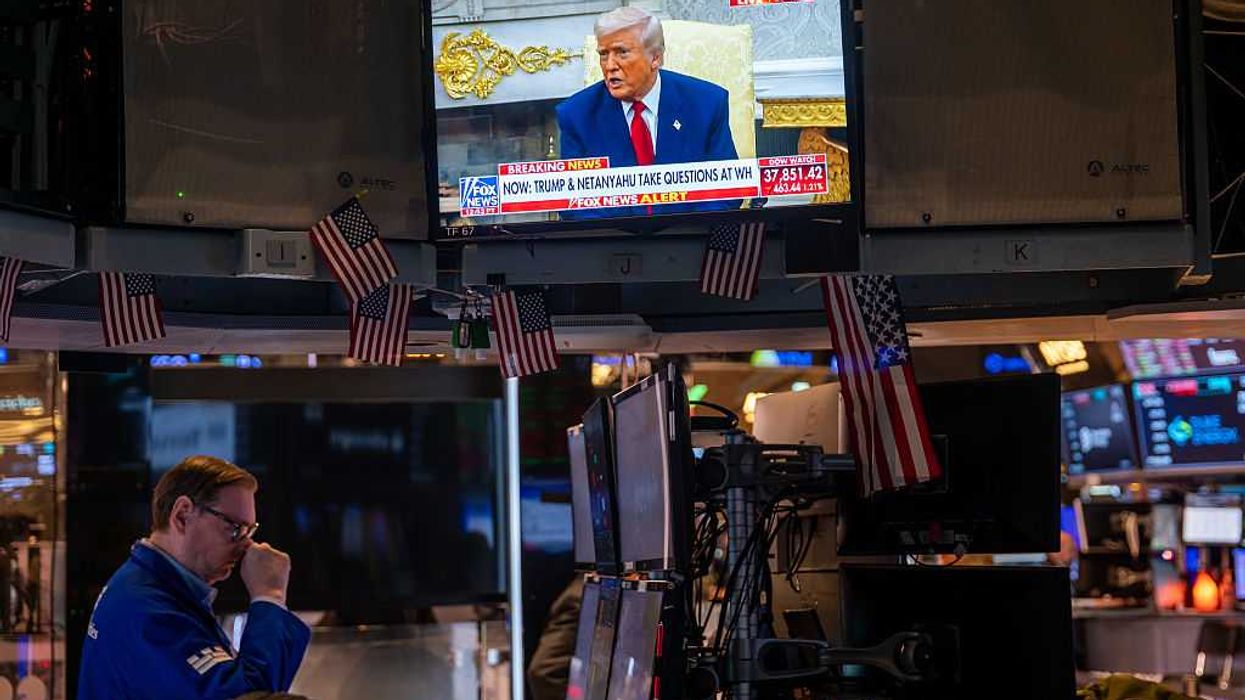
​U.S. President Donald Trump is displayed on a television screen

U.S. President Donald Trump is displayed on a television screen as traders work on the floor of the New York Stock Exchange (NYSE) on April 07, 2025 in New York City.

Getty Images, Spencer Platt

Trump 2.0 Policies Clash With Business School Fundamentals, Fortune 500 CEOs Warn

Leaders of universities have expressed shock when actions by Donald Trump and his 2.0 administration officials have gone directly counter to what he and his appointees supposedly learned during their business-related college education. But what do professors know?

I’ve been privileged to teach and serve as a Marketing department head at an Association to Advance Collegiate Schools of Business-accredited institution; only 6% of business schools worldwide have achieved AACSB recognition. As such, one gets to know the multi-year process that third-party evaluators, including corporate executives, use to rigorously examine the curriculum offerings of accounting, economics, finance, marketing, and management—and, subsequently—what principles well-trained business students should exemplify.

Keep ReadingShow less
Two containers, one with a U.S. flag and another with Canada's flag.
Getty Images, bymuratdeniz

Just the Facts: U.S.–Canada Tariff War Escalates As Trump Raises Stakes

The Fulcrum strives to approach news stories with an open mind and skepticism, striving to present our readers with a broad spectrum of viewpoints through diligent research and critical thinking. As best we can, remove personal bias from our reporting and seek a variety of perspectives in both our news gathering and selection of opinion pieces. However, before our readers can analyze varying viewpoints, they must have the facts.


Since President Trump took office in January 2025, the US has imposed sweeping tariffs on Canadian imports, prompting Canada to retaliate with its own measures. As of October 2025, Canadian goods face up to 35% tariffs, while Canada has matched many of these with its own levies.

Keep ReadingShow less
Is America Still Welcoming Global Talent?
Close up of american visa label in passport.
Getty Images/Alexander W. Helin

Is America Still Welcoming Global Talent?

A few weeks ago, when new proposals limiting J and F visa expansion were open for public comment, immigration quickly became a hot topic again at our research center, where more than half the scientists come from abroad. Some worried about their plan, others traded news and updates about the H1-B. A colleague asked if I was anxious too. To my own surprise, I wasn’t.

I used to be. But after weathering turbulent visa policies under different U.S. administrations, like many other international scholars, I have learned to stay flexible and mobile. My U.S. visa for a graduate program was delayed due to tensions between the U.S. and China several years ago. Up against a deadline for the program, I pivoted to Japan to continue the research training. What felt like a closed door became a new window: I fortunately joined a world-class team in tissue-engineering vascular medicine, broadened my view of clinical care and research, and began bridging my path as both practitioner and scientist. Committed to strengthening the “bench-to-bed” pipeline—learning real-world needs and translating research to meet them—I chose the United States again to carry this work forward.

Keep ReadingShow less
A close up of a train passing by quickly.

The proposed merger between Union Pacific and Norfolk Southern could create America’s first coast-to-coast freight rail system.

Rail Merger Holds Promise for the Economy

Boosting domestic industry and manufacturing continues to be a key economic theme. A recently proposed merger between two major railroad companies could advance those goals—and it carries particular promise for underserved communities who are often on the front lines of America’s workforce.

The merger of Union Pacific and Norfolk Southern would create the nation’s first transcontinental freight rail system, a vision pursued since 1869, when the “golden spike” famously connected the east and west.

Keep ReadingShow less