For centuries, a grim pattern has governed how nations arrive at new political orders. An old order exhausts its legitimacy, the strain builds until it erupts into war, and only afterward do the survivors gather to write the terms of what follows: at Westphalia after the seventeenth-century wars of religion; at Vienna in 1815 after the Napoleonic Wars; and at San Francisco after the Second World War.¹ In each case, the table was set only after the old world had died. Even then, the terms of the new order were not guaranteed. The liberal order that emerged after the Second World War — a framework of universal rights and democratic governance — was not secure until the Cold War ended forty-five years later, and it is still contested.
Given the current level of polarization and rising political violence in the United States, it is time to ask ourselves a tough question. Can we set the table for renewing our system of self-governance before the catastrophe? I believe the answer can be yes, if we find the will to come together across our lines of difference and excavate our common ground.
I spent my career assessing and supporting democracy abroad. Not long ago, I joined my colleagues — former American diplomats and democracy professionals — to turn our assessment framework on our own country. Our central finding was that the United States faces a consensus crisis: a breakdown in our shared agreement about the role of government, the rules of political competition, and national identity itself.²
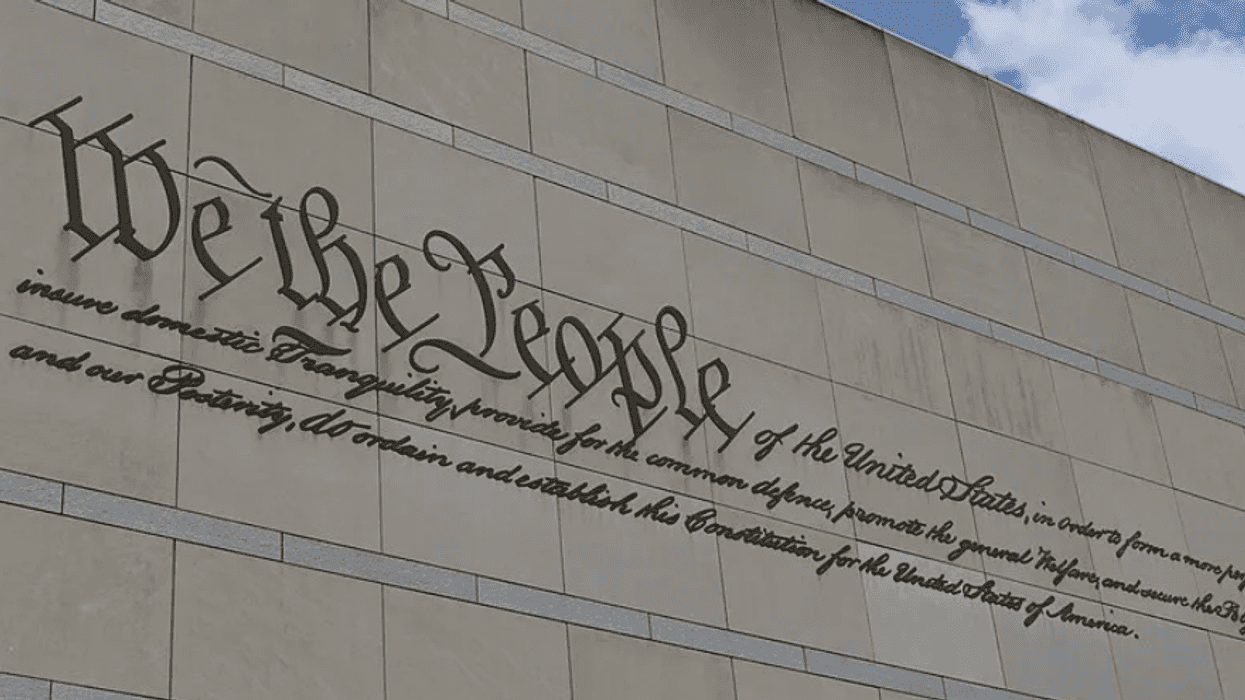
What has frayed is our social contract — the agreement beneath all our laws about who holds power and how it is checked, who belongs in our country, and what we owe one another. The Constitution is the written expression of that social contract.
Sadly, our current political system will not repair itself, because these failures are products of its own incentives. In 2024, 87 percent of House races were effectively settled in primaries — decided by just 7 percent of eligible voters.³ The most expensive election in American history — roughly $15.9 billion in campaign spending, with the wealthiest one percent of donors supplying about half of all the money raised — has put the price of being heard beyond the reach of ordinary citizens.⁴ An officeholder’s surest road to defeat is no longer to fail the country but to be challenged from the extreme of his or her own party. Those who hold the privilege of power under such rules will not, of their own accord, surrender the advantages the rules confer.
What is a Founding?
Americans have faced moments like this before — and answered them with what we rightly call our Foundings. By a Founding I mean a two-part test: first, the people renegotiate the fundamental terms of the social contract, in other words we decide to treat each other differently and engage with our institutions in new ways, and, second, they write the result into the Constitution, beyond the reach of any single election to undo. Our First Founding — from the Declaration of Independence through the 1787 Constitution and the Bill of Rights — set the original terms. The Second Founding remade our social contract and system, but only after the Civil War, following the grim pattern of history. The Reconstruction Amendments ended slavery, guaranteed citizenship and equal protection, and forbade denial of the vote on account of race.⁵
Entrenchment in the Constitution is what distinguishes a Founding from ordinary reform. Still, the renewal of a country’s social contract goes deeper than the amendments that anchor it. A social contract is lived in statehouses, city councils, and communities, not only in the Constitution’s text. The Second Founding, for example, also included the establishment of the Freedmen’s Bureau, civil rights enforcement statutes, and state-level changes. The amendments were the keystone that locked the rest in place.
Which was our Third Founding? There is disagreement on this point. Some scholars point to the New Deal, which recast the relationship between citizen and government.⁶ A rising account — embraced by a bipartisan national commission on our democracy — counts the Civil Rights Movement of the 1960s.⁷ My own view is that the women’s suffrage movement counts as a Founding. As the legal scholar Reva Siegel has shown, the Nineteenth Amendment “transformed We the People — not simply by adding voters, but by democratizing the family” — a renegotiation of the social contract that was also entrenched in the constitutional text.⁸
We do not need to settle that argument here. Whichever account you hold, the Third Founding is spoken for — it lies in the past. What matters is that, in the twentieth century, Americans renewed our social contract without a civil war. The suffragists won their transformation by amendment, through decades of organizing, and the Civil Rights Movement won through disciplined nonviolence. These examples prove that Founding-scale change without catastrophe is not a fantasy. It is part of our inheritance.
Why do reforms struggle to hold?
Despite these achievements, the twentieth century also carries a warning. Much of what the New Deal and the civil rights revolution built lived in statutes and reversible court rulings rather than in the Constitution’s durable architecture. In recent years, the Supreme Court has narrowed the Voting Rights Act and ended race-conscious admissions, dismantling by reinterpretation what was never anchored in the country’s foundational text.⁹ The result is an exhausting pattern: reforms are won and unwon as power changes hands, with no endgame in sight.
Meanwhile, the one instrument our country has for making change durable has seized up. Members of Congress have introduced more than ten thousand constitutional amendments since 1789; only twenty-seven have ever been ratified, and only one since 1971.¹⁰ The Equal Rights Amendment demonstrates the challenges: Congress passed it in 1972, the thirty-eighth state voted to ratify it in 2020, and the amendment still failed — a process fumbled across five decades of missed deadlines, rescinded ratifications, and court rulings. Amid today’s polarization, the Constitution has become, in practice, unamendable — so change migrates instead to the courts, whose reinterpretations, unlike amendments, can always be undone.
The need for a Fourth Founding
This is why I believe the work of our generation is a Fourth Founding. I am not the only one. The American Academy of Arts and Sciences’ bipartisan Commission on the Practice of Democratic Citizenship — launched at the challenge of Stephen D. Bechtel Jr., a Republican philanthropist — reached the same conclusion. Its 2020 Our Common Purpose report found that the conditions of the twenty-first century “pose an urgent threat to the future of our democratic way of life” and therefore require a fourth founding.¹¹
A Fourth Founding would mean renewing our social contract — finding new ways of living together across our lines of difference — and entrenching the deepest common-ground reforms into the Constitution before a significant violent rupture rather than after one. Let me manage expectations clearly: a Fourth Founding would not entail enshrining one faction’s agenda as the will of the whole. What a genuine consensus process settles on would look less like any party’s platform than like the sober center — and that is the point. Although there is research demonstrating that Americans have plenty of common ground, we should not presume the answers. To determine the national consensus on what kind of country Americans want to live in moving forward, we propose to co-create a legitimate, lawful process that lets the American people deliberate on this question.
That raises an important question: by what process could a free people renegotiate its social contract in peace — with everyone at the table and legitimacy no one can deny? That is the subject of my next essay: the Great American Deliberation.
Danielle M. Reiff is a retired American diplomat, peacebuilder, and writer.
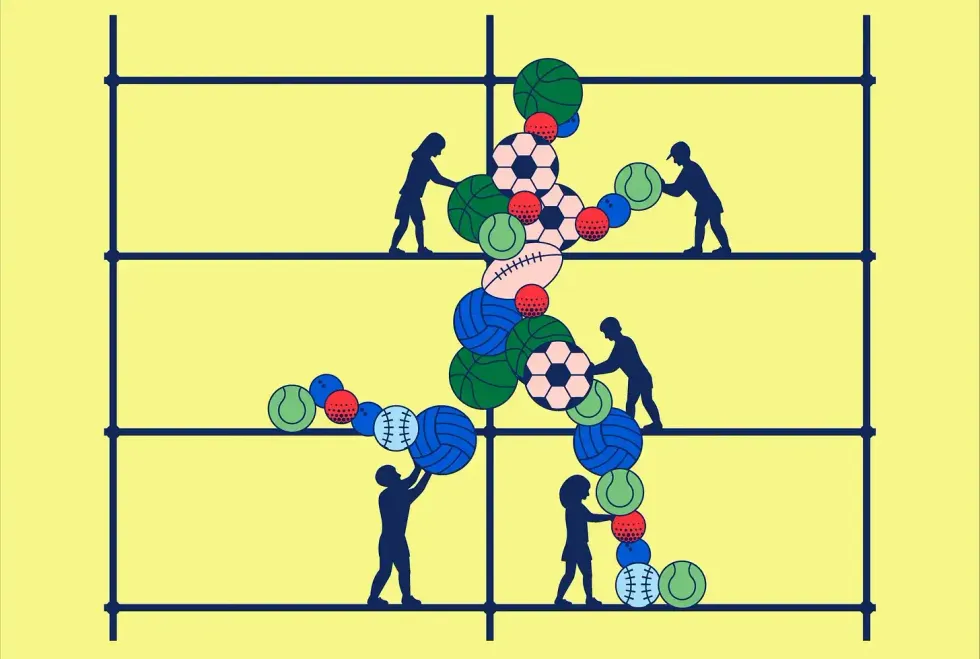 Following our HWF Civic Futures kickoff last week with Eric Liu, our design partners at Public/Official have created a unique visual to capture the “civic scaffolding” spirit of this conversation.
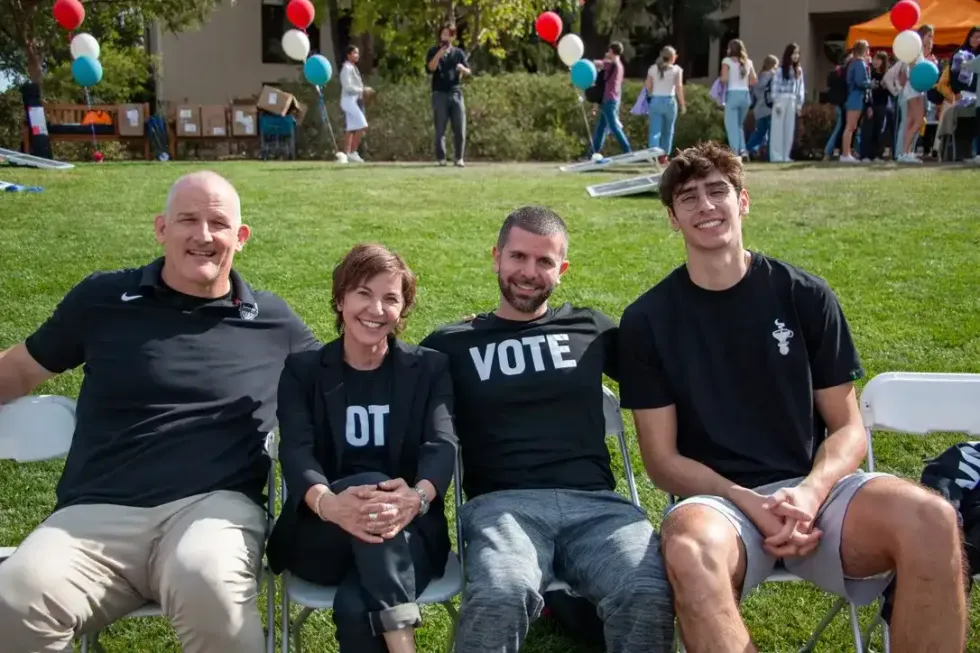 Lisa, Coaches Rev and Matt Elkin, and former Stanford Men’s Basketball star Maxime Raynaud at Stanford’s “All Vote No Play” Democracy Day, 2025