
Washington is a politically active state where, through protests, parades, nonprofit organizations, and community groups, people have proven they will advocate for the causes and issues they care about.
Seattle, a major hub for nonprofits, boasts nearly 25,000 nonprofit organizations focusing on a wide range of local, national, and international issues. These groups reflect activism efforts across major issues impacting the United States, such as advocacy for police accountability initiatives, rights for the LGBTQ+ community, and demands for action against crime, violence, and drug trafficking.
The Seattle government has also taken steps to protect citizens’ right to protest. It has enacted policies and initiatives like the City Policy on Immigration Enforcement, the Stand Together Initiative, and Know Your Rights resources, which provide information on how to recognize Seattle Police officers and vehicles.
Beyond city government initiatives, organized groups with missions to advocate for or with targeted populations continue to work toward building a better state.
Two organizations in particular are making a difference in Washington through their own initiatives, reflecting the broader work being done to elevate voices and communities across the state.
Washington Bus
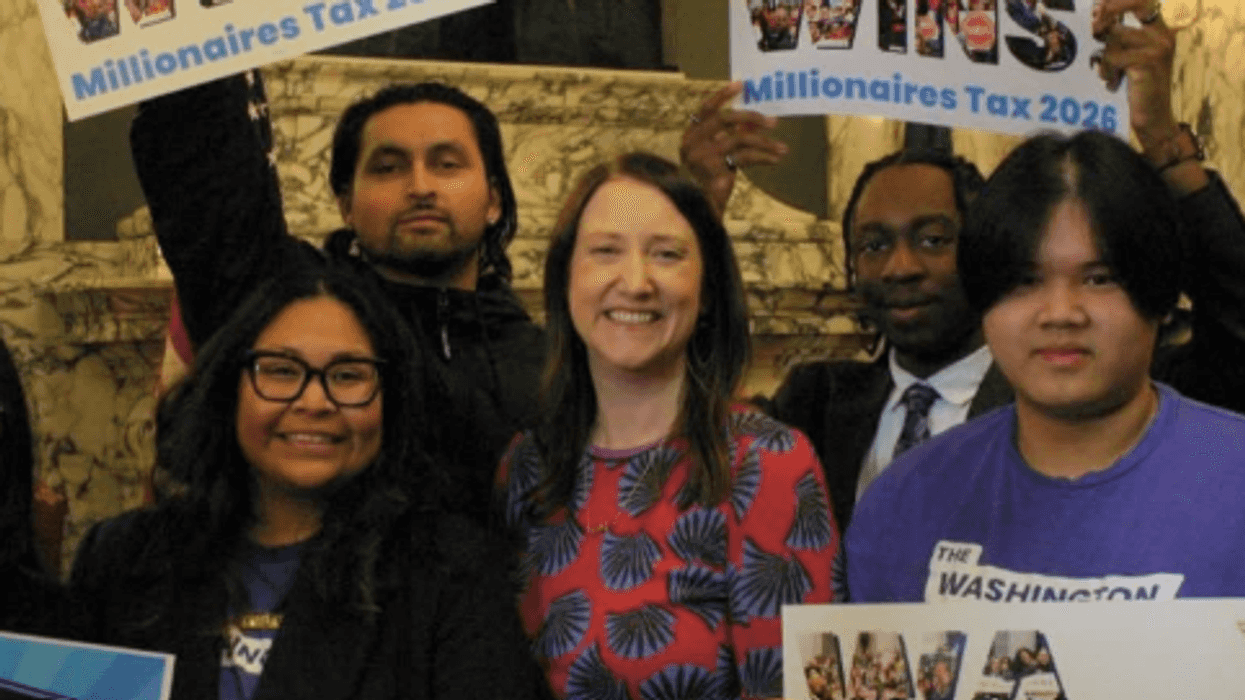
The Washington Bus is the largest youth-led organization working to harness and empower the political power of Washington’s youth, especially those who have been historically disenfranchised.
Despite the name, there is no bus involved in their work; rather, the name represents the organization’s mobility across the state as it sponsors leadership development, advocacy efforts, and voter mobilization for Washington youth.
“We consider ourselves the political home for young organizers in Washington state, advocating for progressive change in a multiracial democracy,” Bailey Medilo, the communications manager for Washington Bus, said. “We are the ones who are constantly in collaboration with community leaders, especially government institutions, elected officials, and grassroots organizations, to build capacity and access for young people in political spaces.”
The Bus acts as a stepping stone for young activists to learn to become better leaders and advocate for the issues they care about. By providing a space for youth leaders to grow, Medilo said these leaders are likely to engage their peers and encourage more youth to get involved in activism, organizing, and voting.
The Bus acts as a stepping stone for Washington youth who are activists in their communities and can learn to become better leaders and advocate for the issues they care about. By providing a space for youth leaders to grow as activists, Medilo said their leaders are likely to engage their peers and more youth to get involved in activism, organizing, and voting.
“[We] ensure that youth organizations can persist in a healthy, expansive way in Washington state and build on existing infrastructure,” Medilo said. “But we also explore ways that we can reimagine how political spaces for young people can be developed and created.”
To get involved with the Washington Bus, there are some paid positions available, as well as several ways to participate through events, cohorts, and councils. The Bus Underground is a youth-led organizer clinic that offers leadership development to help youth build connections with a community of like-minded activists and organizers.
One of their most successful initiatives has been their summer fellowship, where 12 people from across the state are selected from communities in need of intensive youth leadership training. The Bus helps them gain skills that can lead to professional positions, including campaign managers and political activists.
“We have a philosophy of believing in the best intentions of our youth population and our youth voters,” Medilo said. “We believe that if young people are given the tools and the resources to engage in change-making, they will engage in change-making.”
Civic Commons
Civic Commons has the overarching goal of uniting people across Washington state to achieve greater racial and economic equity.
The organization uses three core programs—Belonging, Scorecard, and Network Weaving—to provide training, relationship-building, and a network to empower communities to achieve equitable outcomes, such as homeownership.
“We’re bridging the fragmentation across sectors and communities to build the trust and relational muscle that’s necessary to tackle the issues to get to outcomes,” Michael Brown, the founder and Chief Architect of Civic Commons, said.
The Belonging programs offer programming to build a sense of belonging in neighborhoods, towns, cities, and campuses across Washington state. They aim to build trust and a sense of community before helping groups reach shared goals. The Scorecard for Shared Prosperity serves as a data resource to measure change across the Puget Sound region and help provide insight into how communities are evolving.
The Network Weaving program builds relationships across two major initiatives: the Black Home Initiative, which works to increase the rate of Black homeownership in Western Washington, and Starter Home Plan WA, which works to make homeownership more accessible for low- and moderate-income households.
Through Starter Home Plan WA, Civic Commons provides the resources and tools necessary to help lower-income households in Washington begin their homeownership journey with confidence and knowledge.
Brown identifies the Black Home Initiative as one of their most successful and impactful programs. The organization developed a plan to help 1,500 low-to-moderate-income Black individuals become homeowners between South Seattle and Thurston County by 2028, with a long-term goal of reaching 3,000 homeowners over 10 years.
Brown said the initiative’s progress so far has been possible as a result of “A network bridging sectors and a community working together to achieve something none of them could do on their own.”
Brown added that many other cities and states have begun modeling their own initiatives after the Black Home Initiative to increase homeownership rates among low- to moderate-income Black individuals.
“The essence of our work is the foundational pieces around belonging, but once we create that, it’s really then appealing to the leaders across those various sectors and communities,” Brown said.
Civic Commons has made an impact across the state, particularly in Seattle, where it continues to create new programs and products that accelerate the journey toward building a more racially and economically equitable state.
Both the Washington Bus and Civic Commons are driving change in Washington in unique ways. Through their models, they are helping diverse demographics across the state not only improve their lives and build a better society, but also advocate for their own futures and aspirations.
Daniela Mattson is a student at the University of Southern California and a Fulcrum Fellowship cohort member.
The Fulcrum is committed to nurturing the next generation of journalists. To learn about the many NextGen initiatives we are leading, click HERE.









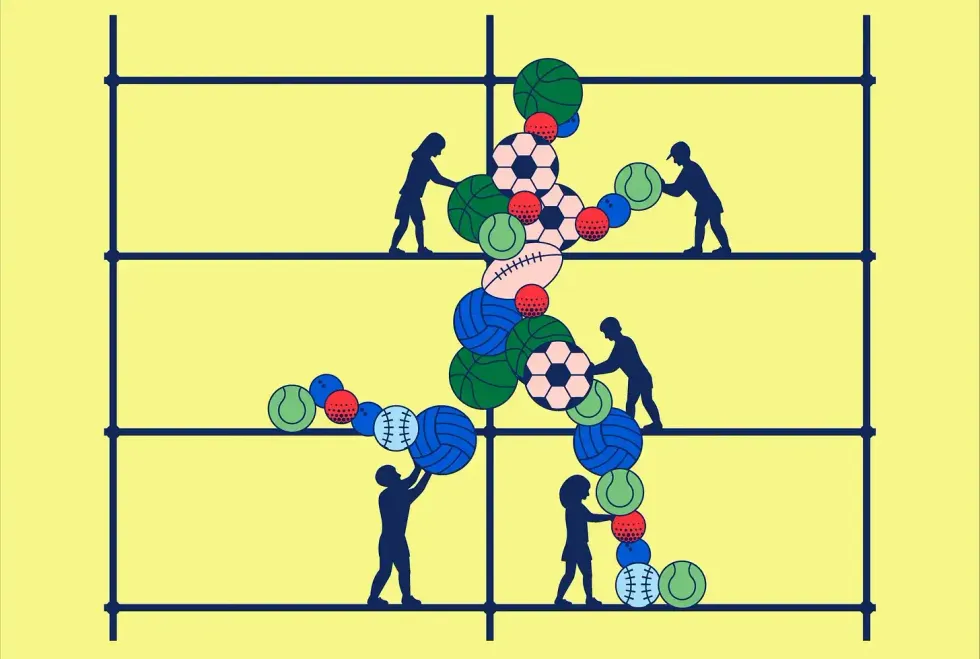 Following our HWF Civic Futures kickoff last week with Eric Liu, our design partners at Public/Official have created a unique visual to capture the “civic scaffolding” spirit of this conversation.
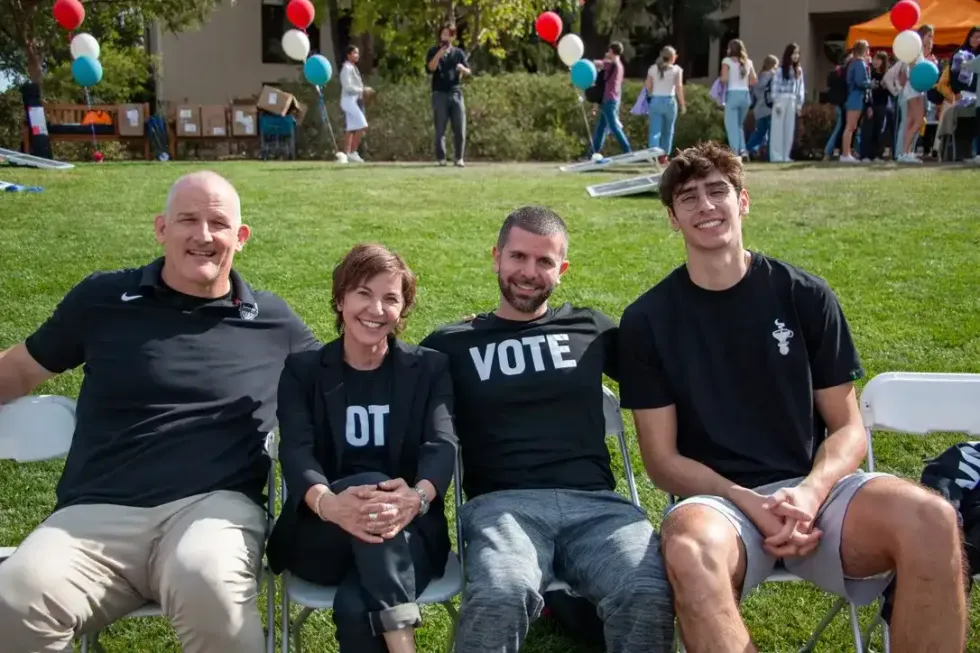 Lisa, Coaches Rev and Matt Elkin, and former Stanford Men’s Basketball star Maxime Raynaud at Stanford’s “All Vote No Play” Democracy Day, 2025