

Independent voters now represent the largest share of the American electorate, and yet they remain mostly unrepresented in federal office. Both major parties have spent decades optimizing for their bases, almost always leaving the near majority of Americans who identify as independent with the choice of either voting for a party candidate they don't fully support or staying home.
A handful of high-profile independent candidates for the US Senate are trying to change that. 2026 is seeing one of the largest surges of interest in independent candidates in recent memory. However, these candidates are often covered as fringe candidates, and stories about them focus more on how they'll impact the outcome of the election between a Republican and Democrat than they do on the substance of the candidate's campaign.
This series exists because the independent electorate deserves better than that. Over the coming months, IVN is conducting in-depth interviews with independent candidates across the country—not just horse-race conversations about polling and fundraising, but substantive discussions about the issues independent voters actually care about.
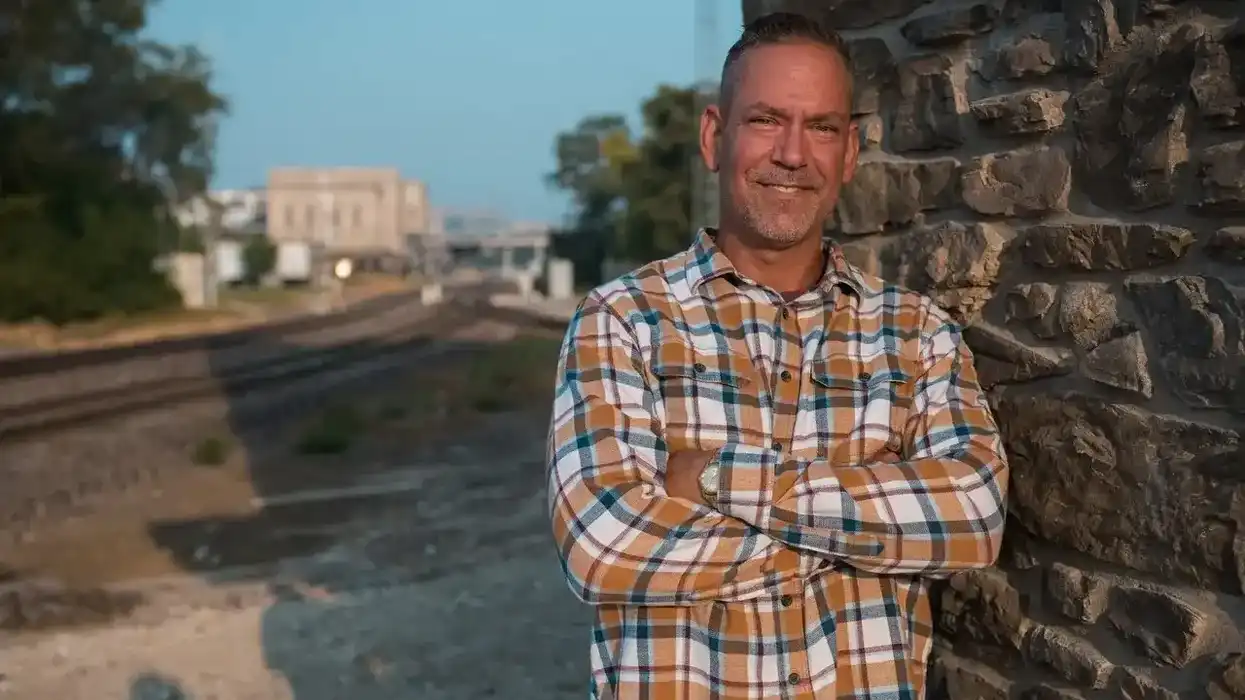
In Nebraska, Dan Osborn is running for US Senate.
I. The Candidate
Dan Osborn graduated from Omaha's Roncalli Catholic High School in 1994. He then joined the Navy, serving four years aboard the USS Constellation before moving on to the Nebraska Army National Guard. In 2004, he took a job as an industrial mechanic at the Kellogg's plant in Omaha and joined the union, where he eventually rose to president of BCTGM Local 50G. In that role, he led the 77-day 2021 strike that stopped the company's proposed benefit cuts and kept the plant open. He was later terminated by Kellogg's, an action he attributes to his union role, and now works as a steamfitter with Local 464.
The through-line from the plant floor to the campaign is the same sentence he has been repeating for three years: working people deserve a seat at the table in Washington. In 2024, running as an independent against Republican Sen. Deb Fischer, that message got him 46.5% of the vote—a roughly seven-point loss in a state Donald Trump carried by 20. It was the strongest independent performance in a Nebraska Senate race in the direct election era, and it convinced him to run again immediately.
II. The Race
The field cleared for Osborn in the space of about a week in July. On July 16, the secretary of state's office verified at least 6,096 valid signatures against the 4,000 required, officially placing him on the November ballot. The next day, Democratic nominee Cindy Burbank, who won her primary in May on an explicit promise to step aside, filed paperwork to withdraw. Secretary of State Bob Evnen initially floated keeping her on anyway, then announced on July 21 that state law gave him no discretion to refuse a declination, while calling the maneuver "a cynical manipulation of the ballot process." The result is a head-to-head between Osborn and incumbent Republican Sen. Pete Ricketts.
Sen. Ricketts is the son of TD Ameritrade founder Joe Ricketts and a co-owner of the Chicago Cubs. He served as Nebraska's governor from 2015 to 2023 before being appointed to the Senate in 2023 when Sen. Ben Sasse left to become president of the University of Florida. He won the special election to finish that term, and he won the Republican primary for this cycle with roughly 82% of the vote. He’s been endorsed by President Trump.
The fundraising totals tell a story of two different styles of campaign. Ricketts has raised $11.2 million through June 30—of which ~$5.3 million is a contribution from himself and $3.6 million came from other committees, leaving roughly $2.2 million from individual donors.
Osborn's campaign reports $5.8 million raised with an average second-quarter contribution of about $40 and no corporate PAC money. Osborn's framing at his ballot-qualification press conference was blunt: "Ricketts believes spending is free speech, he believes his voice is louder because he can write a bigger check."
Nebraska's registration numbers explain why this is still an uphill race. As of July, the state had 620,000 registered Republicans, 328,000 Democrats, and 282,000 nonpartisans—a Republican plurality of nearly 50%.
Public polling has consistently shown a close race when Osborn and Ricketts are placed head-to-head, with Osborn ranging from one point behind to five points ahead. That polling comes with a significant caveat: nearly all of it has been sponsored by Osborn's campaign or by groups aligned with him or other independents. What is notable is not the toplines but the absence of any survey showing Ricketts pulling clear, or even ahead by more than the margin of error.
III. What 2024 Taught Him
Osborn's answer on what he brought forward from the last cycle itself speaks to the increased professionalism of his independent campaign. "We have numbers now," he said. "We have data of how we performed in every county, so we've identified where we need to do better and what our actual win numbers are."
That county-level model can now serve the basis for field operations rather than a guess.
The second asset is recognition. Osborn puts it at 86% statewide. "I don't have to spend the first half hour of every conversation explaining who I am." The third is a volunteer network that returned, showing a high level of grassroots enthusiasm that’s reflected in his small-dollar fundraising advantage.
The one thing he says he got wrong was social media, which he now describes as a major channel he underinvested in.
He also is more direct in his criticism of Ricketts—Osborn called him "the Lex Luthor of Nebraska" and said that as a two-term governor "he ran the state like a mob boss." But what he says of both of his senatorial opponents from the past two cycles is the part that matters to him most: "They're just backbenchers that will rubber stamp whatever their party tells them to do.” Even when, Osborn says, it isn’t working for the people in Nebraska.
IV. The Coalition
Osborn's coalition-building is being built on the backbone of a grueling campaign schedule. He did 200 public town halls in 2024 alone. By the time we spoke in July, he had already done more than 90 this cycle, with a commitment to reach all 93 counties. He described driving twelve miles up a rancher's driveway to have a conversation with a Republican voter—not to pitch, but to ask what he wanted from a US senator and what he felt he was getting.
On the specific problem of independent turnout—recent polling suggests about 30% of independents nationally plan to sit out the midterms—his pitch is less about mobilization mechanics than about identification. "If you're talking about team mentality, that's whose team I'm playing for: the people that are frustrated with the two-party doom loop that we're stuck in. Not passing farm bills, not passing immigration reforms. They're working for the money interests, the lobbyists, the special interests that fund campaigns."
V. Money in Politics: The Fulcrum Through-Line
Every independent Senate candidate in this series has been asked what they would demand before helping either party organize a Senate majority—the "fulcrum" strategy that the six of them have been developing in coordination. Ty Pinkins laid out a detailed list of single-issue bills and rules changes for the first day of a new Congress. Bob Chew added procedural items on reconciliation and restoring the 60-vote threshold for confirmations. Todd Achilles framed the whole exercise as a constitutional reform wave.
Osborn's answer is narrower and, he argues, upstream of all of it. "For me, it really is money in politics," he said. "Money in politics touches so many, if not every, issue that's out there. If you're taking their money, you've got to do their bidding." Citizens United is a Supreme Court ruling, he acknowledged, so the near-term work is finding ways to combat its effects rather than waiting on a reversal.
He also thinks the demonstration matters as much as the legislation. "Just existing in the Senate with a win, and doing it in a way where we didn't take defense contractor money or AIPAC money or railroad money or Facebook money or AI money or cryptocurrency money—just existing in that realm is going to show so many other people, and hopefully voters across the country, that we need to highlight this."
His shorthand for the problem comes from Robin Williams: politicians should wear NASCAR jackets with their sponsors' patches, so voters know in advance how they'll vote.
VI. Term Limits, Done Right
When asked about his own commitment to term limits outside of legislation implementing them, his response was hilariously blunt. "I'm 51 years old. Twelve years puts me—yeah, I want to retire someday, man. I don't need to sign a pledge. I know it's going to be two and out."
But his substantive objection is more interesting than the personal one. Term limits alone, he argues, make the lobbying problem worse rather than better. "The thing that has to live next to it—that's actually more important than term limits—is a complete ban on any former member of Congress becoming a lobbyist. They have a whole Rolodex of all the power players in Washington and all the people with the money. They could probably be way more effective as a lobbyist with those contacts than they could as an actual lawmaker."
He points to Nebraska's own unicameral as the cautionary example: term limits there are too short, and the result is a pipeline of former state senators who now influence the body as lobbyists more than they did as members. His package is three-part and interlocking—term limits, a lifetime lobbying ban, and a stock trading ban with actual enforcement. "Those three things together could be very powerful, but you have to do term limits right."
On age limits, he was more equivocal, noting that voters keep reelecting older members and that "the devil you know versus the devil you don't" seems to be doing real work. But the underlying concern is straightforward: "At some point that decline that is inevitable in all of us is going to happen, and we don't want that to happen while they're in these very high positions that affect so many people's lives."
VII. Growth and Fairness
Osborn's economic platform runs under the name Growth and Fairness, and the two halves are meant to be inseparable. On the revenue side, he identifies two targets: the Department of Defense, which has never passed an audit despite billions in unaccounted assets—"I'm not suggesting we cut defense spending," he was careful to add—and the roughly 50 multinational corporations that park profits overseas rather than repatriating them.
"I pay my fair share. They should too."
On healthcare, he resists jumping to a coverage model before addressing structure. "We don't want to put the cart ahead of the horse. It is about breaking up the monopolies, making sure corporations like CVS can't vertically integrate the entire system where they profit at every single level."
The argument he makes most often is not a moral one but a growth one: at small business roundtables across the state and when talking with independent ranchers and farmers, health insurance is the number one issue every single time. "That's their Achilles' heel. If you could reduce that for people, you would see a massive boom—people wanting to start their own businesses, smart people who don't have to be stuck in a factory."
The same antitrust logic drives his small business platform. Driving across Nebraska, he said, nearly every town has a Dollar General placed just outside the city limits, with revenue flowing to a company in Tennessee. He believes the chain's purchasing model may violate the Robinson-Patman Act, the Depression-era law meant to ensure small grocers can buy the same goods at the same price as large chains.
"Dollar General doesn't help anybody out… The mom and pop grocery shops I've gotten to visit—they're awesome."
Asked what he would need to accomplish to consider a Senate tenure worthwhile, he named four: Social Security solvency through lifting the payroll tax cap; right-to-repair laws with teeth, including for military contracts; aggressive privacy protection, especially against surveillance pricing, license plate readers, and algorithmic targeting of children; and, above all, getting big money out of politics.
"If I could get the money out of politics, the dominoes will fall. Corruption will be lessened by default."
On war powers, made particularly relevant now because of the ongoing war in Iran, he was direct. He called it an illegal and unjust war, argued that the 60-day window in the War Powers Resolution reflects a mobilization timeline that no longer exists, and delivered the line that summarizes his view of the institution he wants to join: "Congress needs to grow a spine."
VIII. Assessment
Osborn enters the general election with the structural setup no independent Senate candidate has had in modern memory: a cleared field, a two-way race against an incumbent who is struggling to break away in available polling, near-universal name recognition, a functioning county-level field model, and a fundraising base of small donors deep enough to compete without a party behind it.
He is arguably the most viable independent Senate candidate in the country this cycle.
The obstacles are also real. Ricketts can self-fund without limit and has already demonstrated the willingness. Nebraska's Republican registration advantage is close to 50%. The polling showing a tied race is almost entirely campaign-aligned, and he recently lost an election among the same electorate while having many of these same advantages.
What distinguishes Osborn within this series is that he is running the least abstract version of the independent argument. He does not have a constitutional theory or a procedural wish list. He has a strike, a plant closure, a recent legitimate campaign, and a message about the working class that resonates throughout his background. Whether that translates into the roughly four points he needs to find between 2024 and 2026 is the question November will settle.
Dan Osborn is Ready to Represent the Working Class in Congress. Is Nebraska Ready to Let Him? is republished as part of The Fulcrum’s partnership with IVN and the Latino News Network to expand voter‑first journalism and strengthen public‑centered coverage of democracy.