



Skip to content
Search

Latest Stories

Follow Us:
Top Stories

The Democrat Is Out in Idaho Senate Race. Now It’s Independent Todd Achilles vs. Jim Risch

David Roth’s exit leaves Todd Achilles as the only serious challenger with the money to take on the three-term Republican incumbent.

News

The Democrat Is Out in Idaho Senate Race. Now It’s Independent Todd Achilles vs. Jim Risch

Todd Achilles

Obtained from Achilles' Facebook post.

BOISE, Idaho—David Roth, the Democratic nominee for US Senate in Idaho, ended his campaign Tuesday evening, leaving independent Todd Achilles as the only well-funded challenger to Republican Sen. Jim Risch.

Roth's statement did not mention Achilles. It did not mention Risch either. Instead, the Idaho Falls consultant said he had "concluded that I can make the greatest difference by focusing my time and energy on helping Democrats win up and down the ballot."


Whether he will endorse anyone in the Senate race remains unanswered. Before the Democratic primary, Roth said there was pressure for the Democrats to stand down in the race, but he pushed for them to field a candidate.

"I met with Todd, and we talked about it, and we're just too far away on issues that I think are absolutely critical," he told the Idaho Capital Sun on July 8, citing single-payer health care and housing investment as points of divergence from what he characterized as Achilles' more moderate positioning.

The pressure for Roth to drop out of the race had been building since the May primary. Former Democratic Rep. Larry LaRocco argued publicly that Roth should follow the example of Nebraska's Cindy Burbank, who withdrew in favor of Dan Osborn, and consolidate the anti-Risch vote behind a single candidate.

On July 8, Ada County Democrats sent Roth a letter setting a deadline: raise $50,000 and produce a campaign plan by Aug. 12, or the county party's executive committee would consider endorsing Achilles instead.

Roth's campaign has raised roughly $8,600 this cycle, according to FEC data. Achilles has raised more than $692,000. Risch's war chest sits above $3.3 million.

The Democrat Is Out in Idaho Senate Race. Now It’s Independent Todd Achilles vs. Jim Risch is republished as part of The Fulcrum’s partnership with IVN and the Latino News Network to expand voter‑first journalism and strengthen public‑centered coverage of democracy.

Read More

Why hasn’t the Princeton Redistricting Project spoken out?

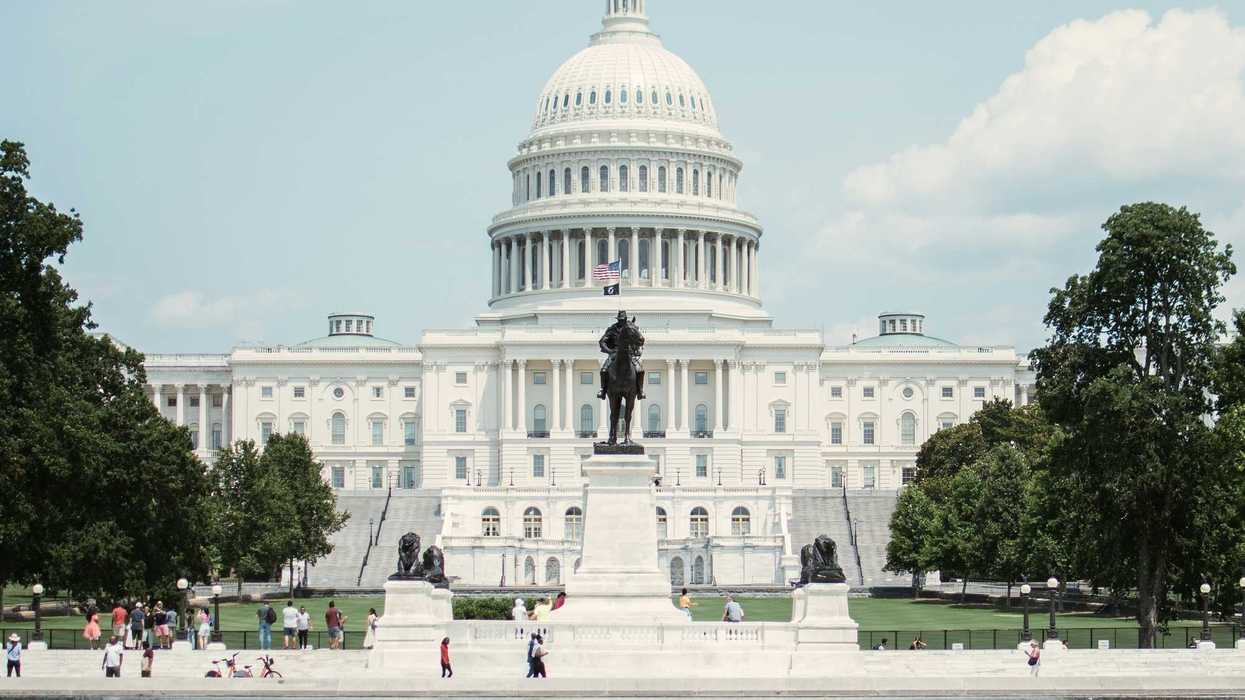
The exterior of Capitol Hill

Getty Images

Why hasn’t the Princeton Redistricting Project spoken out?

The 2026 congressional map is finally set after ten states adopted new congressional redistricting maps for the November 3 General Election. Observers note that the Princeton Gerrymandering Project (PGP) has not graded any state’s maps since it gave California’s Proposition 50 an “F” on October 30, 2025.

The PGP has officially paused grading its Redistricting Report Card because founder Dr. Sam Wang, who transitioned from the Gerrymandering Project to the Electoral Innovation Lab, has launched a campaign for Congress in New Jersey’s 12th District, requiring him to step back from his academic roles, including his leadership at PGP.

Keep ReadingShow less
Voting
Voting
krisanapong detraphiphat/Getty Images

Can Independents Run Through the Jungle?

Last week, the independent movement’s road to Washington hit a snag in, well, the other Washington. One promising campaign for the US House has ended, and another teeters, and all of it raises the question of whether the sort of jungle primaries they face can be conducive to success for nonparty candidates, and what they might take to successfully navigate moving forward.

In Washington’s 1st Congressional District, located just northeast of Seattle, independent James Etzkorn finished 3rd in his primary race, garnering just over seven percent of the vote. Suzan DelBene, the seven-term incumbent and DCCC Chair, came in first with 53%, while Republican Mary Silva - the lone R in the seven-candidate field - earned about 27%. Several Democrats running to the left of DelBene finished lower in the ranks, sharing the remainder of the vote.

Keep ReadingShow less
Latino Voters Stand to Lose the Most if Supreme Court Greenlights Trump’s Mail‑Voting Power Play

Latino voters

AI generated photo

Latino Voters Stand to Lose the Most if Supreme Court Greenlights Trump’s Mail‑Voting Power Play

Weeks before Americans cast their midterm ballots, President Donald Trump has asked the U.S. Supreme Court to reinstate an executive order that would sharply restrict mail‑in voting. Courts have already blocked the order, calling it an overreach that would inject federal control into state‑run election systems. But the administration is pressing ahead anyway, and the consequences — especially for Latino voters — could be profound.

Mail‑in voting is not a luxury. It is how working parents, seniors, rural voters, people with disabilities, and millions of naturalized citizens participate in democracy. It is how communities that have historically faced barriers to the ballot box finally gained reliable access. And it is how Latino voters — the fastest‑growing segment of the electorate — have expanded their political power. When a president asks the Supreme Court to take that access away, we should be clear about what is happening: this is not about election integrity. It is about power.

Keep ReadingShow less