

Skip to content
Search

Latest Stories

Follow Us:
Top Stories

West Virginia NAACP wants statewide data center moratorium

News

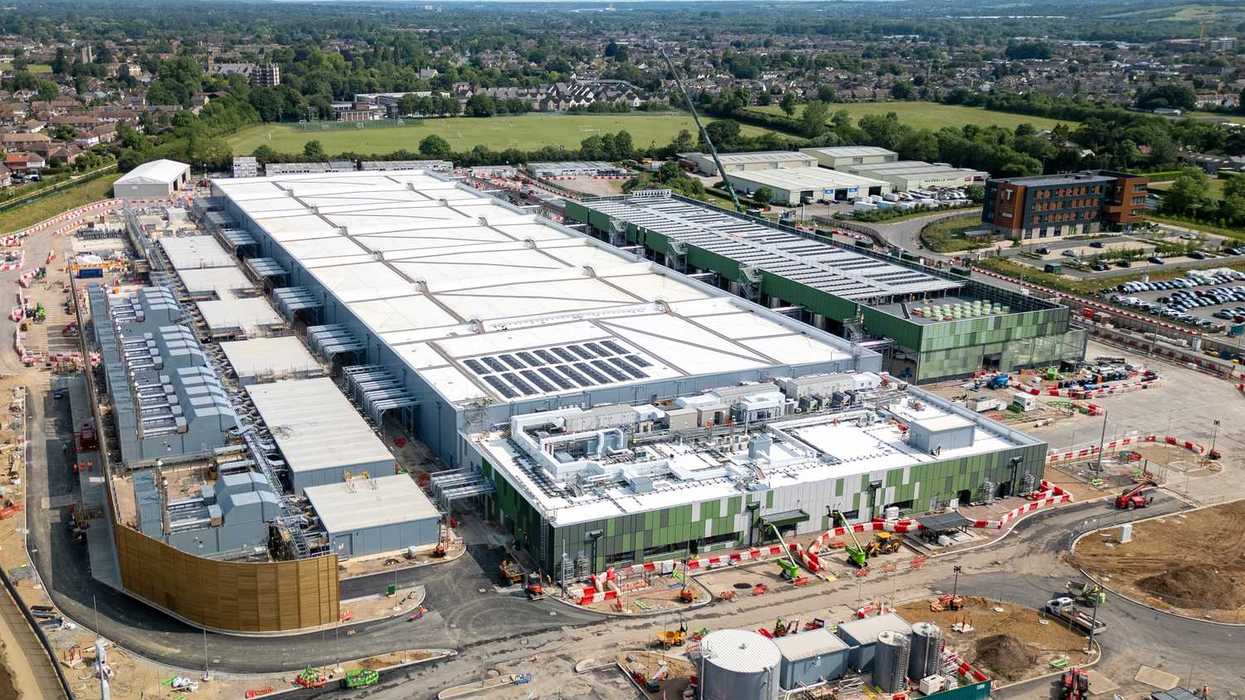
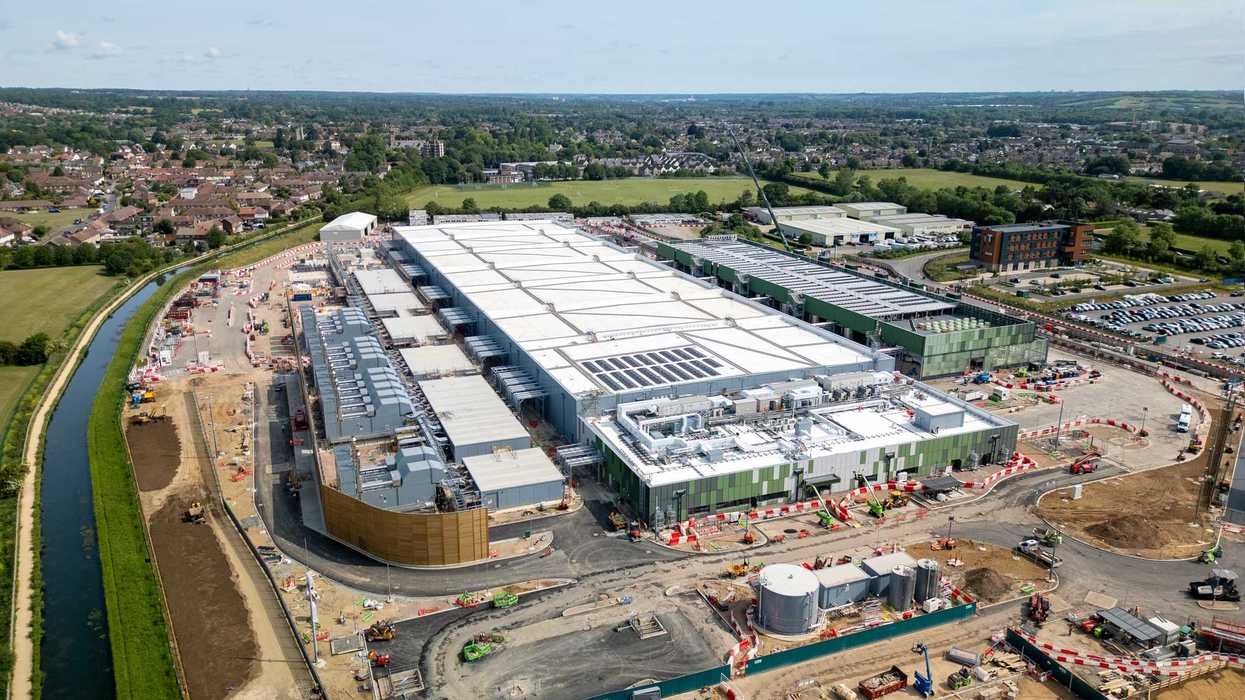
Aerial view of a large Google Data Center

Aerial view of a large Google Data Center

Getty images

Local chapters of the NAACP in West Virginia have joined together in unanimously opposing new construction of data centers, signing on to a resolution demanding a statewide moratorium.

Data center growth in the Mountain State is on the rise. It is estimated fewer than a dozen smaller centers are currently in operation and around 10 large-scale projects have been proposed.


Loretta Young, president of the West Virginia State Conference of the NAACP, said local chapters in the state and across the nation are worried about how the projects could affect the cost of utilities.

"The water and sewer bills in West Virginia are already among the highest in the country and electricity bills have been increasing in West Virginia due to higher demands on the power grid," Young pointed out.

State legislation now makes it easier for such facilities to be built. Last year, West Virginia Gov. Patrick Morrissey signed House Bill 2014, also known as the Power Generation and Consumption Act, into law. The legislation allows high-impact data centers to build and operate independent microgrids to generate their own power, designed specifically to attract massive technology investments.

Young believes data center construction is related to quality of life for people in underserved communities, adding West Virginia residents, especially those in McDowell County, have suffered from a history of resource extraction.

"If a local community doesn't want a data center monopolizing the water supply, driving up utility rates and reducing their quality of life through excessive noise and light pollution, that should be the end of the discussion," Young contended.

State officials recently developed what they called a plan for responsible data center development, which includes proposals to protect ratepayers and direct revenue to local schools and governments.

West Virginia NAACP wants statewide data center moratorium was first published by Public News Service and is republished with permission.

Nadia Ramlagan is a Louisville, Kentucky-based radio journalist, podcast producer, and editor.


Read More

Walling In, Walling Out
A person holding a smart phone with social media on the screen
Photo by Berke Citak on Unsplash

Walling In, Walling Out

In the 1980s, comedian Steven Wright had a bit about Smokey the Bear. When we were kids, we must’ve seen the old PSA a thousand times. “Only you can prevent forest fires.” As Wright recalls Smokey’s warning, he points at himself with a questioning look as if to say, “Me?”

That bit came to mind the other day when I saw the post of a friend from high school that started out by saying, “If you weren’t sure, this is censorship. You know, what you like to accuse President DJT of…”

Keep Reading Show less
Study Reveals Sharp Generational Divide in How Latino Identity Influences Daily Life

Study Reveals Sharp Generational Divide in How Latino Identity Influences Daily Life

Latino immigrants and U.S.-born Latinos differ sharply in how much their identity shapes their daily lives, according to recent findings from the Pew Research Center’s 2025 National Survey of Latinos. The survey shows that Latino immigrants are far more likely than U.S.-born Latinos to say their identity is central to who they are, and that it influences their experiences in the United States. Pew researchers Gabriel Piña, Mark Hugo Lopez, Sahana Mukherjee, Dalia Fahmy, and Alexandra Cahn report that the divide reflects differences in cultural connection, lived experience, and generational distance from immigrant roots.

Pew’s analysis finds that Latino immigrants are significantly more likely to say their origins are central to their identity, while U.S.-born Latinos — especially those in the third generation or higher — are less likely to feel that connection. The report notes that “U.S. Hispanics are divided on whether their identity helps or hurts them in America,” with some respondents describing their Latino identity as a source of pride and connection, and others saying it is tied to discrimination or barriers.

Keep Reading Show less
People standing outside between falling buildings.

Rescuers continue to search for victims and work at a collapsed building after a magnitude 7.2 earthquake struck Venezuela and other regions in the Caribbean, on June 28, 2026 in Caraballeda, La Guaira, Venezuela.

Jesus Vargas/Getty Images

As Venezuela Recovers from Deadly Earthquakes, South Florida Leads National Relief Efforts

MIAMI, FLA — After twin earthquakes shook parts of Northwestern and Central Venezuela last month, relief efforts have been quickly organized, particularly in South Florida, where the largest relief efforts are being organized.

Miami-Dade County is currently home to the largest Venezuelan diaspora in the country. With over 124,000 Venezuelan residents, the county accounts for about 17% of the national Venezuelan population.

Keep Reading Show less
Community leaders condemn anti-immigrant posters in Kenosha as investigation remains open

President Darryl Morin of Forward Latino speaks at a press conference about anti-immigration posters found around Kenosha, WI, on June 3, 2026.

Angeles Ponpa

Community leaders condemn anti-immigrant posters in Kenosha as investigation remains open

KENOSHA, Wis. —Community leaders, faith leaders and civil rights advocates gathered this month to condemn anti-immigrant posters that appeared across Kenosha, as police continue investigating who is responsible.

The posters, which depicted a green alien inside of a firearm target alongside the acronym “MAGA,” were first reported in early June after residents discovered them posted on telephone poles throughout the city, according to Racine County Eye. WISN 12 reported the Kenosha Police Department opened an investigation after receiving reports of the signs.

Keep Reading Show less