
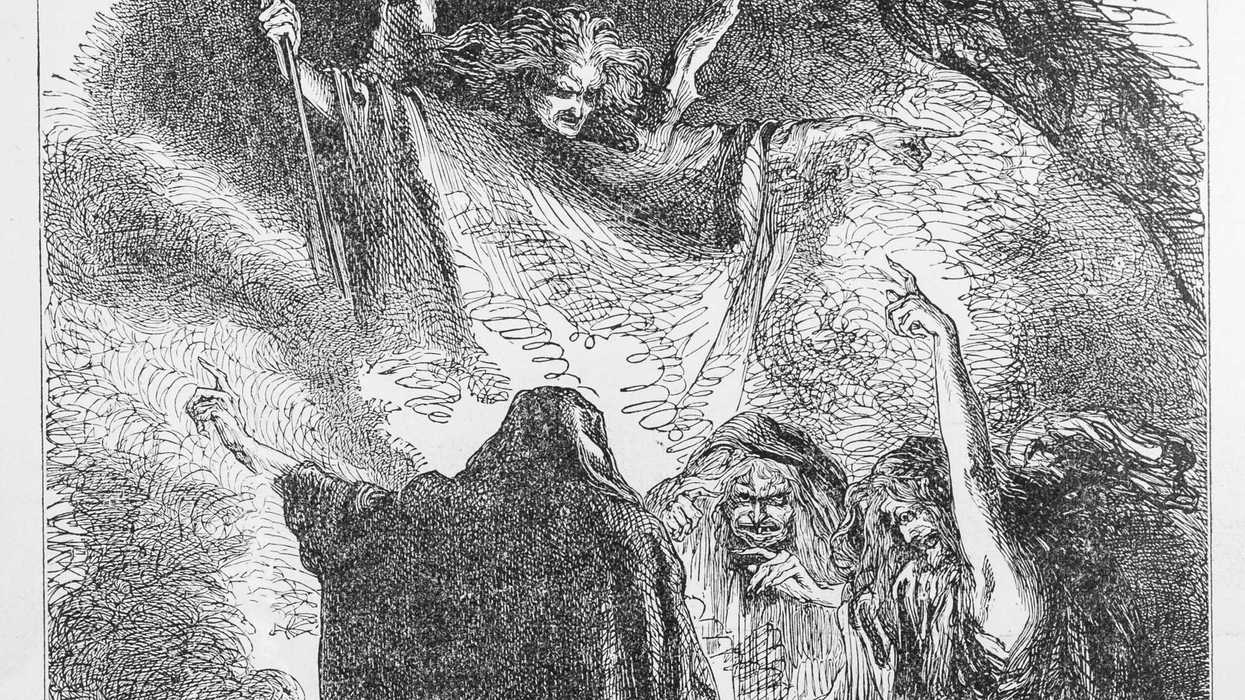
“Something wicked this way comes…” chant the three witches in Shakespeare’s Macbeth, hailing the former general, now the new king of Scotland.
And indeed, something wicked this way has come to us, in the threat that we are facing to our democracy.
Macbeth is one of William Shakespeare’s shortest and darkest plays, a tragedy written over 400 years ago. It may seem odd to compare our current times with a play written in 1606, yet, as the stories from our past reveal, human nature has not changed. Shakespeare was a master of ascertaining character and chronicling the forces that act upon it, which in turn determine the fate of individuals and of nations.
Considered one of Shakespeare’s many masterpieces, Macbeth is the story of the man who would be king. Sound familiar?
It is an exploration of the devastating consequences of unbridled political ambition. This arrogance is considered so frightening that even the actors in the play are afraid of its unleashing. It is bad luck to say the play’s name in the theatre, and instead, Macbeth is referred to as “The Scottish Play.”
At the beginning of the play, the three witches have divined General Macbeth’s future and have predicted that he is going to be king. Once Macbeth gets a glimpse of the power he will wield and a taste of his predicted future glory, he will not be satiated until he has claimed the crown. To do so, he must kill the legitimate king. With his wife’s cajoling and assistance, he does. More murders must then be committed to cover up his first crime and to keep his hold on power.
During his reign of tyranny, Macbeth becomes paranoid, oblivious to his blind ambition. He expresses himself in soliloquies, as he does not have a “platform” for his rants, like “Truth Social.”
The witches have helped create the “monster” Macbeth has become, but “ego” plus the quest for power is a fatal potion with or without witches. If there are witches in our modern story, the press played the part in our current president’s accession. Back in 2016, there were 17 major candidates for the Republican nomination for president, and most political pundits thought his candidacy was largely a joke. But, after each of the 12 debates (except one he skipped in Des Moines), the media were far more interested in a sensational sound bite than any context. Fitting their bill was Donald Trump, with his penchant for controversy, dependably orchestrating a press conference that looked more like the final of a UFC Championship than a commentary on national issues.
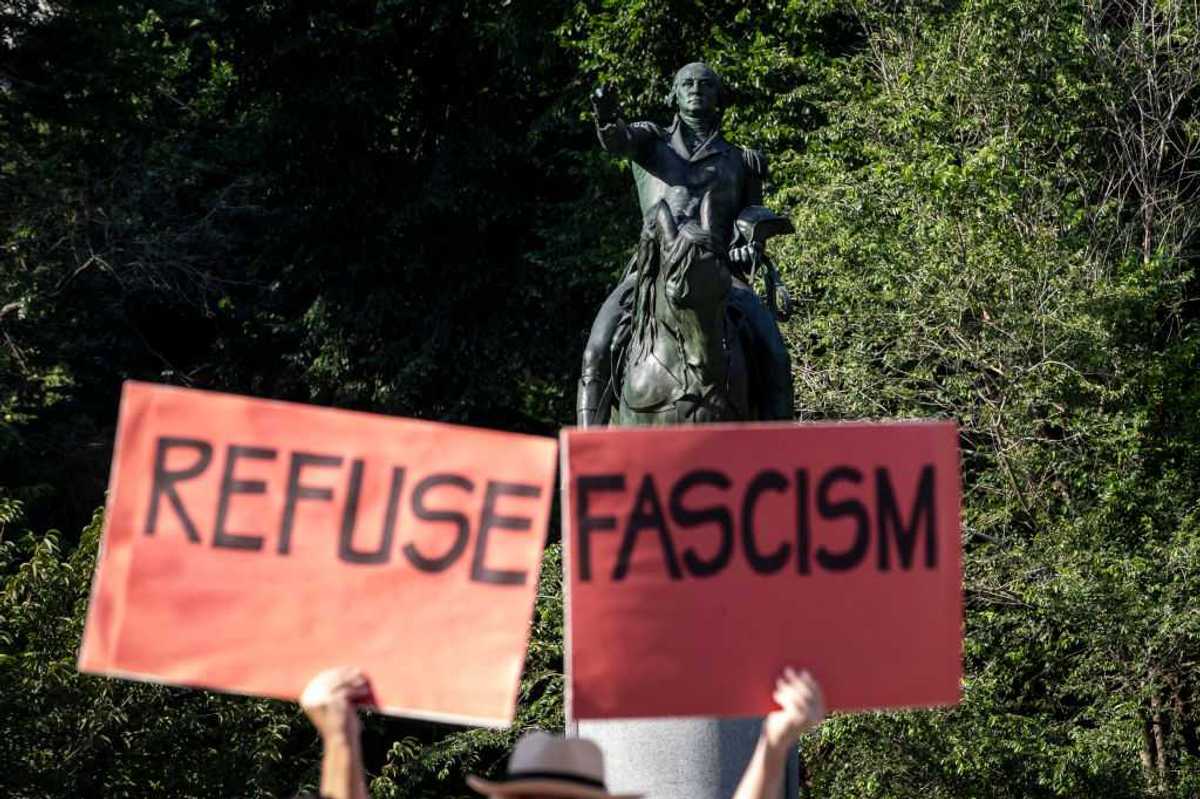
We once did have a general who did ascend to power, our first president and the “father of our country,” George Washington. He refused to be a king, refused even to serve more than two terms as president, a voluntary ceding of power, which was basically unheard of at the time. And pretty much unheard of now as well, as the current concept of “public service” might more accurately be called “political service.” In a quote attributed to Washington, he said, “I did not overthrow George III (the King of England during the Revolutionary War) to become George I (or the first king of our newly formed democracy)." Washington lived that quote, proving his belief in its essence by his actions. He was tremendously popular and a war hero—he could have been king.
The theme of ambition and the corrupting nature of power is played out daily in our national arena. Unchecked ambition leads to destruction.
Power corrupts; absolute power corrupts absolutely. (Lord Acton)
We in this country have a system of checks and balances to right us when we go too far left or too far right, or just too far. Will we demand that those we elected uphold these balances and do their jobs? Or, will we, like Lady Macbeth, after helping her husband murder the king, suffer the consequences and be forever washing the blood off our hands?
The story of Macbeth warns us that unchallenged authority degrades moral authority, very often leading to unethical behavior. And in its extreme, it leads to total corruption.
The “wicked coming this way” is this abuse of power.
So, here we are, 250 years after the inception of our nation, ready to celebrate its Semiquincentennial. And we have never, and do not—yet—have a king.
But we do have a “ruler.”
It is our Constitution.
Amy Lockard is an Iowa resident who regularly contributes to regional newspapers and periodicals. She is working on the second of a four-book fictional series based on Jane Austen’s “Pride and Prejudice."