

Back in 2012, President Barack Obama issued a statement at a press conference that would change his presidency and his legacy forever.
It was a year into what would become Syrian leader Bashar al-Assad’s brutal and protracted war on his own people, a war that would cost hundreds of thousands of lives, empower Iran and Russia, and destabilize much of the region.
Obama said then of U.S. intervention, “We have been very clear to the Assad regime, but also to the other players on the ground, that a red line for us is we start seeing a whole bunch of chemical weapons moving around or being utilized. That would change my calculus. That would change my equation.”
But, of course, it didn’t.
In August 2013, Assad ordered a devastating sarin gas attack in Ghouta which killed at least 1,400 people, many of them children. It was a defiant and indefensible move that clearly crossed our red line.
Obama at first announced there would be a targeted military strike in response, but ultimately decided to pivot to a diplomatic deal, reaching a much-derided agreement with Russia to dismantle Syria’s chemical weapons stockpile.
Syria hailed the move as a “historic American retreat,” and to this day, foreign policy experts argue that Obama’s capitulation weakened America’s credibility abroad. Even Obama has expressed his regrets over Syria, and what New York Times columnist Nick Kristof called “his worst mistake.”
When a president speaks, the world listens…and learns. And our current president is realizing that the hard way.
President Trump’s ill-conceived war in Iran has dragged on for more than 100 days now, and shows no signs of concluding. That’s not merely because Trump seems totally out-maneuvered by a regime that’s been planning a war of contrition with the U.S. for nearly 20 years, but because he is no longer believed.
For nearly a decade, Trump has been threatening Iran with an often bellicose and cartoonish mix of social media threats, warnings and ultimatums. Back in his first term, he threatened to target 52 Iranian cultural sites (and then backed down); he threatened Iranian “obliteration” via Twitter (and then backed down); and he posted in all caps, “CONSEQUENCES THE LIKES OF WHICH FEW THROUGHOUT HISTORY HAVE EVER SUFFERED BEFORE” (and then backed down).
And again in his second term, since starting the war, Trump’s issued more threats: “A civilization will die, never to be brought back again,” and “hell will reign down on [Iran].” He’s threatened the “complete demolition” of Iran’s power plants, oil wells, and bridges, and to bomb the country “back to the Stone Age.”
Trump’s threatened to stop and start the war countless times, and this week, Fox’s Trey Yingst shared that he’s once again threatening to “bomb the sh*t” out of Iran if they fail to reach a peace deal, a deal Trump has been promising since the start of the war three months ago was “close.” Thursday morning, Trump threatened to bomb Iran’s defense systems and “assume total control of its oil and gas markets.”
To be clear, Trump’s threats of genocide are totally inappropriate and may even enter war crimes territory, but his lack of follow through has also emboldened Iran. They’ve watched Trump issue threat after threat for years, while fumbling through both diplomatic and military channels to reach some kind of deal that would help the U.S. save face. Meanwhile, we are no closer to a nuke-free Iran, a liberated Iranian people, or regime change than we were before the war started.
On the global stage, not only isn’t he feared, he’s not even believed anymore. What this means for Iran is anyone’s guess. But if past is prologue, “Trump Always Chickens Out” — TACO — could end up defining his legacy more than anything else.
S.E. Cupp is the host of "S.E. Cupp Unfiltered" on CNN.

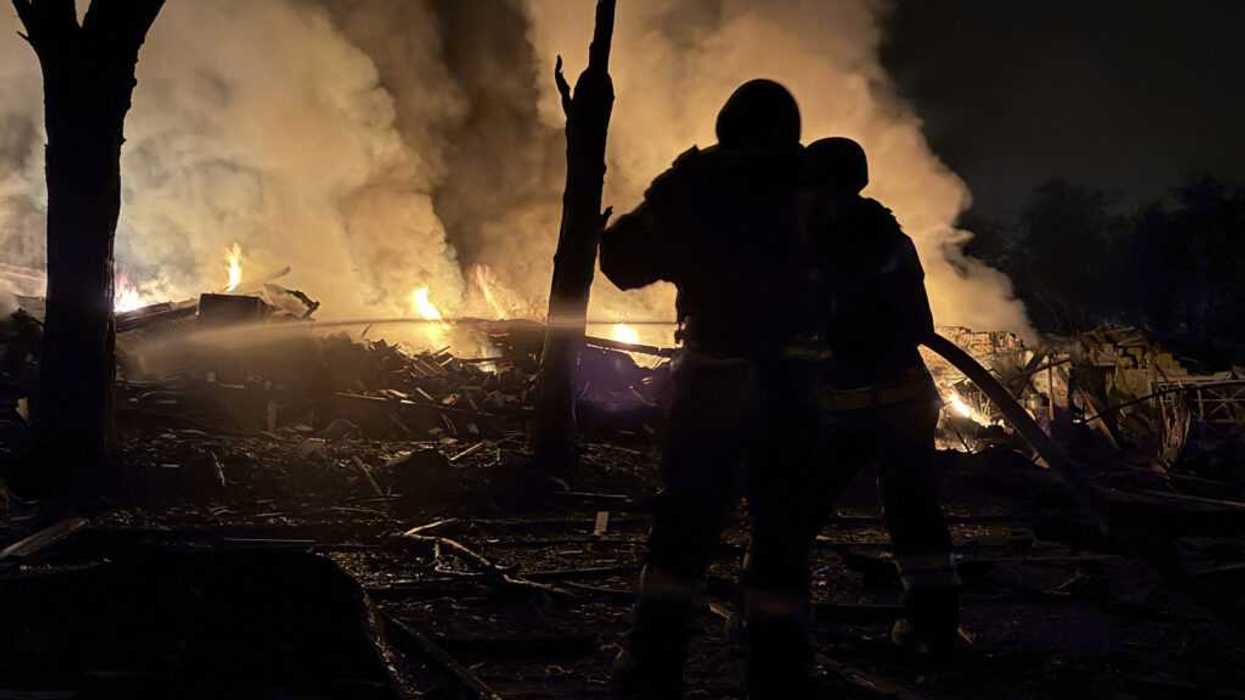







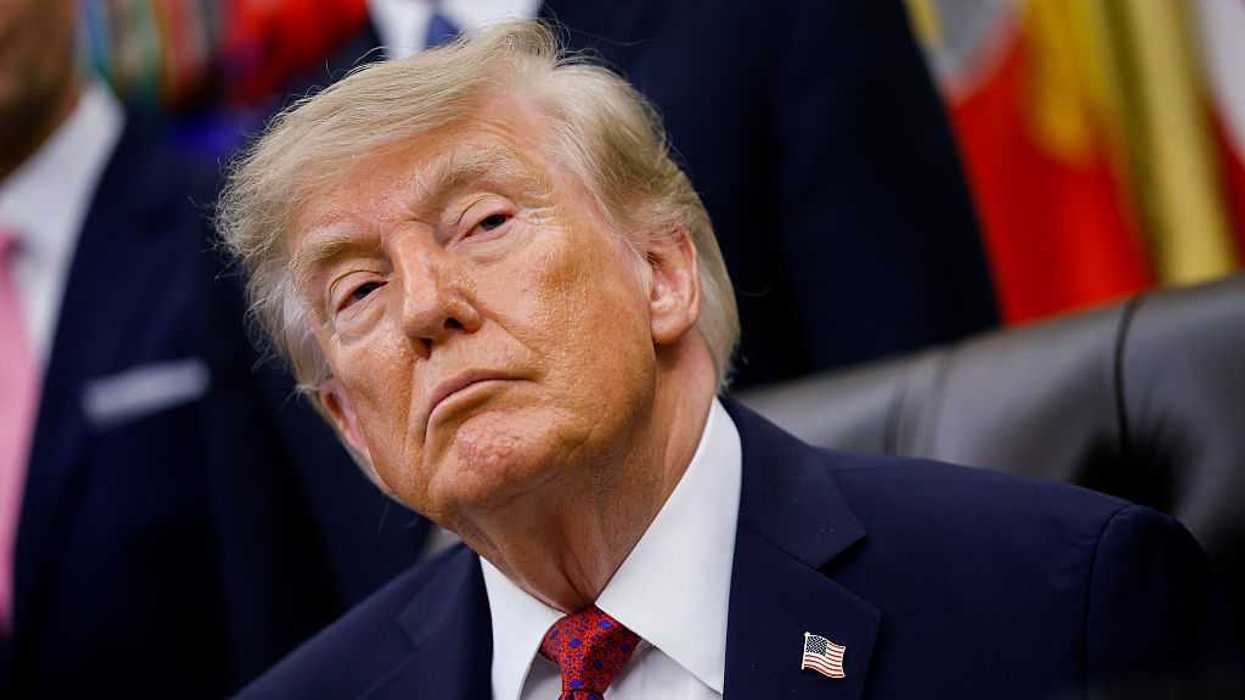
U.S. President Donald Trump speaks during a“ Steel Across America” event ahead of the 25th anniversary of the Sept. 11th attacks on the Ellipse near the White House on Sept. 8, 2026 in Washington, D.C. President Trump welcomed 9/ 11 first responders to the Tunnel to Towers Foundation’ s“ Steel Across America” event featuring a 16,900- pound, 21- foot steel beam recovered.
For Trump, even 9/11 is an opportunity
There was a reason organizers of the 9/11 ceremony in Manhattan told President Trump he could not speak at this year’s memorial service.
A good one, it turns out.
Because in a speech he gave on Tuesday in Washington, he did exactly what they were presumably worried about — he made it about himself.
According to The New York Times, Trump had wanted a speaking role at the service, but the National Sept. 11 Memorial and Museum, which oversees the site, said no, as they’ve maintained for the past decade-plus that the venue and event should be nonpartisan.
Trump has long used awful tragedies to either puff himself up, trash political opponents, or sell lies to the American people.
He blamed a deadly plane crash at Washington National Airport last year on diversity, equity and inclusion policies. He blamed Puerto Ricans for the devastation they endured after Hurricane Maria in 2017. He reportedly considered withholding disaster relief after the California wildfires based on the way affected regions voted. In an interview on Fox News meant to commemorate the 75th anniversary of D-Day in Normandy, he used the occasion to slam former House Speaker Nancy Pelosi…with graves of the dead behind him.
And now, as we approach the 25th anniversary of what many New Yorkers consider the darkest day in modern history, Trump has done it again.
He told a rambling, nonsensical story — one he’s told before — about going to Ground Zero just after terrorists flew two commercial jets into the twin towers. In the story, which no one has been able to verify, despite multiple attempts, he says firefighters had to carry him out of One Liberty Plaza, also known as the U.S. Steel Building, because they thought it was about to collapse.
As CNN fact checker Daniel Dale notes, there’s no evidence Trump went into this building, especially at a time when NYPD and NYFD had locked down the area. There’s no evidence that building was collapsing — in fact, it was deemed structurally sound and reopened within two months of the attacks. There’s no evidence he was carried out of it by firefighters.
But the lie isn’t even the worst part. Pretend it was all true — why would the leader of our country, and a New Yorker, decide to make that tragic day about himself?
Because that’s who Donald Trump is. He’s a malignant narcissist.
He’s also, incidentally, a terrible and ineffectual president, who’s made ill-fated decisions that he has to keep defending, and there’s nothing he won’t do to make himself look and feel better.
Within the first two minutes of his speech, he was cravenly using 9/11 to justify and promote his dumb war in Iran — two events separated by 25 years and 6,000 miles.
“And I will tell you, we’re right now fighting because we have a certain nation that wanted a nuclear weapon, they were very close to getting it, and now they have no chance at getting it. They will never have a nuclear weapon. Iran will not have a nuclear weapon. And they’ve been punished greatly. As you know, we’ve really taken it to them.”
As a New Yorker who lived through 9/11, still one of the worst days of my life, I’m utterly sickened by Trump’s crass, political, and self-promotional framing of that awful day.
And I’m relieved he won’t be given a platform to do it again on Friday’s anniversary in lower Manhattan.
Because for Trump, everything is his for the taking, and absolutely nothing is sacred.
S.E. Cupp is the host of "S.E. Cupp Unfiltered" on CNN.