


What does it mean when the presidential oath becomes a performance instead of a promise? It means the nation is left vulnerable to a leader whose actions suggest that personal power may matter more than the Constitution he swore to defend.
He raised his right hand and swore to “preserve, protect, and defend the Constitution.” Yet millions of Americans have watched a president whose conduct repeatedly raises doubts about his commitment to that oath. His attacks on constitutional limits, his hostility toward oversight, and his tendency to treat institutional constraints as obstacles to personal objectives have led many to conclude that constitutional duty is no longer his governing priority. When the oath becomes symbolic rather than binding, the consequences are carried by the public.
Across the country, Americans feel something deeper than political disagreement. Many describe instability, exhaustion, and concern about an administration that often appears more focused on loyalty, image, and personal power than on public service.
A megalomaniac leader is defined not by a single act, but by a pattern of behavior. Political psychology associates such traits with grandiosity, inflated self‑importance, a need for admiration, intolerance of criticism, and a desire for control. Critics argue that the president’s conduct reflects these traits: demanding loyalty, attacking opponents, rewarding flattery, and framing disagreement as betrayal.
His public image appears central to his leadership style. He has promoted portrayals of himself as a heroic, powerful, symbolic figure. Supporters may view these as political theater; critics see a leader preoccupied with personal greatness. A president grounded in constitutional duty does not require constant self‑mythologizing—the office itself carries authority.
That impulse extends into efforts to attach his name, image, and personal brand to public institutions and national symbols. The significance of monuments, commemorative projects, and branding efforts lies not in any single proposal, but in what they suggest about governing priorities. Symbolic projects become revealing when they overshadow substantive policy needs.
A president’s priorities are revealed not only by what he says but by what he chooses to pursue.
Americans have repeatedly expressed concern about housing affordability, healthcare costs, wages, infrastructure, and economic stability. Yet public attention is often drawn toward symbolic projects and political spectacles centered on the president himself. Critics argue that this contrast reflects a deeper imbalance: while citizens seek solutions to urgent problems, government attention is redirected toward personal recognition.
The issue is not simply vanity. The issue is governance.
Every hour devoted to personal glorification is an hour not devoted to public problems. Taxpayer resources are not unlimited, and government attention is not symbolic—it is consequential. Public funds exist to solve problems, maintain infrastructure, protect rights, and address national needs, not to elevate individual political figures.
While families struggle with housing costs, healthcare expenses, childcare, and economic uncertainty, critics argue that governance often shifts toward symbolic displays, political grievance, and personal branding. Whether through naming efforts, public spectacles, or highly visible self‑referential projects, many Americans see a government increasingly oriented around one individual rather than the population it serves.
This is where concerns about megalomania become relevant. The issue is not a clinical label, but a governing pattern: when self‑focus becomes dominant, priorities shift. Public attention, political capital, and taxpayer resources risk being diverted toward sustaining a leader’s image rather than addressing public needs.
The pattern extends beyond symbolism. The president has frequently attacked judges who rule against him, characterized oversight as persecution, and portrayed institutional constraints as obstacles to his agenda. Supporters argue he is confronting entrenched interests, while critics see a deeper unwillingness to accept limits on presidential authority.
Independent courts, congressional oversight, inspectors general, and accountability mechanisms exist to prevent the concentration of power. When a president repeatedly challenges those safeguards, concerns about executive overreach become clear.
The same concerns arise when examining promises and performance. Presidents of all parties fall short of campaign promises, but critics argue that this presidency is marked by a recurring pattern of sweeping claims, shifting explanations, and refusal to accept responsibility. When narrative becomes more important than accountability, public trust erodes.
Over time, this produces consequences that extend beyond politics. Trust in institutions weakens, polarization intensifies, public servants operate under increased pressure, and citizens become less confident that government is acting in their interest. These are not abstract outcomes—they shape how people experience government in daily life, from economic stability to institutional reliability.
The consequences accumulate into something more serious: erosion of shared confidence in democratic systems themselves.
This is where the risk becomes structural. Political psychologists and constitutional scholars warn that when leadership centers on personal ambition, erodes accountability, and treats safeguards as illegitimate, it creates the conditions for democratic backsliding. Tyranny does not appear in a single moment; it grows when limits on power are steadily weakened or dismissed.
A presidency that concentrates attention on loyalty, undermines oversight, and elevates personal image above institutional restraint does not immediately become authoritarian. But it creates an opening for authoritarian drift: reduced accountability, weakened institutional independence, and normalization of personal power over constitutional limits.
When duty is abandoned, the nation absorbs the abuse—through weakened institutions, distorted priorities, and a presidency centered on personal power rather than public service.
The Framers anticipated this danger. They designed a system of separated powers precisely because they understood that no leader could be trusted with unchecked authority. The Constitution was not written for ideal leaders but for flawed ones—and for moments when ambition overwhelms restraint.
The events surrounding January 6 intensified concerns about how fragile democratic norms can become under strain. Millions watched violence unfold at the Capitol as Congress carried out its constitutional duty. What alarmed many Americans was not only the attack itself but what they viewed as an inadequate response from a president whose foremost responsibility was to defend constitutional order. Critics argue that the episode revealed how quickly institutional stability can be tested when loyalty to a leader competes with loyalty to the Constitution.
Concerns about presidential priorities also extend to foreign policy. Critics argue that several major decisions have contributed to instability, uncertainty, and economic disruption. When projecting strength becomes the goal rather than a strategy, the result is volatility rather than security.
Restoring duty requires every branch of government to fulfill its constitutional role. Congress must exercise oversight, use its power of appropriations, pass legislation, and, when necessary, pursue impeachment. Courts must uphold the law, protect due process, and enforce constitutional limits. Public institutions must remain accountable to the Constitution rather than to any individual officeholder.
Citizens have responsibilities. They must remain informed, reject normalization of abuses of power, participate in civic life, demand accountability, and vote. The Constitution provides remedies, but those remedies depend on a public willing to use them.
A republic survives only when its citizens insist that leaders serve the country—not themselves.
An abusive president who seeks to place his name, image, and personal brand at the center of public life is not simply building a legacy. Critics argue he is attempting to make himself inseparable from the nation itself. The taxpayers who fund government deserve more than spectacle, branding campaigns, political retaliation, and displays of personal grandeur. They deserve constitutional leadership focused on their needs.
The Framers understood the danger of leaders who confuse themselves with the country they govern. They wrote the Constitution not to flatter presidents, but to restrain them—especially those who place personal ambition above public duty. The Republic survives only when the Constitution, not the president, defines the limits of power.
Carolyn Goode is a retired educational leader and national advocate for ethical leadership and civic renewal. She writes about democracy, constitutional duty, and the role of citizens in strengthening public life.

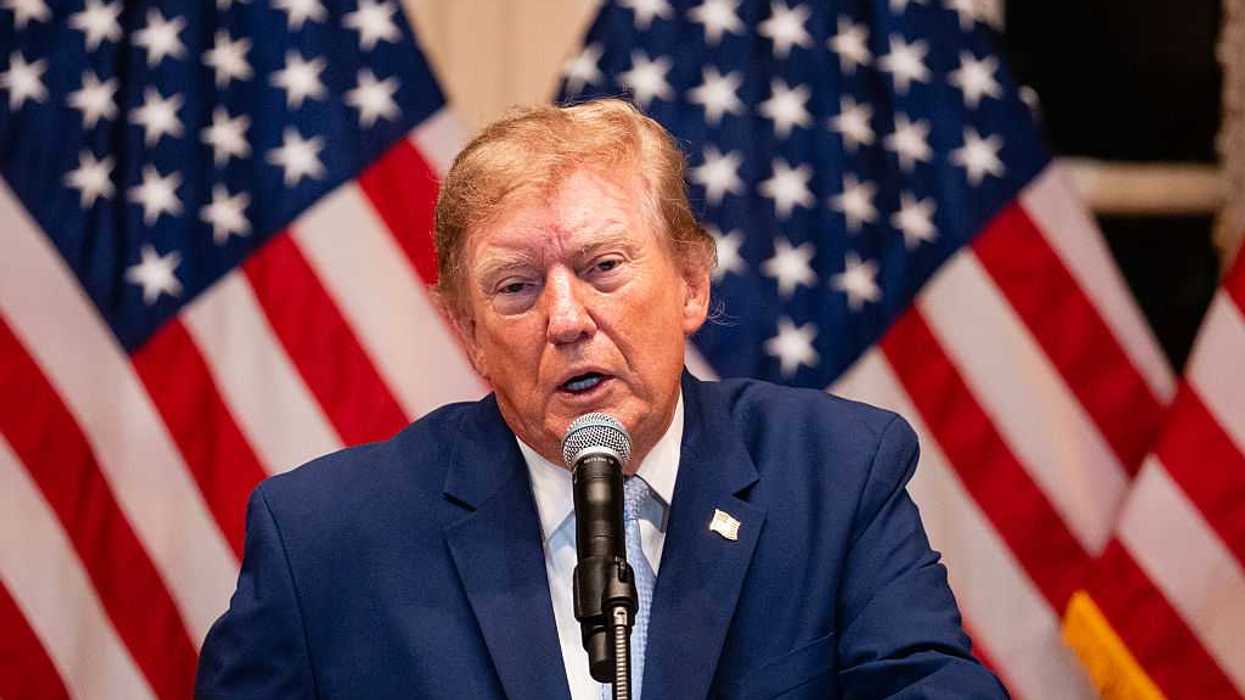






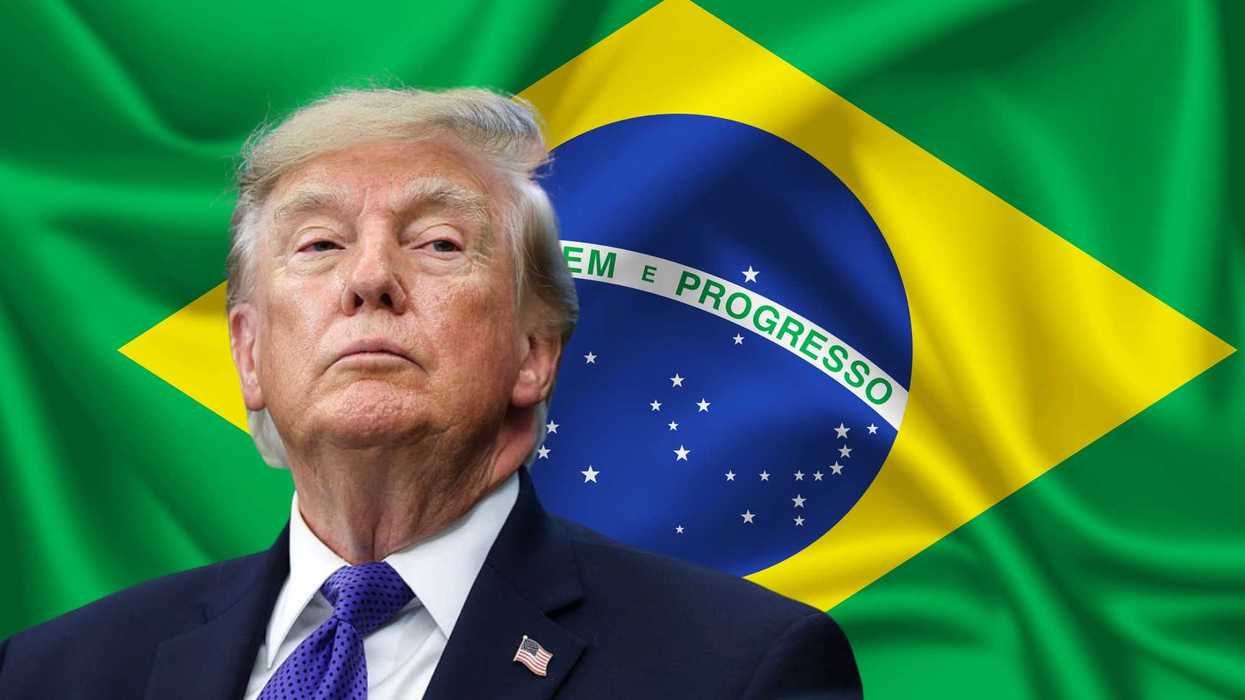
U.S. President Donald Trump speaks during a campaign rally at Pinnacle Bank Expo Center on the Nebraska State Fairgrounds on October 05, 2026 in Grand Island, Nebraska.
The President Invited Iran to Bomb My Home
I was driving home to San Diego from Los Angeles on Monday night when I heard that the President of the United States had offered both cities up to Iran as bomb targets. At a rally in Nebraska, defending his war, Trump told the crowd, “let [Iran] take out Los Angeles, let ‘em take out San Diego.” It was, he said, “a very small price to pay.”
I was coming from a Bernie Sanders rally for Proposition 40, the one-time tax on California billionaires that would send 90% of its revenue to healthcare. We desperately need it to pass because, in order to give tax breaks to billionaires, Trump signed a law that will strip health coverage from 10 million Americans; this tax will make sure we can still cover Californians. Call me crazy, but I think taxing billionaires one time so we can make sure kids in California get to see a doctor is a very small price to pay. I also think that even if Trump were joking, it is indefensible to make jokes about the potential destruction of so many lives. Human life is never a small price to pay. Human life is priceless.
Plus, the reality is: here in San Diego, we’re already paying the price for Trump’s actions, and it’s not small at all. He has gutted FEMA, tried to kill climate resiliency programs, and destroyed public health standards, while his signature law is set to cut off health insurance and food support for hundreds of thousands of San Diegans. Like plenty of American cities, San Diego is already busy finding local solutions to respond to the problems this president has recklessly created.
Not to mention, at least 19 American service members have been killed in this war already. Human rights monitors have documented more than 3,600 dead in Iran by April alone. Here at home, gas is sitting just pennies below its all-time record. Taxpayers have already spent more than $45 billion on the war, while Trump’s oil and gas portfolio has grown by roughly $15.5 million this year alone. Of course anything is a “small price” to someone paying free.99 for this war, and profiting from it. Meanwhile, We the People are paying twice: first for the war, and then for the consequences of that war. But now he wants San Diego to pay a third time, flippantly offering us up to Iran.
It is worth noticing which cities he thought to name. Were San Diego and Los Angeles strategically chosen to signify something to his audience, or were they simply the first cities that came to mind as expendable places? Either way, the effect is to normalize—-and to gauge a crowd’s reaction to–the idea of massive violence in major California cities, suitable targets because of their perceived liberal lean. So what if Iran needs to bomb a little bit of America before the war can be over? Who cares, says Trump, if they target Los Angeles and San Diego?
By the way, why didn’t he offer up San Francisco, the free-love hippie-town MAGA loves to hate (and also my birthplace)? Could it be because that’s where the tech titans live? The same ones who joined Trump for Xi Jinping’s state dinner, a guest list worth a combined $2.4 trillion?
San Diego may have fewer billionaires, but it is home to more than 115,000 active-duty service members and 230,000 veterans. One in six active-duty sailors–in the entire Navy–is stationed here. So is one in four Marines. You cannot throw a rock in this county without hitting a military family: brats and spouses and veterans are among us. I got out of the Navy last year after ten years, and eight of those were here in San Diego. When Trump says “let ‘em take out San Diego,” he’s talking about the backbone of the United States military. He’s also talking about the people fighting his war.
San Diego has not been watching this war from the sidelines. Today, the USS Abraham Lincoln returns to North Island after an almost yearlong deployment to the Middle East that featured food shortages, broken toilets, and mold in the showers after 286 days at sea without a single port call. Eight sailors in the Lincoln’s strike group attempted suicide, but in August, when a reporter asked whether the deployment had gone on too long, Trump said “not nearly long enough.” Now he has told a crowd in Nebraska that we should let Iran take out the city those sailors call home. These are sociopathic sentiments.
Last week at Quantico, Pete Hegseth closed his address to the force by telling them, “President Trump has your back and so do I.” To the contrary, President Trump has put one of the biggest military towns in the country forward as a target for our adversaries. With friends like these, the “domestic” in “against all enemies, foreign and domestic” starts to sound a lot less hypothetical.
San Diego is home to Naval Air Station North Island, Naval Base San Diego, Naval Amphibious Base Coronado, the Point Loma submarine base, Camp Pendleton, and Miramar (and I have been permanently stationed at or trained at all of them). If Iran bombed San Diego and Los Angeles, aside from the devastating loss of life, it would cripple an immense share of our national security readiness.
And for what, exactly? Trump says the war is “essentially almost over with.” This is the same man who claimed in June 2025 that Iran’s nuclear program had been “obliterated,” then launched a war over it anyway on February 28. More than seven months later, he wants us to believe two things at once: that we’ve basically won, and that we might need to sacrifice an American city or two to finish winning. If the war is almost over, why does anybody need to take out San Diego?
I wonder if Trump’s endorsed candidate for California’s 48th District here in San Diego County will respond to these remarks. He recently said “no pain, no gain,” when referring to the gas prices San Diegans are paying. Jim Desmond, would you apply that same mindset if we were bombed? Or do you have the moral courage to stand up for the people you’re running to represent?
Last November, six Democratic members of Congress, all veterans, including Senator Mark Kelly, recorded a video reminding troops of their duty to disobey unlawful orders, restating the law that says so. Trump called it “SEDITIOUS BEHAVIOR, punishable by DEATH,” and then his Justice Department went looking for an indictment, which a grand jury refused. The president treated reading the law out loud to the troops as a capital offense, but then he himself invited a foreign enemy to destroy two American cities, possibly as a punchline. Is anyone calling the latter sedition? Who is demanding accountability?
Calling our lives a small price to pay affirms a moral bankruptcy, as well as an obvious dereliction of duty to the office he holds. While we can’t impeach him or invoke the 25th Amendment ourselves, we must stop being so quiet about what we’re paying already. We can make our voices heard by calling our representatives, writing op-eds, knocking doors, phone banking, and voting in defiance of the man who threatens the safety of our city. Ballots are already arriving in mailboxes. Vote, and vote yes on 40 (and no on 41 and 42).
Trump has been harming our cities for a while, but now he is inviting our military adversaries to join him in the harm. If we have any self-respect as Americans, we must not tolerate our leaders disregarding the dignity of lives in this way. We must fight for our home.
Julie Roland was a Naval Officer for ten years, deploying to both the South China Sea and the Persian Gulf as a helicopter pilot before separating in June 2025 as a Lieutenant Commander. She has a law degree from the University of San Diego, a Master of Laws from Columbia University, and is a member of the Truman National Security Project.