
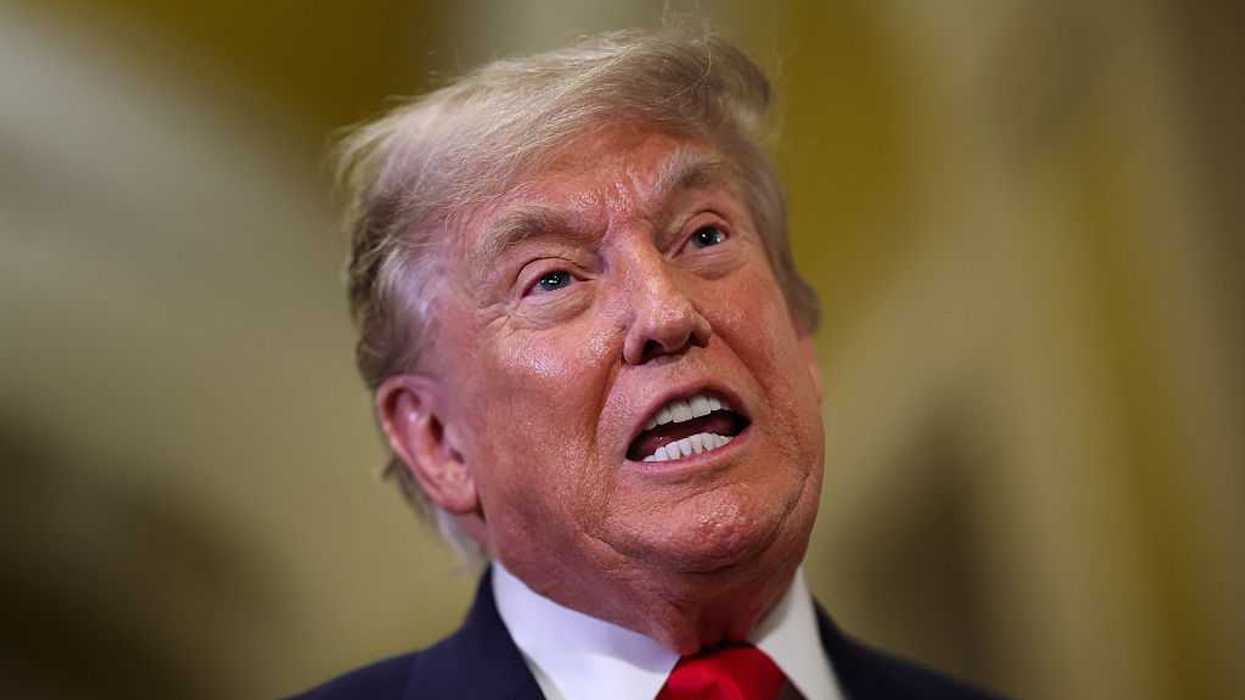

Donald Trump’s racist, misogynist, xenophobic view of the world has undermined the USA’s global standing. He has surrounded himself with cabinet officials who believe that competence is determined not by expertise, training, education and experience but with factors perceived to be far more important like, whether they are white, male and retain a feudal sense of subservience, other criteria he values include girth, facial hair and his very subjective perception of attractiveness.
Trump’s attack on wokeness and diversity, equity and inclusion mean that his administration is left without a diversity of knowledge , cultural understanding and empathy which means his negotiators for the Iran War cannot appreciate the history of the region, the cultural nuances, the languages, the political tensions, the emotional impact of their actions or the thinking of the current leadership. Being woke means understanding a variety of perspectives and having empathy for others, something this administration sorely lacks. They represent the total opposite of Kissinger, Brzezinski, Albright and Rice who were lifelong experts on their diplomatic counterparts.
In February Donald Trump accused the leaders of the Iranian regime of being a “vicious group of very hard terrible people” . In June he showered compliments on the Iranian leadership. In addition, his about face, and the President’s assurances that the Iranian leaders can be trusted, come after he has killed several family members of the current Supreme Leader.
Had the President not fired the Middle East experts in the State Department, he would have known that Iran is, like much of Central Asia, comprised of people who have survived a variety of empires ranging through several millennia, including but not limited to the Achaemenid/Persian, Ottoman & Mongolian empires. While Trump diverts the 250th anniversary of U.S. Independence from England, to a personal partisan event, MAGA pretends that 250 years is a long time, while they seeks to eradicate the 40,000 years of Native American history. In other words, suggesting that the President thinks in terms of 250-year increments is gratuitous, it is more appropriate to suggest that he thinks, as far ahead as the next campaign season and more likely he barely thinks beyond tomorrow’s news cycle.
I was once working with a lawyer from a neighboring country to Iran and she suggested that “you American lawyers want to get from A to B and you want to get there as fast as possible. I am Byzantine,” she said…”I do not think that way.” The point is, that Iranian leadership does not think the same way the president does. In my opinion they are not interested in money to the same extent that the president is. They do not need to respond to a Congress or an electorate. They have the luxury to think in terms of 2500 years. Their memories are long and while Donald Trump has most likely not given a second thought to the death of the Supreme Leader’s family, the Supreme Leader is unlikely to ever forget or for that matter forgive, nor are the Iranian people likely to forget the massacre of children at the Shajareh Tayyebeh Elementary School.
It is within this context that Donald Trump an inveterate liar suggests that the Iranian leadership is now trustworthy and that he has achieved significant progress with a gentlemen’s agreement. Iranians are less likely to bestow such trust on the USA or its leadership. Trump’s so-called MOU is woefully unspecific. Any diplomat will tell you that strategic ambiguity may be essential to closing a multilateral agreement, but where there is ambiguity, the diplomat must presume that the gaps will be aggressively interpreted against their interests.
The JCPOA was a major achievement because it was not bi-lateral it was multilateral. It included China, France, Germany, Russia, the United Kingdom, the United States and was endorsed by the UN Security Council. The inclusion of Russia, and China meant that two of Iran’s leading potential allies were bound to the agreement. Such action would forbid Iran’s allies from assisting Iran to undermine or violate the agreement in any material way. The endorsement of France, Germany the United Kingdom and the UN provided gravitas to the agreement which meant that failure to adhere would bring condemnation on the world stage.
The JCPOA was a 159-page document which outlined explicit terms addressing the limits on Iran’s use of Uranium, its enrichment, stockpiling, research and development, reactor facilities with extensive monitoring and verification by international bodies for up to 25 years. It also outlined a considered approach to sanctions by the UN, the EU and the US.
The current MOU addresses none of these issues. The Israeli’s (who to my understanding are not at the table) have rejected the proposal and regardless of what one thinks of President Netanyahu, it is hard to imagine Israel waiving its right to defend itself. Donald Trump has alienated NATO, and wholly unnecessarily, leaders of the UK , France, Germany & Italy.
In addition to exposing US Allies of Oman, Saudi Arabia, UAE and Qatar, the failure of the administration to clearly secure a victory against Iran has exposed weaknesses in the military capabilities of the USA. Since World War II the goal of the US Military has been to fight under a two-theatre war model. In essence it was intended to be capable of engaging in two major conflicts, essentially one in Europe or the Middle East and one in Asia at the same time.
The Trump administration has demonstrated that there is a serious argument that the US is neither competent nor capable of mounting such efforts. The feeble military action in Iran has provided credible evidence that with the failure to cooperate with NATO and the allocation of resources to the Middle East, that the US’s ability to defend against China for the purposes of fulfilling its historical commitments to Taiwan or against a Putin expansion into Europe have been seriously compromised.
The president has complained that the US has lost respect on a global stage, but he alone has overseen the country’s greatest deconstruction of military, diplomatic and intelligence capabilities since prior to WWI and the utter destruction of the respect and reputation of the USA amongst allies and enemies alike.
Walter H. White, Jr is a director of Lawyers Defending American Democracy and served as a director & chair of the Central Asian American Enterprise Fund during the Clinton & Bush administrations.








The President Invited Iran to Bomb My Home