
Skip to content
Search

Latest Stories

Follow Us:
Top Stories

Welcome to Trump’s lame duck presidency

Opinion

Welcome to Trump’s lame duck presidency

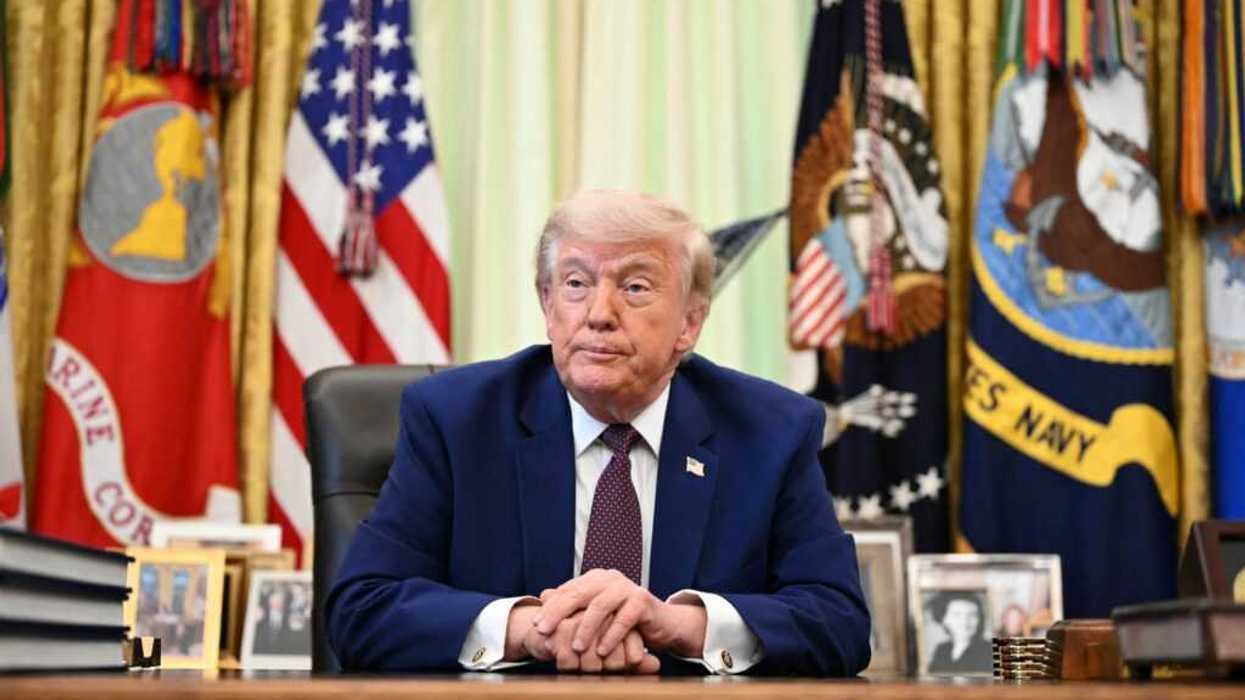
President Donald Trump speaks to the press in the Oval Office of the White House in Washington, D.C., on June 3, 2026.

(Mandel NGAN/AFP via Getty Images/TCA)

It's been a while since we saw a lame duck presidency — long enough in politics to maybe forget what one looks like.

In October 2014, President Barack Obama hit his lowest approval rating yet at 40%. The midterm elections were an absolute bloodbath for Democrats — Republicans expanded their majority in the House by 13 seats and took control of the Senate with a gain of nine seats.


The predictions for the second half of Obama’s second term were fatalistic. As early as 2013, analysts were calling his presidency DOA, having seemingly spent all of his political capital on getting the Affordable Care Act passed and implemented, which didn’t go smoothly. He suffered early second-term losses on the Bush-era tax cuts, gun control efforts, and immigration reform.

There was just nothing left in the tank. Or so it seemed.

But Obama defied those predictions. In 2015, he got a huge win when the Supreme Court — in a surprise from conservative Chief Justice John Roberts — ruled in favor of keeping Obamacare intact, preserving his signature legislation.

Then, the ambitious Trans Pacific Partnership deal, the world’s biggest ever trade agreement accounting for two-fifths of trade, got fast-tracked by a highly divided Congress.

He got another win in Cuba, where he secured an agreement to resume diplomatic relations after 54 years of hostilities. And he signed an Iran nuclear deal designed to prevent Iran from developing nukes in exchange for sanction relief.

Whatever you think of Obamacare, the TPP, and the Cuba and Iran deals, it’s hard to argue Obama’s final months in office were very “lame.” In as little as a year, he’d redefined the meaning of the term.

We know how much Obama tends to get in Donald Trump’s head. As the legend goes, after all, it was Obama’s mockery of Trump at the 2011 White House Correspondents’ Dinner that provoked him to run for president. Ever since, he’s been fixated on the ex chief, even blasting his Chicago presidential library with petty jabs in recent months.

Well, Trump only wishes he were having the final few years that Obama did. Instead, it seems, Trump’s lame-duck presidency has arrived early.

Trump’s approval has plummeted since his inauguration, dropping from 52% to 38%, while his disapproval has shot up 15 points.

Thanks in large part to his dumb tariffs and dumb war in Iran, the midterms are looking so bad for Republicans, the party’s resorted to mid-census redistricting schemes that may or may not pay off. Democrats could not only take back the House but win the Senate, with candidates in red states like Texas, Iowa and Ohio in real contention.

Then there are his recent losses. A lot of them.

The $1.8 billion slush fund to pay out MAGA loyalists, including Jan. 6 insurrectionists, was met with such disdain from his own party, he had to dump it.

Four Republicans in the House just voted with Democrats to pass a war powers resolution directing Trump to withdraw military forces from Iran.

Republicans in both chambers have come out to condemn Trump’s utterly absurd pick for director of national intelligence, Bill Pulte.

The fate of his billion-dollar ballroom remains up in the air, as do the “Trump battleships” he’s proposed. A judge ruled he cannot put his name on the Kennedy Center, and his Freedom 250 concert series collapsed as musical acts dropped out one by one, leaving Vanilla Ice to headline, if it happens at all.

These are some humiliating losses. And the crazy part is, had Trump pursued “normal” policy wins for Americans instead of the insane, vulgar, and self-interested nonsense he has, he’d surely be in a different position.

But he didn’t. Welcome to your lame duck, era, Mr. President.

S.E. Cupp is the host of "S.E. Cupp Unfiltered" on CNN.

Read More

NATO Has an Article 5. It Doesn't Have an Iran Policy

(L-R) Recep Tayyip Erdoğan, President of Turkey, Mark Rutte, Secretary General of NATO, Donald Trump, President of United States and Keir Starmer, Prime Minister of United Kingdom during a “family photo” at Beştepe Presidential Compound during a welcome ceremony for the NATO Summit on July 08, 2026 in Ankara, Turkey.

(Photo by Win McNamee/Getty Images)

NATO Has an Article 5. It Doesn't Have an Iran Policy

It seems just yesterday I was writing up a piece regarding the G7 summit taking place in southern France. In truth, it was a few weeks ago, but now that the NATO summit has wrapped up, I can’t be the only one with deja vu; world leaders meeting amid the continuing US-led war with Iran. I think I’ve seen this film before.

Welcome to Faultline. Last week, heads of NATO member states convened in Turkey for their yearly summit. Many issues were on the table for the summit, and the one expected to take center stage was the ongoing Russian invasion of Ukraine, considering that the Iran war was supposed to be done, as had been announced weeks ago. However, less than 30 days into the alleged 60-day ceasefire, President Trump has announced that negotiations with Iran are over, and not because they reached an agreement.

Keep ReadingShow less
2026 Democracy Awards Honor Excellence Across Congressional Offices
white concrete building during daytime

2026 Democracy Awards Honor Excellence Across Congressional Offices

The Congressional Management Foundation's Democracy Awards recognize congressional offices that demonstrate excellence in public service. While the headlines often focus on conflict, this year's winners remind us that strong leadership, thoughtful management, and a commitment to continuous improvement strengthen both Congress and the constituents it serves

Constituent service remains one of Congress's core functions, and this year's winners of the Best of Constituent Service Award demonstrate that excellence requires exceptional organizations and internal infrastructure. For example, Senator Adam Schiff's office (D-CA) streamlined processes by creating online forms for casework authorization and privacy releases. This system allows constituents to submit requests in minutes, streamlining a process that traditionally required extensive time and resources, resulting in more efficient casework intake

Keep ReadingShow less
Graham’s legacy & his failure over Trump

U.S. Senator Lindsey Graham, Republican of South Carolina, listens to President Donald Trump unveiling the Kennedy Center Honors nominees on Aug. 13, 2025, at the Kennedy Center in Washington, D.C.

(Mandel Ngan/AFP via Getty Images/TCA)

Graham’s legacy & his failure over Trump

I met the late Sen. Lindsey Graham about 20 years ago, when I was coming up in conservative politics.

I had been part of the neoconservative wing that believed in the “benevolent hegemon” version of America, and the idea that “history can be pushed along with the right application of power and will,” as Francis Fukuyama once described it.

Keep ReadingShow less
Trump’s Defense of ICE Traffic Stops Shows a President Willing to Risk Lives for Politics

U.S. President Donald Trump in the Oval Office of the White House on July 14, 2026 in Washington, DC.

(Photo by Andrew Harnik/Getty Images)

Trump’s Defense of ICE Traffic Stops Shows a President Willing to Risk Lives for Politics

President Donald Trump blasted ICE’s decision to suspend most vehicle stops after agents fatally shot two men just six days apart in Texas and Maine, declaring on his social media site: “We CANNOT give up one of ICE’s most important and effective Crime Fighting tools, THE TRAFFIC STOP!” His response made the stakes unmistakably clear. Instead of acknowledging the loss of life or the urgent need for accountability, Trump rushed to defend the very tactic that produced these deadly encounters. Once again, he signaled that the wellbeing of people — immigrants or citizens — matters far less to him than protecting his political agenda.

Trump’s posture toward ICE has always been rooted in escalation. He has framed undocumented immigrants as threats, encouraged aggressive enforcement, and rewarded secrecy over transparency. The consequences of that approach are now visible in a series of fatal encounters that reveal an agency operating without meaningful oversight.

Keep ReadingShow less