
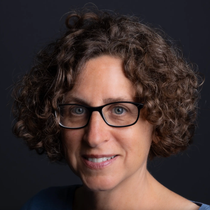
Erin McCanlies was listening to the radio one morning in April when she heard Robert F. Kennedy Jr. promising to find the cause of autism by September. The secretary of Health and Human Services said he believed an environmental toxin was responsible for the dramatic increase in the condition and vowed to gather “the most credible scientists from all over the world” to solve the mystery.
Nothing like that has ever been done before, he told an interviewer.
McCanlies was stunned. The work had been done.
“That’s exactly what I’ve been doing!” she said to her husband, Fred.
As an epidemiologist at the National Institute for Occupational Safety and Health, which Kennedy oversees, McCanlies had spent much of the past two decades studying how parents’ exposure to workplace chemicals affects the chance that they will have a child with autism. Just three weeks earlier, she’d been finalizing her fourth major paper on the topic when Kennedy eliminated her entire division. Kennedy has also overseen tens of millions of dollars in cuts to federal funding for research on autism, including its environmental causes.
For 20 years, Kennedy has espoused the debunked theory that autism is caused by vaccines, dismissing evidence to the contrary by arguing that vaccine manufacturers, researchers and regulators all have an interest in obscuring their harms.
He remains skeptical of the scientists who have been funded by his own agency to study the neurodevelopmental condition. “We need to stop trusting the experts,” he told right-wing host Tucker Carlson in a June interview, going on to suggest that previous studies that found no relationship between vaccines and autism were marred by “trickery” and researchers’ self-interest.
In contrast, Kennedy told Carlson that under his leadership, and with a new, federally funded $50 million autism research initiative, “We’re going to get real studies done for the first time.”
Some autism researchers fear that the effort will manipulate data to blame the condition on vaccines. “Kennedy has never expressed an open mind, an open attitude towards what are the fundamental causes of autism,” said Helen Tager-Flusberg, a Boston University psychologist who founded a coalition of scientists concerned about his approach to autism. In a June statement, the group said the initiative lacks transparency and that Kennedy “casually ignores decades of high quality research that preceded his oversight.”
As Kennedy promotes his new initiative, ProPublica has found that he has also taken aim at the traditional scientific approach to autism, shutting down McCanlies’ lab and stripping funding from more than 50 autism-related studies. Meanwhile, he has stood by as the Trump administration encourages the departure of hundreds of federal employees with experience studying the harm caused by environmental threats and rolls back protections from pollution and chemicals, including some linked to autism.
Kennedy did not respond to requests for an interview, and an HHS spokesperson did not answer specific questions from ProPublica, including those related to the concerns of the coalition of autism scientists. “Under the leadership of Secretary Kennedy, HHS is taking action on autism as the public health emergency it is,” the spokesperson wrote. “NIH is fully committed to leaving no stone unturned in confronting this catastrophic epidemic — employing only gold-standard, evidence-based science. The Department will follow the science, wherever it leads.”
Genetic factors account for a significant portion of autism cases. Research like the kind McCanlies and other government-funded scientists have conducted over the past two decades has established that environmental factors have a role, too, and can combine with genetics. Multiple factors can even converge within the same individual. Some of those environmental risks could be reduced by the very measures the Trump administration is rolling back.
Kennedy would have been well positioned to advocate for researchers looking into the environmental causes of autism while sitting on President Donald Trump’s cabinet.
The nephew of President John F. Kennedy and son of his former attorney general, Bobby, Kennedy spent decades as an attorney battling some of the world’s most notorious corporate polluters. Once heralded by Time Magazine as one of the “heroes for the planet,” he railed against actions by the first Trump administration, complaining in his 2017 introduction to the book “Climate in Crisis” that 33 years’ worth of his work was “reduced to ruins as the president mounted his assault on science and environmental protection.”
But recently he has remained publicly silent as the Environmental Protection Agency halts research and weakens regulations on air pollution and chemicals, including some McCanlies and her colleagues have identified as possible factors in the development of autism.
“I don’t think he’s aware of my work,” McCanlies said, “or most of the literature that’s been published on what the causes of autism are.”
McCanlies was studying how a toxic chemical, beryllium, causes chronic lung inflammation in workers when she began to think seriously about autism.
It was 2005, and her college-age stepson had a job shadowing children with autism. As he described helping them navigate playground dynamics, reminding them to return a wave or a greeting, McCanlies wondered whether their behaviors might be tied to chemicals their parents had encountered on the job. Could the exposures have altered genes their parents passed down? Could they have infiltrated the kids’ developing brains through the womb or through breast milk?
The questions remained abstract until McCanlies met another researcher named Irva Hertz-Picciotto, who had a unique data set. She had collected detailed information on the occupations of two large groups of parents: those who had children with autism and those whose kids developed neurotypically. Comparing the groups’ chemical exposures before their children were born could help illuminate causes of the condition, McCanlies realized.
Hertz-Picciotto, an environmental epidemiologist based at the University of California, Davis, was a pioneer in the search for the causes of autism. In 2009, she published a much-cited paper highlighting a sevenfold increase in diagnoses in California. While others had asserted the rise was due to increased awareness and broadened diagnostic criteria, Hertz-Picciotto found those factors could only partially explain it. She and others went on to document additional contributors to autism risk, including parental age at the time of birth, a mother’s fever during pregnancy and more traditional environmental considerations, such as chemical exposures.
McCanlies hadn’t studied autism. But she offered Hertz-Picciotto her experience in genetics and epidemiology as well as the considerable resources of her agency. NIOSH was established in 1970 to investigate the dangers of the workplace, and its statisticians and industrial hygienists were among the world’s experts on the health impacts of chemical exposures.
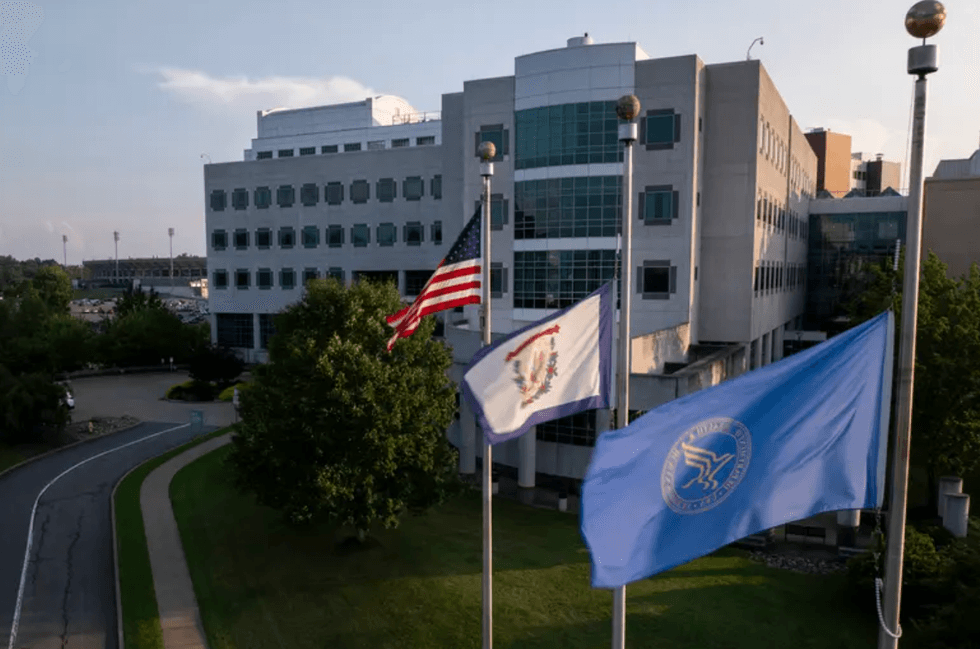 The National Institute for Occupational Safety and HealthCredit:Nate Smallwood for ProPublica
Their first collaboration, published in 2012, used Hertz-Picciotto’s data to see if parents of children with autism were more likely to have been exposed to chemicals already thought to be dangerous to the developing brain. The work was technical and time-consuming, but the analysis showed a clear relationship: Mothers and fathers of children with autism were more likely than the parents of unaffected children to have been exposed to solvents such as lacquer, varnish and xylene on the job. These solvents evaporate quickly and can be easily inhaled or absorbed through the skin. Chemical plant workers, painters, electricians, plumbers, construction workers, cleaners and medical personnel are among those who may be exposed to these solvents.
The sample size was small — just 174 families. But the results lined up with recent findings showing possible links between autism and exposure to metals and certain solvents during pregnancy or early childhood, including a solvent called methylene chloride. They also tracked with studies linking the chemicals to miscarriage, reproductive problems, birth defects and developmental problems other than autism.
McCanlies and Hertz-Picciotto followed up with a 2019 study that looked at more than 950 families. It showed that women exposed to solvents at work during pregnancy and the three months leading up to it were 1.5 times more likely to have a child with autism than women not exposed to the chemicals. (The study did not find a link for chemically exposed men.)
Their third study, published in 2023, took the link between solvent exposure and autism as a starting point. Using blood samples to examine the genetic makeup of the parents of children with autism, McCanlies and Hertz-Picciotto found that when exposed to solvents on the job, people with specific variants of 31 genes had an especially elevated risk of having a child with autism. Their genetic makeup appeared to increase the risk that solvents by themselves posed. Some of those 31 genes help cells connect with one another; others play a role in helping cells migrate to different areas so they can grow into the various parts of the brain; still others ensure that cells clear away toxic substances.
Researchers were also making strides under the National Institute of Environmental Health Sciences, a division of Health and Human Services, which has financed investigations into dozens of environmental contaminants. Several have been linked to autism, including air pollution, certain pesticides, a plastic additive known as BPA and diesel exhaust, which causes “autism-like behavioral changes” in mice. In 2021, Hertz-Picciotto co-published a study linking “forever chemicals” called PFOA and PFNA with the condition. (In 2023, a second paper also found an association with PFNA.) Other government-funded research has established a link between autism and another solvent, trichloroethylene, also known as TCE, which has been used for dry cleaning, manufacturing and degreasing machines.
Together, the results have shown that many exposures can increase the likelihood of autism, and that there can be multiple causes for any one person.
At least one exposure can have the opposite effect: A study by a researcher named Rebecca Schmidt — and funded by the NIEHS and NIH — found that a B vitamin called folic acid was associated with a significant decrease in the chances of an autism diagnosis. More than a dozen studies have since confirmed the association.
One problem hung over much of autism research. The sweeping diagnosis includes everyone from people who treasure their neurological differences to those with debilitating symptoms, including repetitive behaviors, excruciating sensitivity to touch and sounds, and difficulty responding to social situations. McCanlies and Hertz–Picciotto wondered whether certain chemicals were linked to the most severe cases or to specific symptoms.
In 2023, they set about finding out.
They were preparing to submit their study for publication when newly inaugurated Trump put Kennedy in charge of America’s health.
Despite having made chronic health conditions the focus of his agenda, Kennedy has quietly abided environmental policies that will exacerbate these problems, including autism.
The Environmental Protection Agency, under Administrator Lee Zeldin, is rolling back rules and regulations that will result in an increase in air pollution, which multiple studies have linked to autism. The agency is in the process of reversing bans on several chemicals, including TCE, one of the solvents associated with the disorder, and has told a federal court it won’t legally defend certain aspects of a ban on methylene chloride, another of the solvents linked to autism. It also began dismantling its Office of Research and Development, which has funded research into the environmental conditions contributing to autism. According to an EPA spokesperson, more than 2,300 workers have so far elected to leave the agency through Trump administration programs encouraging early retirement and resignation.
The EPA also began canceling grants, including one it had given to Schmidt, the researcher who studied the protective effect of folic acid. Schmidt had been awarded $1.3 million to determine whether air pollution from wildfires might increase the risk of various neurological conditions. Schmidt and her colleagues had just done preliminary analysis and found that there was a significant association between wildfire pollution exposure and autism when she received a letter saying that the grant was terminated because the project was “no longer consistent with EPA funding priorities.” After a judge ruled in a class-action lawsuit on behalf of University of California researchers alleging their funding was unlawfully terminated, her grant was reinstated last month. But the EPA has appealed the judge’s ruling, leaving Schmidt unsure about the fate of the project.
Schmidt said there is an urgent need to finish the study and warn people about how to avoid the dangers from wildfire smoke by staying indoors and using air filters and N95 masks. “Millions of pregnant women are getting exposed as we speak,” she said.
Meanwhile, Kennedy has presided over his own gutting of research. Known for sharing videos of his bare-chested workouts, he likened his agency’s cuts to getting rid of “unhealthy fat,” but his plan to reduce the staff of HHS by 20,000 amounts to slashing the workforce by roughly a quarter, including veteran scientists. Among the divisions Kennedy eliminated was one that studied air quality and collected data on chemicals found in human blood. Some workers in the division were subsequently reinstated. After a lawsuit and pressure from Congress, HHS has also rehired some NIOSH workers, though none at the division where McCanlies worked. Those whose jobs have not been reinstated remain on administrative leave.
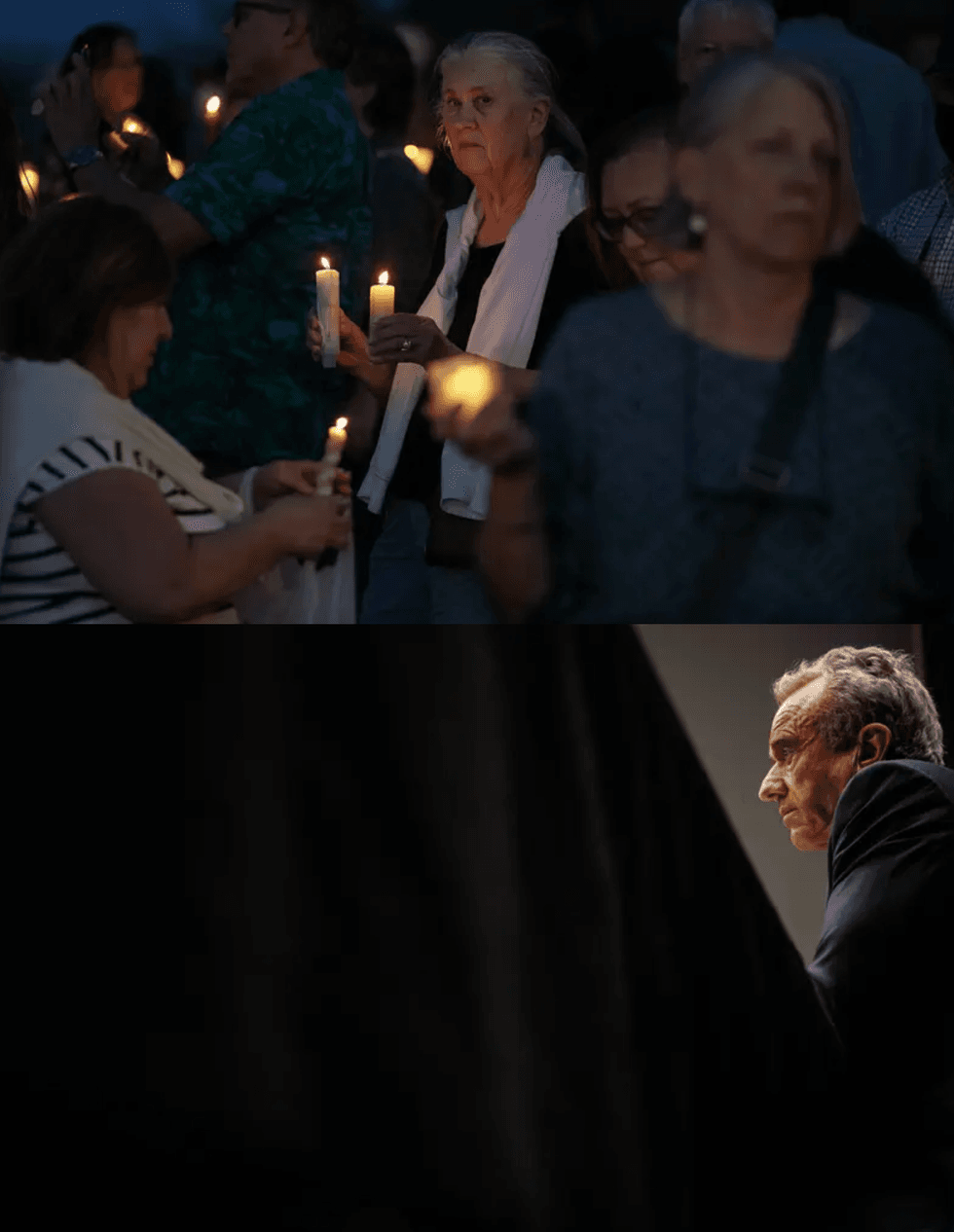 People participated in a candlelight vigil (first image) in front of the Centers for Disease Control and Prevention in Atlanta after Robert F. Kennedy Jr. (second image) announced cuts to HHS this year.Credit:First image: Elijah Nouvelage/Getty Images. Second image: Samuel Corum/Getty Images.
The reorganization plan for HHS involves consolidating the remnants of these parts of the agency, along with several others, into a new division called the Administration for a Healthy America. Asked about the transition, an HHS spokesperson told ProPublica in an email that the reorganization would save taxpayers $1.8 billion a year and that “critical programs will continue.”
Meanwhile, a ProPublica review of federal data found that more than $40 million in grants awarded by the National Institutes of Health for dozens of autism-related research projects were canceled under Kennedy’s watch. Some had been awarded to universities the administration is now targeting, while others ran afoul of Trump’s “anti-woke” priorities by mentioning gender and other verboten terms. Among them was a grant to Harvard University to use data on nearly half a million Israeli children to evaluate whether men’s exposure to air pollution affects the risk of having a child with autism. (A small number of grants have been recently reinstated.) A survey of researchers conducted by the Autism Science Foundation, which tallied cuts to training grants and the anticipated cuts to future grants over the next few years, estimated that the total loss of funding could be tens of millions more.
“We’re talking about probably decades of delays and setbacks,” said Alycia Halladay, chief science officer at the Autism Science Foundation. “To take money away from all these areas of need to focus on a question that the HHS director considers high priority seems not scientific and not the way that science is done.”
Housed under the National Institutes of Health, Kennedy’s new $50-million Autism Data Science Initiative is looking to fund two- to three-year research projects that plumb large public and private datasets to find “possible contributors to the causes of autism” as well as conduct research on existing treatments.
With the deadline for his promised discovery fast approaching, Kennedy recently acknowledged that his initial six-month timeline was overly optimistic. He told Carlson he should have “some initial indicator answers” about the causes of autism by September, his original deadline, and promised unqualified answers within another six months.
While the NIH typically releases the names of the scientists on the committees that review grant applications and the criteria they use to review them, it has not done so in this case. Nor has the agency clarified what role NIH staff will have in awarding the grants, who will make the final selection, or what terms and conditions researchers must agree to if they receive funds. HHS did not respond to ProPublica’s questions about who will make the final grant selection and why the agency has not yet made this information public, but a video NIH created for applicants of the funding acknowledges that reviews of the proposals “do not follow the traditional NIH review process.” According to the video, the process was “designed to ensure integrity, fairness and transparency.”
Hertz-Picciotto, who laments the fact that Kennedy is “shutting down good studies,” is among the researchers in her field who have decided to apply for the funding. “Some of his agenda is really ridiculous and very counterproductive,” she said. “But if something good can be done with this money, I’d like to be part of that.”
If her project is approved, she plans to hire McCanlies to consult on it.
McCanlies said she agreed to work on the project because she has complete confidence in her longtime colleague, if not the health secretary. “I don’t trust him at all,” she said.
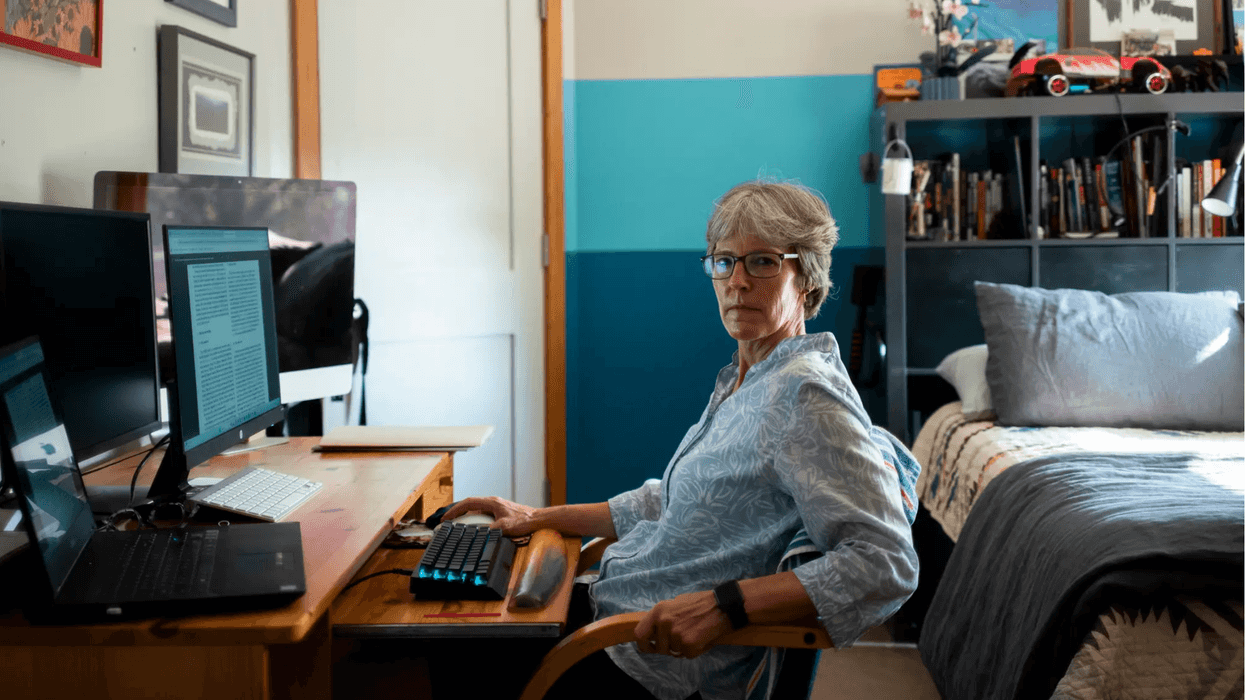
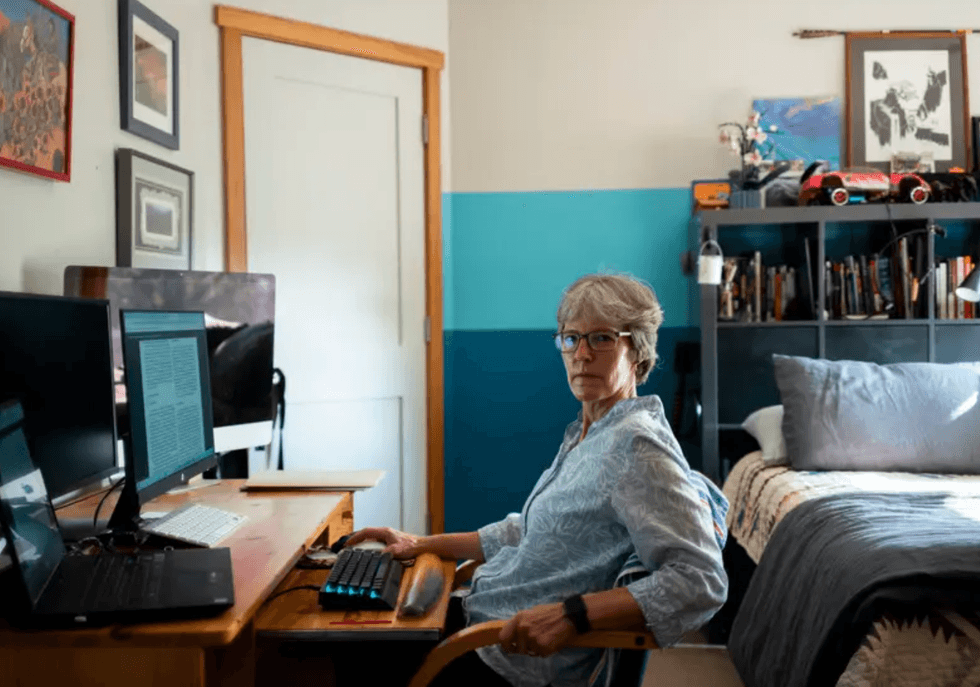 McCanlies in her home office in Morgantown, West VirginiaCredit:Nate Smallwood for ProPublica
McCanlies had never paid much attention to Kennedy — or to politics. Throughout the seven presidential administrations that governed while she had been at NIOSH, her work had been utterly uncontroversial. But weeks after his confirmation, she knew her job was in peril. She had deleted the first email she received from Trump’s Office of Personnel Management. The tone was so strange and disrespectful, hinting that she might be punished if she didn’t respond by confirming her email address, that she assumed it was a phishing attempt. By the time she received a second, suggesting that she find a “higher productivity” job in the private sector, firings and budget cuts were rolling across federal agencies.
The 58-year-old, who has short, greying hair, hazel eyes and three graduate degrees, hadn’t been ready to leave NIOSH’s Health Effects Lab in Morgantown, West Virginia, a place where she had mentored young colleagues, taught a lunchtime meditation class and helped conduct several yearslong research projects. The lab is also where she met Fred, her husband, another Ph.D. scientist who studied workplace chemical hazards. She reluctantly put in for early retirement just days before the entire lab was dissolved.
McCanlies spent her final days at NIOSH finishing her last paper, which explores the association between workplace chemicals and the severity of autism. Normally, she would have her supervisor sign off on her submission to a journal, but he had already lost his job. The rest of her colleagues were gone, too, and the lab’s hallways were empty as she gave the manuscript a final edit.
She felt proud of the study, which answered some of the questions she and Hertz-Picciotto had posed years ago. There were indeed links between exposures and the severity of autism. Parents’ exposure to plastics was “consistently and significantly associated” with lower cognitive scores in their children who had autism, increases in “aberrant behaviors” and deficits in basic life skills, the study found. The exposure was also linked to particular symptoms of autism, including social withdrawal, hyperactivity and repetitive behaviors such as hand flapping and body rocking. Higher autism severity scores and weaker daily living skills were also linked with ethylene oxide. Last year, the EPA imposed stricter limits on the chemical, which is used as a sterilizer. But the agency is now reconsidering those restrictions, and, in July, Trump exempted some of the biggest polluters from them.
The paper, which is now available as a preprint, recommended that regulatory agencies “consider increasing awareness of these hazards and make clear recommendations for implementing protective measures at the worksite.”
Having just watched so many occupational health experts forced to leave their jobs, McCanlies suspected their advice was unlikely to be heeded anytime soon.
Sharon Lerner covers health and the environment and the agencies that govern them, including the Environmental Protection Agency.
RFK Jr. Vowed To Find the Environmental Causes of Autism. Then He Shut Down Research Trying To Do Just That. was originally published by ProPublica and is republished with permission.









The President Invited Iran to Bomb My Home