

“We the People” know our government is not working. For decades, Americans have said they want leaders who work together, confront problems honestly, and make decisions that push the country forward. Yet the officials we send to Washington keep repeating the same self-defeating patterns—polarization, gridlock, shutdowns, and an almost complete inability to address the nation’s biggest challenges.
The result is a governing culture that cannot resolve problems, allowing them instead to grow, intensify, and metastasize. Issues don’t disappear when ignored—they become harder, more expensive, and more politically explosive to solve.
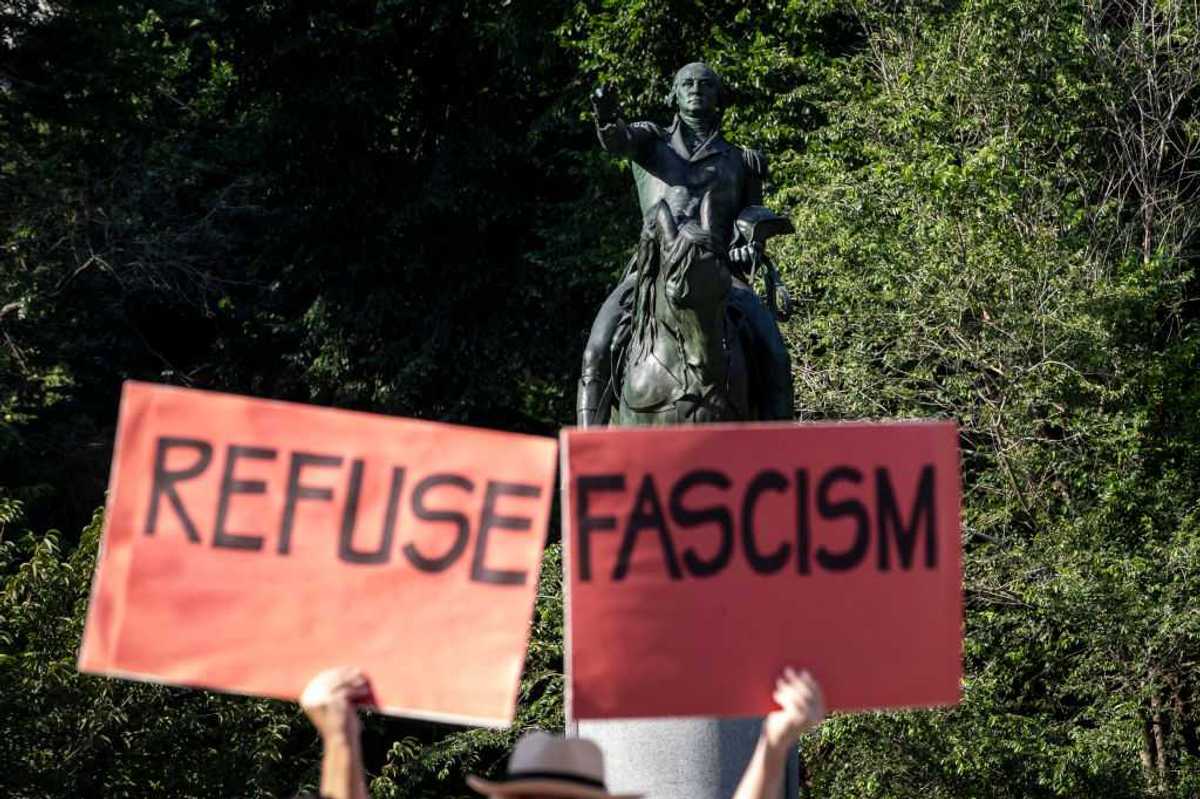
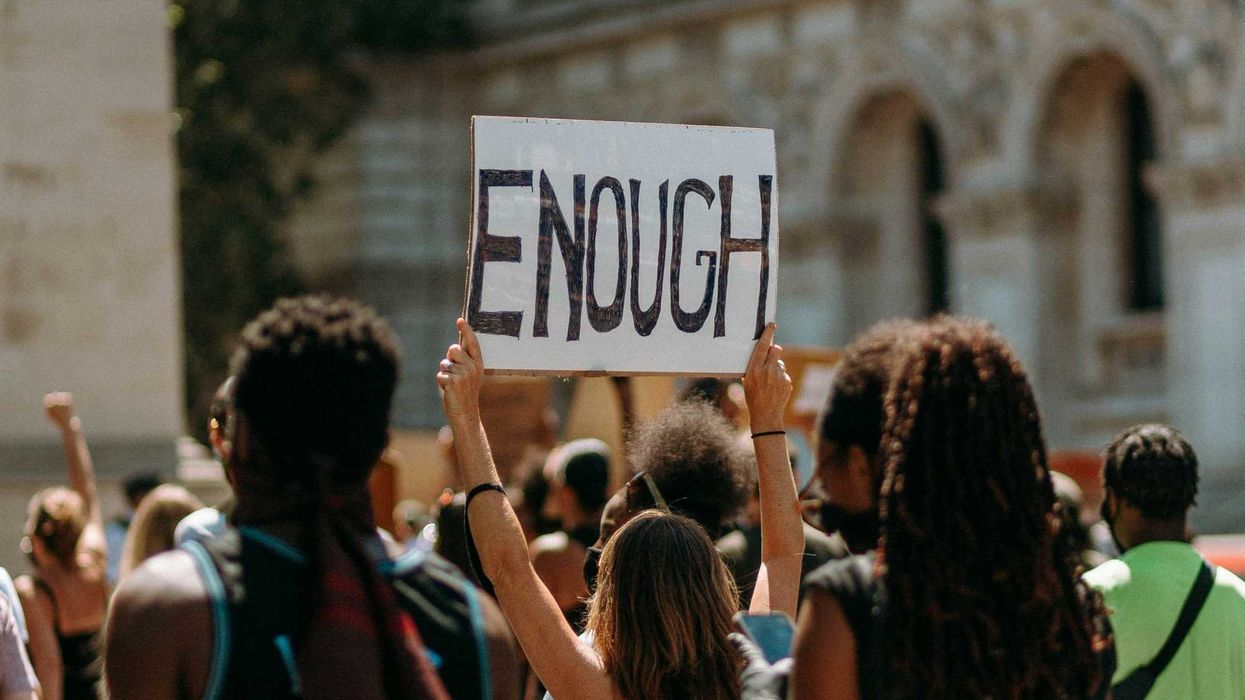
In October, over seven million people took to the streets in the No Kings protest—the largest public demonstration in modern memory—expressing outrage at Trump’s attempts to control the levers of government and his disregard for the separation of powers. Weeks later, record-breaking special-election turnout in states such as Virginia and New Jersey made clear that voters were desperate for a new direction. Long lines in California reflected the same frustration with political manipulation and gamesmanship.
Yet as those demonstrations unfolded, Washington was shut down for 43 days. Congress once again failed to pass the annual budget bills—something it hasn’t done on time since 1997. Instead, lawmakers rely on a chain of short-term continuing resolutions (CRs), each one a manufactured crisis that becomes a leverage point for partisan brinkmanship. The latest CR funds the government only through January 31, 2026—barely two months of stability.
During the standoff, federal employees were furloughed or forced to work without pay. Air traffic safety was strained. Public services were disrupted. And on issue after issue—immigration, the economy, Social Security, climate, AI, healthcare, civil rights, Ukraine, reproductive rights, guns, housing—the country made no progress. Not even a beginning.
Some analysts framed the huge November turnout and the No Kings protest as a decisive victory for Democrats. But that interpretation misses the point. With only two parties to choose from, a vote against Republican leadership is not automatically a vote for Democratic leadership. More likely, it is a rejection of the current political trajectory, which could easily flip in the next election.
Even if Democrats take the House and perhaps the Senate in 2026, we will still have two polarized parties, the same rigid decision-making structures, and the same inability to govern. A change in congressional control cannot fix a broken system.
If the 2026 midterms simply repeat the “we win, you lose” cycle, the public will be no closer to solutions. We cannot keep perpetuating this vicious cycle of non-governing. The core problem is not political preference. It is a governing framework that has failed—and has been failing for years.
The Illusion of Mandates
After the recent election, Kamala Harris said, “We must harness the people’s power to come up with a blueprint for our government that truly works for the American people.” She is right. But listening to the public requires more than celebrating a partisan win. The “blueprint” cannot be a continuation of three decades of escalating hostility and governance by conflict.
The challenge starts with the psychology of partisanship. George Washington warned 229 years ago of “the baneful effects of the spirit of party,” rooted in “the strongest passions of the human mind.” That warning has never felt more relevant: political passion has overtaken national responsibility.
We must also avoid misreading the moment. Trump-era politics distorted the landscape so severely that many assume the public is shifting left. But recent polls show something different. Support for both major parties remains historically low. Nearly half of voters now identify as Independent–not wedded to either party. A few weeks ago, Republicans polled slightly ahead, but now it’s Democrats. Volatility and indecisiveness characterize the public mood on parties, while a poll of more than 20,000 people last summer found that 80% want leaders who compromise to get things done.
The public is not endorsing Democrats or Republicans. They are rejecting dysfunction. They are rejecting the chaos and extremism of recent decades—an era marked by wild swings of power, constitutional brinkmanship, weaponizing government authority, and rising threats to democracy itself.
For decades, Congress has misread the public, interpreting every narrow victory as a mandate. But a win by 1%, 2%, or 3% is not a mandate. It is a warning.
The Call for Something Different
A few organizations have been listening to the public. Swing Left’s Ground Truth initiative emphasizes trust-building by “showing up early, listening closely, and treating every voter as worth the conversation.” Future Caucus, No Labels, the Independent Center, the Sunwater Institute, the Bipartisan Policy Center, ModSquad PAC, and Blue Dog PAC are all seeking new pathways for cooperation.
Future Caucus’s major post-2024 study, Together or Torn, found that 84% of voters prefer leaders who “work together respectfully and with integrity toward solutions.” That number is astounding—and it has remained consistent across multiple polls.
Evan Bayh, recently named one of six No Labels’ National Leaders, warned, “Bad things will happen to our beloved country unless millions of good people step up to counter the dangerous extremism and political violence consuming our politics.” No Labels has also helped build the Problem Solvers Caucus—a bipartisan group of roughly 70 House and Senate members working to build trust and find cross-party agreements.
But while these efforts matter, none provide what America truly needs: a well-known, membership-based, coherent, sustained, national mechanism to influence the decision-making structures of Congress and the broader government. Fragmented efforts, however sincere, with little public identity cannot overcome structural incentives that reinforce division—large-scale public involvement and support are necessary.
Why Our Political System Cannot Fix Itself
The greatest obstacle to reform is structural. The Constitution states simply that each chamber of Congress “may determine the rules of its proceedings.” Those rules, written and controlled by party leadership, define: what bills get voted on; which amendments are allowed; how committees operate; how debate is structured; who holds procedural power; and whether bipartisan cooperation is possible.
No independent analysis would conclude that today’s rules serve the public. They serve the parties.
Consider just a few examples of how Congress’s rules now obstruct real legislating: closed rules in the House routinely prevent members from offering amendments, shutting out genuine debate; the so-called Hastert Rule blocks votes on bipartisan bills unless they have the support of a majority of the majority party; Senate holds allow a single senator to freeze nominations or legislation indefinitely; the mere threat of filibuster—once a tool for extended deliberation—has become a routine weapon of paralysis; and leadership’s tight control over committees suppresses the bipartisan policymaking those committees were designed to produce.
These are not quirks. They have been woven into the decision-making system over the years and are now considered rigid constraints. They deliberately frustrate cooperation and compromise and are designed to give power to the party in control, rather than facilitating constructive problem-solving.
While rule changes are technically easy—a majority in the House, a supermajority or nuclear majority in the Senate—the political incentives overwhelmingly discourage reform. Leaders, lobbyists, funders, influencers, and interest groups have various reasons to preserve systems that benefit them, even those systems that harm the nation. A simple matter of party over country.
The Need for an External Force
Some assume the solution is a third party. But third-party efforts routinely collapse under structural and financial pressures, ballot-access barriers, and the ever-present fear of becoming a spoiler.
The Forward Party has made a serious attempt to advance an alternative party based on bipartisanship and compromise. Their slogan, "Not Left, Not Right, but Forward," is inspiring and what many voters are asking for. Yet, after four years with prestigious backing and financial support, it has failed to gain even widespread name recognition.
The media landscape compounds the challenge. News outlets increasingly reflect partisan identities. Algorithms reinforce beliefs. Disinformation spreads. Even legitimate reporting is dismissed as biased when it challenges a party’s narrative.
Because neither party will voluntarily rethink the governing framework, because third parties remain structurally marginalized, and because information channels are fragmented and distrusted, we need a new force—external, respected, and powerful enough to pressure both sides and gain nationwide recognition.
A national forum… A civic mediator… A Third Point of View!
Not a third party… Not a loose protest movement… Not just another nonprofit…
Something fundamentally different!
Imagine an institution with millions of members, expert staff, public representation, credibility, and the ability to influence media narratives, congressional debate, and individual legislators. A forum grounded in constitutional principles, driven by evidence, and committed to bipartisan solutions rooted in documented public consensus.
A forum that does not dictate ideological positions but provides authoritative guidance—research, analysis, and public sentiment—to help both parties move toward balanced, practical solutions.
A place where moderates, independents, unaffiliated citizens, and exhausted majorities can unite around constructive governance.
What a National Third Point of View Could Do
A Third POV forum could fill systemic gaps by:
- Coalescing public sentiment into a unified national membership organization open to individuals and organizations alike, giving millions of citizens a direct connection and support for an instrument that advocates governance consistent with their beliefs.
- Coordinating policy expertise on congressional rules, legislation, AI-enabled transparency and information management, and institutional reform.
- Bringing together existing reform groups, strengthening them, and providing focus, rather than competing with them.
- Producing trusted analysis—research, scorecards, public opinion indexes—that media and lawmakers must take seriously.
- Influencing legislation by presenting compromise-oriented positions backed by millions.
- Providing nonpartisan framing for political events to reduce manipulation.
- Applying timely, targeted public pressure on congressional decision-making.
- Proposing specific rule changes to reduce polarization and restore constructive deliberation.
The goal is not to replace election campaigns or parties. It is to counterbalance them—providing a home for the widely documented and recognized public voice for cooperation and compromise. An ever-present influence on decisions beyond the campaign seasons and a respected counter to partisan extremes.
What Existing Efforts Teach Us
Groups like No Labels, the Independent Center, Future Caucus, the Bipartisan Policy Center, and others have demonstrated two important truths:
- Millions of Americans are hungry for post-partisan solutions.
- Congress’s outdated rules and procedures are the root cause of dysfunction.
The Hoover Institution and Sunwater Institute’s 2024 report, Revitalizing the House, put it plainly: “This is not a Republican or Democratic problem, but a problem with how the institution currently operates.”
These organizations have laid a solid foundation of infrastructure and concept for a much broader movement to fit the critical needs of our time. What is missing is scale—a membership organization large and visible enough to influence and shape national political incentives.
That is what a Third POV forum could provide.
Harnessing the Public’s Power
The largest gap in American politics today is between what the people want and what the political system delivers. The public wants respect, cooperation, responsibility, and results. They want decisions based on facts and the national interest, not party discipline or fear of primary challenges.
Millions support this vision. Thousands of groups, organizations, and staff resources are backing this idea. But they are scattered and uncoordinated—silos without a central structure capable of shaping congressional behavior.
To carry “the great experiment” beyond its 250-year epoch, we must reconnect public power to political decision-making in a durable, organized, and sustained way. That means more than voting every two years. It means building a civic architecture worthy of the country’s complexity and ambition.
A Blueprint for a New Mindset
The way forward requires a fundamental mindset shift—one that recognizes the political reality of a country divided nearly 50–50 and accepts that neither side can govern effectively without the other.
Bipartisanship is not a courtesy. It is a structural necessity.
A national Third POV forum could reinforce this reality by: Keeping public expectations visible and unavoidable; elevating compromise-oriented solutions; exposing manipulative partisanship; giving moderates and independents political cover and recognition; influencing committee agendas and legislative priorities; and demonstrating that the real mandate is for the government to function.
With enough members and credibility, such a forum would become impossible for Congress, the Executive Office, and the media to ignore.
The Time Is Now
We stand at a crossroads. The old model—win, lose, power, control—has given us paralysis, anger, instability, violence, and democratic decay. The public is demanding something better. The country is ready for a new mindset and a new civic infrastructure that gives voice to the exhausted majority.
The solution is not another party, another protest, or another think tank.
It is a Third Point of View—an organized, respected, nationwide forum with the legitimacy and scale to influence how decisions are made and how governing actually works.
We cannot continue the vicious cycle of non-governing. The survival of American democracy depends on rethinking how we solve problems, how we allocate power, and how we listen to the public.
It is time for the new mindset.
It is time for the next evolution of American self-government.
It is time to build the Third Point of View.
It is time for the groups, organizations, foundations, and powers already dedicated to the bipartisan government model to organize, coordinate, and expand this tenet of governance to give it the scale and influence the public is demanding.
Jeff Dauphin, aka J.P. McJefferson, is retired. Blogging on the "Underpinnings of a Broken Government." Founded and ran two environmental information & newsletter businesses for 36 years. Facilitated enactment of major environmental legislation in Michigan in the 70s. Community planning and engineering. BSCE, Michigan Technological University.