


Skip to content
Search

Latest Stories

Follow Us:
Top Stories

Pew Research Report: Americans’ Attitudes on Abortion Are More Divisive

The Pew Research Center released a new report highlighting recent poll and survey findings of Americans’ views on abortion based on their political affiliation and gender.

News

Pew Research Report: Americans’ Attitudes on Abortion Are More Divisive
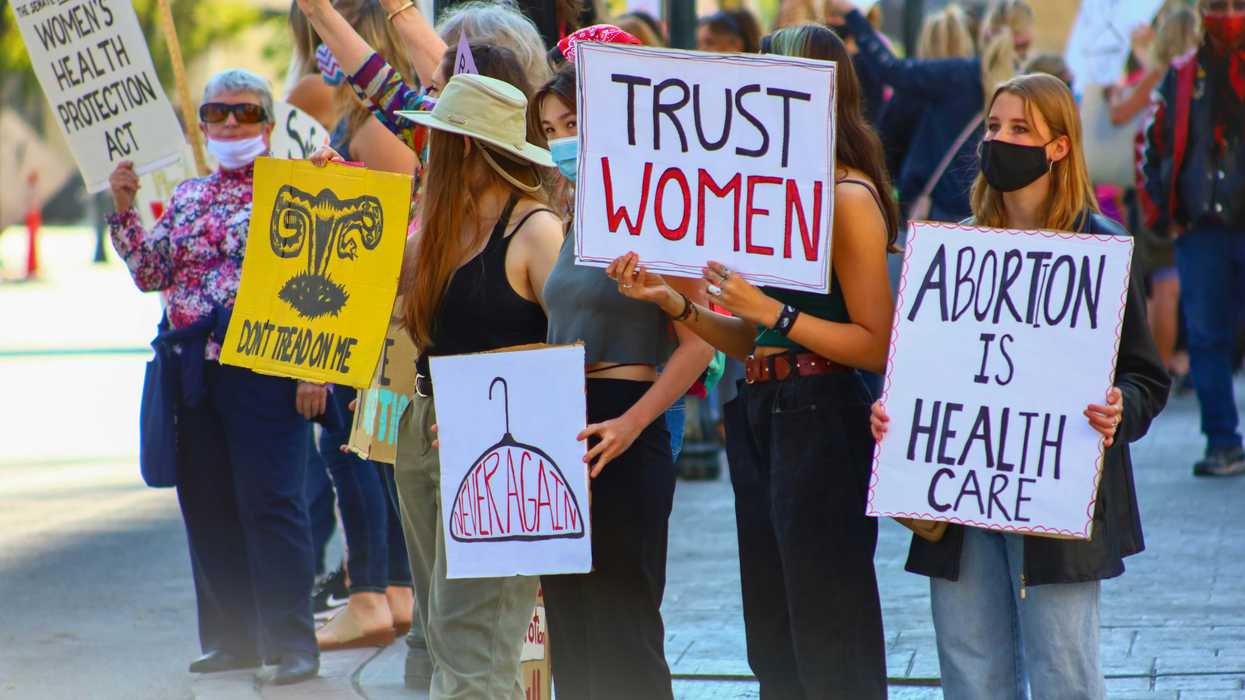
a group of women holding signs and wearing masks
Photo by Manny Becerra on Unsplash

Americans’ General Attitudes on Abortion

Despite abortion being banned in 13 states and restricted in others since the Supreme Court’s 2022 Dobbs ruling, a 60% majority of Americans say abortion should be legal in all or most cases, according to a January Pew Research Center Poll.


Although the number of U.S. adults who say abortion should be legal has gone down from 63% in 2024, support for legal abortion remains higher than it was 30 to 20 years ago. With strong public support, at least five states have confirmed or potential abortion-related ballot measures in the 2026 election.

This slight decline in Americans’ support of abortion in recent years has occurred principally among Republicans and Republican-leaning independents, while Democrats’ stance has remained more stable, according to a March Pew Research Center Report. Currently, 36% of Republicans say abortion should be legal, compared to 41% of Republicans sharing this view in 2024. At least 84% of Democrats say abortion should be legal in all or most cases since 2022.

The Center’s poll findings show that views of abortion between parties are more opposed than a few decades ago. There was a 24 percentage point gap between Democrats’ and Republicans’ stances; Today, that gap has doubled.

Chart shows Wide partisan gap in views of whether abortion should be legal

About half of Americans strongly agree with the statement, “The decision to have an abortion should belong solely to the pregnant woman,” according to the report. While 39% of U.S. adults agree with the statement, “Human life begins at conception, so an embryo is a person with rights.”

Chart shows About half of Americans say the decision to have an abortion belongs to the pregnant woman; about 4 in 10 say an embryo is a person with rights

How U.S. Adults View Medication Abortion

More than half of Americans (55%) say medication abortion should be legal in their state, according to the January Pew Research Poll. About 18% of respondents were not sure of their stance, and 26% said it should be illegal. The share of U.S. adults who said medication abortion should be illegal has grown since 2024, and the number of individuals who are unsure of their stance on the issue has declined.

The nationwide poll highlights the diversity between Democrats, Republicans, and independents. Additionally, in recent years, the number of Americans who are undecided on the issue has gone down from 25% in 2024 to 18% in 2026.

While individuals all across the political spectrum have become more divisive on the topic, this shift in attitude is largely seen among Republicans.

While the majority of Democrats and Democratic learning independents say medication abortion should be legal (76%), Republicans and Republican learning independents are more torn on the issue. About 43% of this group say it should be illegal in their state, a third (35%) say it should be legal, and 21% are unsure.

While people’s affiliated party—rather than their gender—is a greater indicator of their views on abortion, recent surveys show a growing modest gender gap in attitudes toward abortion among Republicans.

Chart shows Democrats overwhelmingly say medication abortion should be legal in their state, while Republicans are more divided

Attitude on Abortion by Gender

Most recent polls show that about two-thirds of women (64%) say abortion should be legal in all or most cases, and about half of men (55%) say abortion should be legal; While 34% of women and 44% of men say it should be illegal.

While the greatest influence on people’s views on abortion seems to be their political affiliation, gender is still a factor in people’s views, according to the report’s findings.

Within the Republican party, two-thirds of men (68%) say abortion should be illegal, compared to 58% of women who share this opinion.

However—among Democrats and Democratic leaning independents—an overwhelming, similar majority of women (85%) and men (83%) both say abortion should be legal.

According to the report, there is a difference in views among women and men, generally, on the following statement: “The decision about whether to have an abortion should belong solely to the pregnant woman.” More than half of women (58%) strongly agree with the statement, compared to 45% of men.

Within the Republican party, women (38%) are more likely than men (25%) to strongly agree with this statement. While women (74%) and men (70%) in the Democratic party similarly strongly agreed with the statement.

Chart shows Women are more likely than men to say pregnant women should be the sole deciders of whether to have an abortion

View the report in-depth at pewresearch.org

Belen Dumont is the Associated Editor of The Fulcrum.

Read More

Sexual Assault Thrives in Silence

Co-founder of the United Farm Workers Association, Dolores Huerta, August 16, 2025 in Austin, Texas.

.(Photo by Brandon Bell/Getty Images)

Sexual Assault Thrives in Silence

Dolores Huerta broke her silence 60 years after Cesar Chavez had assaulted her. In her statement, Dolores Huerta said, “I carried this secret for as long as I did because building the movement and securing farmworker rights was my life’s work”. She did not want to hurt the movement.

After 15 years of working with survivors and supporting domestic violence and sexual assault programs, I know this instinct well. Most survivors do not want to rock the boat or damage the reputation of leaders, bosses, or ex-partners. Speaking up can mean destabilizing families, workplaces, and entire communities. Survivors will deny their own pain to protect institutions and the people they care about, especially in oppressed and marginalized communities.

Keep Reading Show less
Healthcare Jobs Surge Mask a Productivity Crisis—and Rising Costs
person sitting while using laptop computer and green stethoscope near

Healthcare Jobs Surge Mask a Productivity Crisis—and Rising Costs

Healthcare and social assistance professions added 693,000 jobs in 2025. Without those gains, the U.S. economy would have lost roughly 570,000 jobs.

At first glance, these numbers suggest that healthcare is a growth engine in an otherwise slowing labor market. But a closer look reveals something more troubling for patients and healthcare professionals.

Keep Reading Show less
The Cost of Fear: What Immigration Enforcement Is Doing to Our Clinics

Hands holding a heart

Picture provided by Latino News Network

The Cost of Fear: What Immigration Enforcement Is Doing to Our Clinics

He was supposed to come in three months ago. When he finally returned to the clinic, it was not for routine follow-up. Instead, it was because he could no longer feel his feet, and his vision had begun to blur. He told us he had missed his appointments out of fear. Immigration enforcement activity in his neighborhood and rumors of Immigration and Customs Enforcement (ICE) near clinics made him afraid to be seen entering a healthcare space. So he stayed home. He rationed his insulin until it ran out. Now he sat before us with uncontrolled diabetes, worsening nerve damage, and worsening vision concerning diabetic retinopathy.

Stories like this are becoming increasingly common. In Minneapolis, recent ICE raids have sent shockwaves through immigrant communities, with reports of enforcement agents present in or near healthcare settings, including exam rooms. Families describe being too afraid to leave their homes, even to see a doctor, or choosing the most ill child to bring to urgent care because bringing multiple children would be too risky. Clinics meant to serve as places of healing are being transformed into sites of fear.

Keep Reading Show less
A person grabbing a gallon of milk from an aisle.

New U.S. dietary guidelines from Robert F. Kennedy Jr. and Brooke Rollins promote more milk in schools—but widespread Lactose Intolerance raises questions about equity and nutrition policy.

Getty Images, Theerawit Jirattawevut

Lactose Intolerant? You’re Not Alone

Last month, U.S. Department of Health and Human Services (DHHS) Secretary Robert F. Kennedy, Jr. and U.S. Department of Agriculture (USDA) Secretary Brooke Rollins announced new dietary guidelines for Americans that were a major reset of federal nutrition policy. Among the new recommendations: drink more milk, eat more yogurt and cheese. While nutritionists continue to debate the scientific basis of the recommendations, changes in federal meal programs, including school meals, are already in the works.

Any school that participates in federal meal programs must offer milk with every meal, and new guidelines support whole milk in addition to 2% and skim milk already available in schools. While there is debate about the level of saturated fats in whole milk, there’s a deeper problem with the dairy recommendation for school lunches: the widespread prevalence of lactose intolerance. The vast majority of people on this planet, approximately 70%, are lactose intolerant. While it is estimated that only about 35% of the US population is lactose intolerant, that number is much higher depending on your ancestral history: 75% of African Americans; 90% of Asian Americans; 50% of Latinos; 50% of Ashkenazi Jews; and 70-90% of Native Americans are lactose intolerant. For school districts with large populations of descendant groups, the recommendation to just drink more milk doesn’t work for millions of kids.

Keep Reading Show less