WASHINGTON, D.C. — A growing movement is reshaping how student‑athletes engage with democracy, and at its center is The Team, a nonprofit that integrates civic responsibility directly into college sports. Its mission — developing “teammates, leaders, and citizens” — is resonating across campuses nationwide as athletes step into roles that extend far beyond competition.
Elizabeth Ford, the team's program manager, noted that student‑athletes are uniquely positioned to influence civic culture because “they already have a platform, and people listen to them.” Ford highlighted how The Team is channeling that influence into structured, nonpartisan civic leadership.
The organization’s Engaged Athlete Fellowship has become one of the country’s fastest‑growing civic leadership programs for student‑athletes. Applications surged from 59 to 396 between the first and third cycles — an increase reflecting rising interest in civic engagement across NCAA divisions. Fellows receive leadership training, mentorship, and support to design civic projects tailored to their campuses and communities.
Projects have ranged from voter‑engagement campaigns and legislative workshops to mental‑health initiatives, community sports camps, and resource drives. At Howard University, fellows tackled truancy and organized athletic‑gear donations for youth in Africa. At Northwestern, athletes are developing civic‑education programming and spotlighting racial inequities in women’s distance running.
In a Fulcrum interview, Elisee Byun, program coordinator for The Team and a former varsity gymnast at UC Berkeley, emphasized why athletes are embracing civic work: “Athletes know how to show up for their communities. They just need the tools to do it intentionally.” Byun said the fellowship helps athletes connect their discipline and teamwork to civic responsibility.
This year, I met the 2025–2026 Engaged Athlete Fellows in Washington, D.C., where athletes connected with professionals across fields — from tech to sports — who showed how civic engagement strengthens their industries and careers. The gathering offered a firsthand look at how young leaders are translating visibility, discipline, and collaboration into civic impact.
- YouTube youtu.be
One fellow, Katherine Helms, a women’s swimmer at North Carolina State University, underscored why athletes are stepping into civic leadership. “I think first of all I believe as athletes we have a platform that can help better our communities and we're also role models,” Helms said. “People look up to us — kids, but also adults.” She described her project, “Swim for Life,” a free, beginner swim and water safety clinic serving children from low-income families in Raleigh. It brought local youth onto a college campus and into a college pool for the first time. “I thought that the impact would be measured on how many kids learned how to swim. But it was more than that. It was confidence-building, seeing themselves differently, and learning a new skill they didn’t think they could do.”
“Swim for Life” is run in partnership with Neighbor to Neighbor (N2N), a nonprofit dedicated to reversing the effects of poverty through mentoring, education, and community development. N2N assists with participant recruitment and family outreach to ensure the program reaches children who lack access to swim education.
Another fellow, Jasmine Jackson, a women’s basketball player at Elizabeth City State University, said the fellowship pushed her to rethink what meaningful community engagement looks like. Her project centered on listening first — not assuming what a neighborhood needed, but building trust through conversation and collaboration. “The biggest takeaway from that project was the impact that it left on the community,” said Jackson. “Literally, from everything from the kids to the principals—just being able to go into a community and not go in with tunnel vision and ‘Hey, we know how you need help,’ but asking them and being intentional and seeing what they need and how you can support that.” Through mentorship, hands-on engagement, and immersive experiences, her goal is to empower future minds by showing them what’s possible and helping them envision their own journey as scholars, athletes, and changemakers.
Jackson’s emphasis on listening and community‑driven work reflects a broader theme emerging across the fellowship: athletes are recognizing that their influence extends well beyond the court, track, or pool. For many, that sense of responsibility is shaped not only by their civic projects but by their own journeys through college athletics — journeys that opened doors to education, mentorship, and long‑term opportunity.
That perspective is especially clear among Division I athletes, who understand firsthand how powerful that pipeline can be. For many, competing at the D1 level isn’t just about sports — it’s a gateway to education, opportunity, and career pathways that will outlast their athletic careers. Only a small percentage ever make it to the professional level, so the college experience becomes the foundation they carry forward. That’s why building a pipeline matters: ensuring that talented young people, especially those who may not know how to navigate the system, can access the same doors athletics opened for them.
David Davitt of the University of Pennsylvania Men’s Track and Field & Cross Country developed new pathways for student-athletes to pursue careers in financial services. His project focuses on building a structured talent pipeline that expands access to professional opportunities by addressing real obstacles athletes face — including rigid recruiting timelines, demanding practice schedules, and limited flexibility for traditional internships.
“When you understand that you have that platform through being there, it's like you want to create that for the next generation,” Davitt said. “I think just experiencing that myself, I really want to make sure that other people have the same opportunity, especially for the ones who don't necessarily know the pathway to get that opportunity, but are well capable of getting in.”
The Team operates as a fiscally sponsored project of the Bridge Alliance Education Fund, the parent organization of The Fulcrum. The partnership reflects a shared commitment to expanding civic infrastructure and empowering new generations of democratic leaders. The Team is already evaluating candidates for the 2026–2027 Engaged Athlete Fellowship — a sign of the program’s continued momentum and the growing national interest in student‑athlete civic leadership.
As student‑athletes continue to rise as influential voices in American culture, The Team is proving that sports can be a powerful entry point into civic life — helping young people build not only stronger teams, but a stronger democracy.
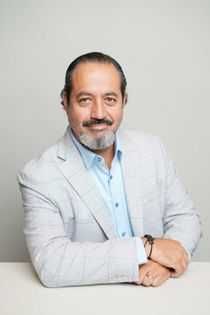
Hugo Balta is the executive editor of The Fulcrum and the publisher of the Latino News Network









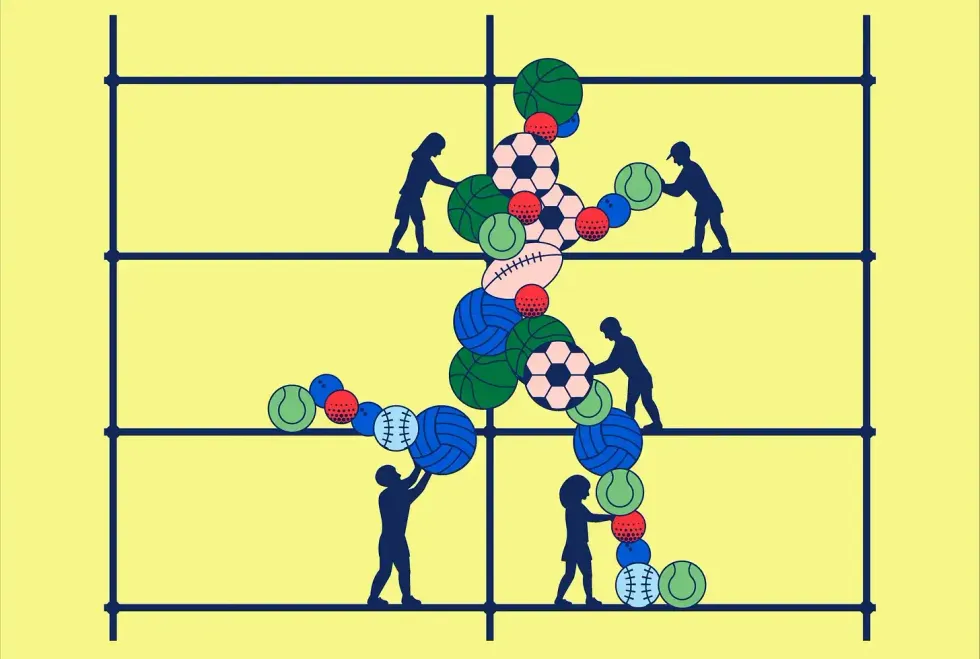 Following our HWF Civic Futures kickoff last week with Eric Liu, our design partners at Public/Official have created a unique visual to capture the “civic scaffolding” spirit of this conversation.
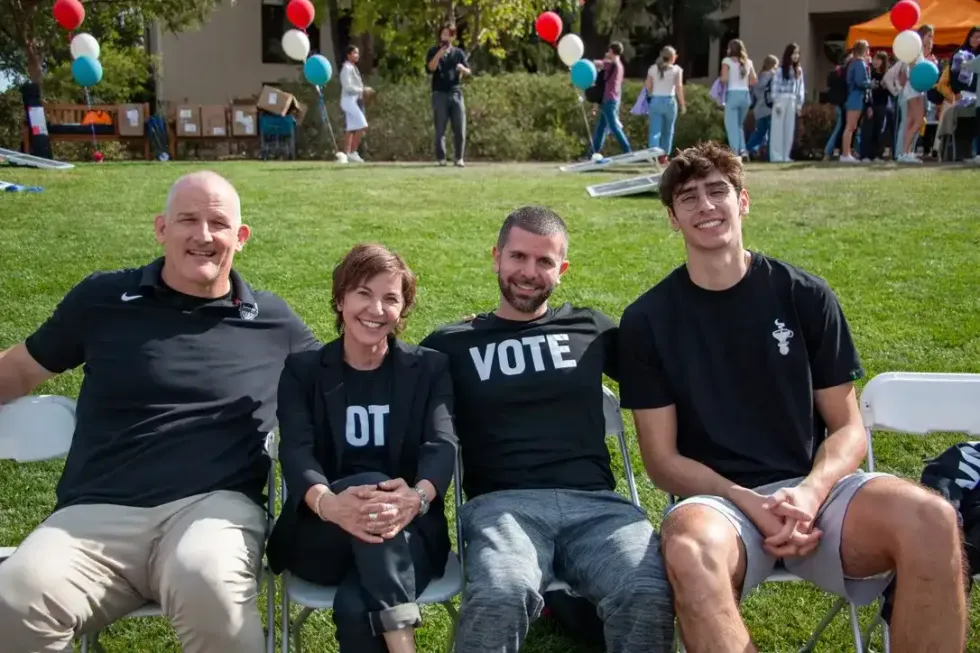 Lisa, Coaches Rev and Matt Elkin, and former Stanford Men’s Basketball star Maxime Raynaud at Stanford’s “All Vote No Play” Democracy Day, 2025