



A friend recently asked if I was optimistic about the future. Not in any particular context - just one of those casual what kind of person are you kind of questions. I stopped what I was doing. Little did this inquirer know that I was in the midst of a months-long journey into the Founding era of America, and that this particular question was among the first things considered by the people we recognize as our founders. My free time had been enveloped by nonfiction, documentaries, podcasts, and reflective writing. And here, in advance of the country's 250th birthday, was the right question for, as it turned out, the right person. I took a breath and lobbed my answer back -
“Do I really have a choice?”
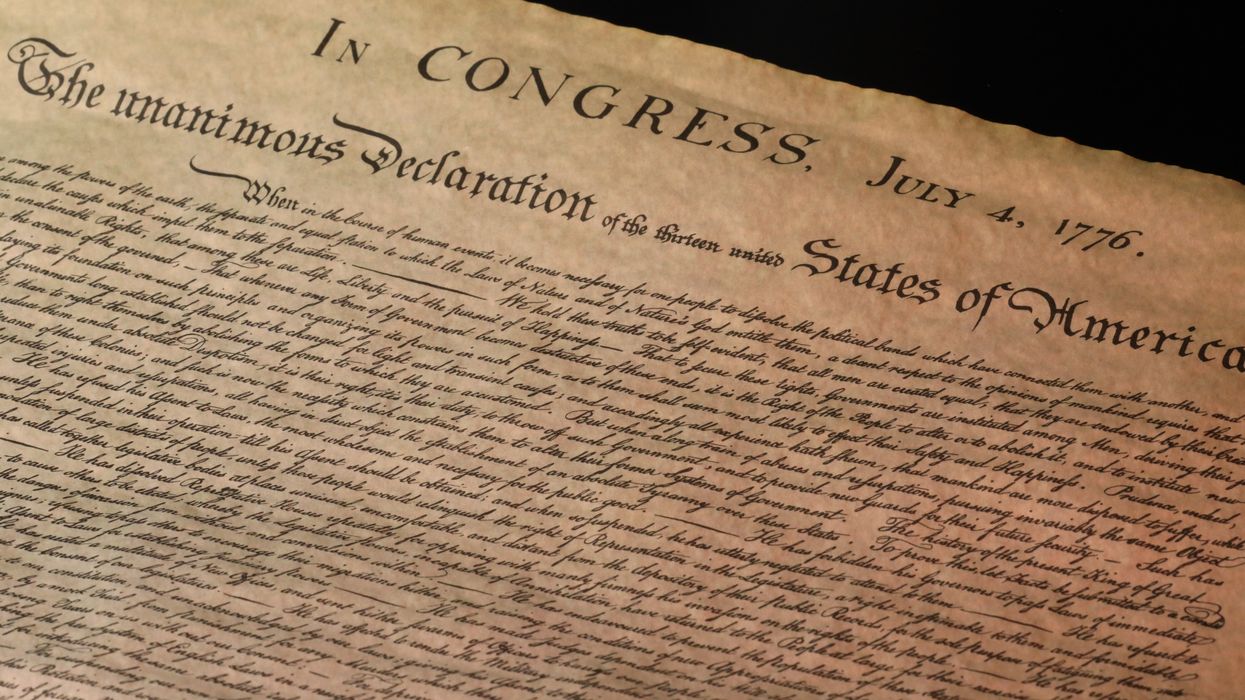
War moved across America’s Eastern seaboard, and one of the hottest summers on record gripped Philadelphia. The Second Continental Congress convened in early July to decide whether to approve the Declaration of Independence. The Continental Army waited in New York for the approaching full force of the Empire. The moment was upon the Congressional delegates. Some demanded independence, others hesitated. After hours of back-and-forth in the steamy State House, the delegates unanimously approved the Declaration of Independence.
Utter jubilation followed. Church bells rang, choirs sang, as a newly independent people danced in the street. John Adams promptly remarked that this was to “be celebrated, by succeeding Generations, as the great anniversary Festival. It ought to be commemorated, as the Day of Deliverance...with Pomp and Parade, with...Bonfires and Illuminations from one End of the Continent to the other from this Time forward forever more.”
The American experiment was underway. It was the first true step in the Founders’ vision of self-governance. No longer did government mean kings, queens, crowns, or inherited titles passed without a nod from the governed. In an instant, the Declaration turned that world upside down. It was the first time any nation, country, kingdom, or empire was to implement a government where the power to govern is derived from the people. Today, I am one of over 340 million hereditary participants - born into a political experiment unlike any before it.
The Declaration was a product of the Enlightenment - specifically the argument that government ought to derive its legitimacy from the consent of the governed. A radical idea, brought forth by the Founders from Thomas Jefferson’s pen, ultimately reached new heights. The Declaration did two things. First, it severed America's colonial relationship with the British Empire by explicitly announcing America's independence. This was the political purpose of the Declaration. But this part of the document merely cut the cord – it was not the ink that birthed the nation. America sprang to life when Jefferson put to paper the following words:
We hold these truths to be self-evident: that all men are created equal...
This is where America took its first breath.
Even more remarkable than the uniqueness of such an assertion during an age of monarchy is the self-awareness of these words. Imagine if Jefferson had instead written, We hold these truths to be self-evident: That all white land-owning males are created equal…But he didn’t write that. The Founders understood they were confined by time and space and that they, themselves, were incapable of ever fulfilling the equality clause of the Declaration they had crafted.
But they believed future Americans could.
Newly-elected President George Washington wrote in 1790:
As mankind become more liberal they will be more apt to allow, that all those who conduct themselves as worthy members of the Community are equally entitled to the protection of civil Government. I hope ever to see America among the foremost nations in examples of justice and liberality.
Jefferson echoed the President, also in 1790, that, “the ground of liberty is to be gained by inches, that we must be contented to secure what we can get from time to time, and eternally press forward for what is yet to get.”
The Founders called it the great stage of life. It is the same stage we walk today - in our cities and towns, our neighborhoods, among ourselves. Transcending time and political order, the Founders’ words remind us that those inches are ours to find. It is built into the bedrock of our lives. Where do we find them on the stage we walk today?
The great play we find ourselves a part of is never complete because the Founders’ great promise can never be fully achieved. The human condition resists any final settling of that promise. Our ability to create and nurture is matched by our capacity to tear down - total equality remains an unreachable horizon. The Founders’ task will never be completed.
And yet it is precisely this awareness, born in 1776, that makes the Declaration’s words so extraordinary. They are eternal, even as our concept of equality has evolved. So long as a single child’s face is stained by the tears of neglect - so long as a single door is shut to the beggar - so long as a single person is judged not for who they are but for what they appear to be – the stage remains beneath our feet, and we play our part as the light slowly shifts from us to the next generation.
Ours is a struggle created by, of, and for the people. All of them. It is the lives of real human beings – living and dead, then and now. It is a legacy of self-evident truths revealed only through the most twisting prejudice and excruciating pain. The broken ships of slavery. The unmarked graves on taken land. The hush of a thousand songs. We face that cracked mirror, always showing how far we can go. And we are still finding our way.
On the last day of his presidency, George Washington reflected on 40 years of public service and the hope that generations to come would take up the nation’s laboring oar:
I trust...that the good sense of our countrymen will guard the public [interest]…and that, altho[ugh] we may be a little wrong now and then, we shall return to the right path with more [vigor].
This lasting trust rests on a simple belief: neither the Founders nor the government alone could fulfill the Declaration’s bold claim of equality. It would take the people, generation after generation. Person after person.
On this Fourth of July, this trust lives on - in ourselves and through each other - as we together briefly stand on this inherited stage.
[A]n abstract truth, applicable to all men and all times, and so embalm it there, that to-day, and in all coming days, it shall be a rebuke and a stumbling-block to the very harbingers of re-appearing tyranny and oppression.
-Abraham Lincoln, 1859
Kevin Tibolt is a resident of Portland, Oregon.









The President Invited Iran to Bomb My Home