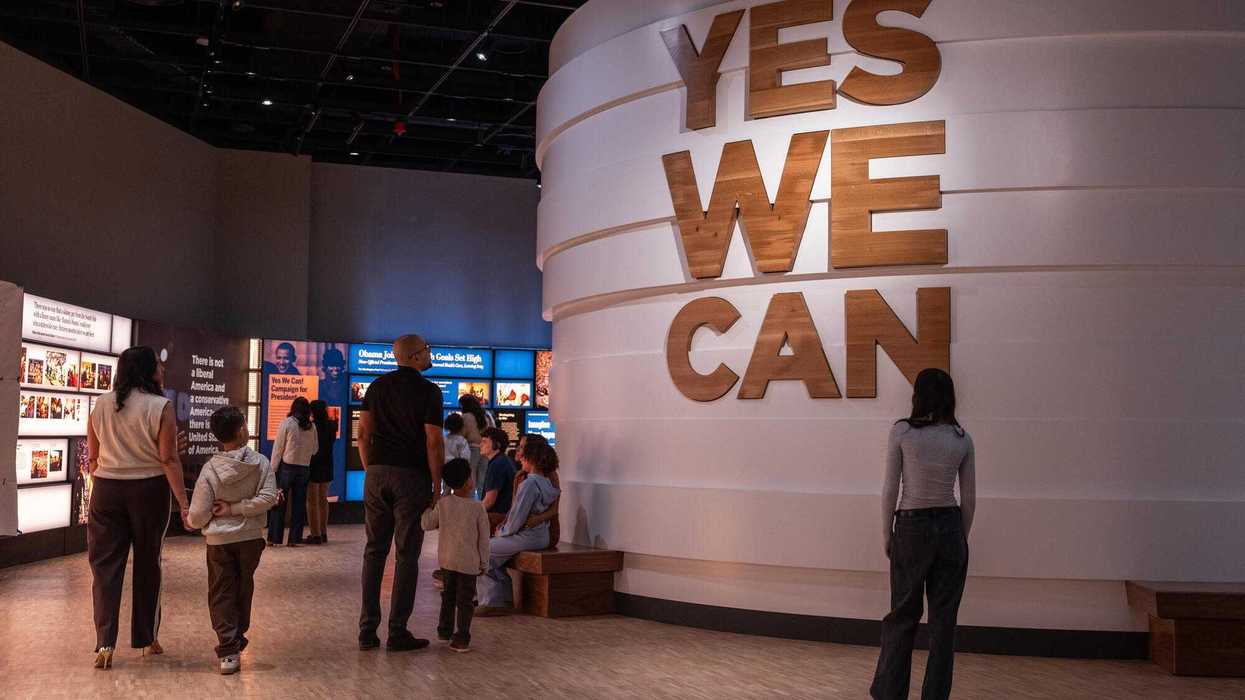
Rising from Chicago’s South Side as a striking blend of architecture, history, and civic aspiration, the Obama Presidential Center stands as a bold new landmark in the city’s cultural landscape. Its glass‑and‑stone museum tower, expansive public gardens, and integrated Chicago Public Library branch make clear that this is far more than a traditional presidential museum. It is a living monument to the American story — its struggles, its triumphs, and its ongoing fight to live up to its own ideals. When it officially opens to the public on Friday, June 19, 2026 — Juneteenth — that symbolism will resonate even more deeply.

The Obama Presidential Center, Chicago, Illinois
Previewing the Center before its public opening was a nostalgic and unexpectedly emotional experience for me. Walking through the museum, I felt the weight of history, the promise of progress, and the painful contrast with the political moment we find ourselves in today.
One of the most powerful moments of my visit came as I stood before Power of Words, the Center’s four‑story canvas of filmic storytelling, art, and sound. The installation is a meditation on the force of language — how words can inspire, empower, and connect people in their pursuit of social progress. Standing there, I felt transported back to a time when presidential rhetoric aimed to lift us up, when President Barack Obama used language to call the country toward its better angels. And I felt, just as sharply, how words can also be twisted into instruments of division, fear, and resentment. We are living through that contrast now under President Donald Trump’s administration, where language is too often wielded not to unite, but to fracture.
- YouTube youtube.com
Moving through the exhibits, I was struck by the vast sweep of American movements represented — the Civil Rights Movement, the suffrage movement, the immigrant‑rights movement — all threads of struggle and hope that ultimately converged in the election of the first Black president. Seeing that arc laid out so thoughtfully was profoundly inspiring. But it was also painful. The contrast between what was achieved before and during the Obama years and where we find ourselves today, under a presidency defined more by division than unity, was impossible to ignore.
And in that moment, I found myself asking questions I wasn’t prepared for: How did this happen? How could we have let this happen to our country? Could it be that what was built under Obama’s presidency — the sense of possibility, the belief in a more inclusive America — was more fragile than we understood, a house of cards we mistook for bedrock? Was I blinded by my own story, by my family’s immigrant journey, and the imperfect but undeniable realization of the American dream we experienced? These questions lingered with me as I moved from exhibit to exhibit, forcing me to confront not only the country’s trajectory but my own assumptions about its resilience.
As I continued through the museum, still wrestling with those questions, I encountered an exhibit that grounded me again in the long arc of struggle and perseverance.
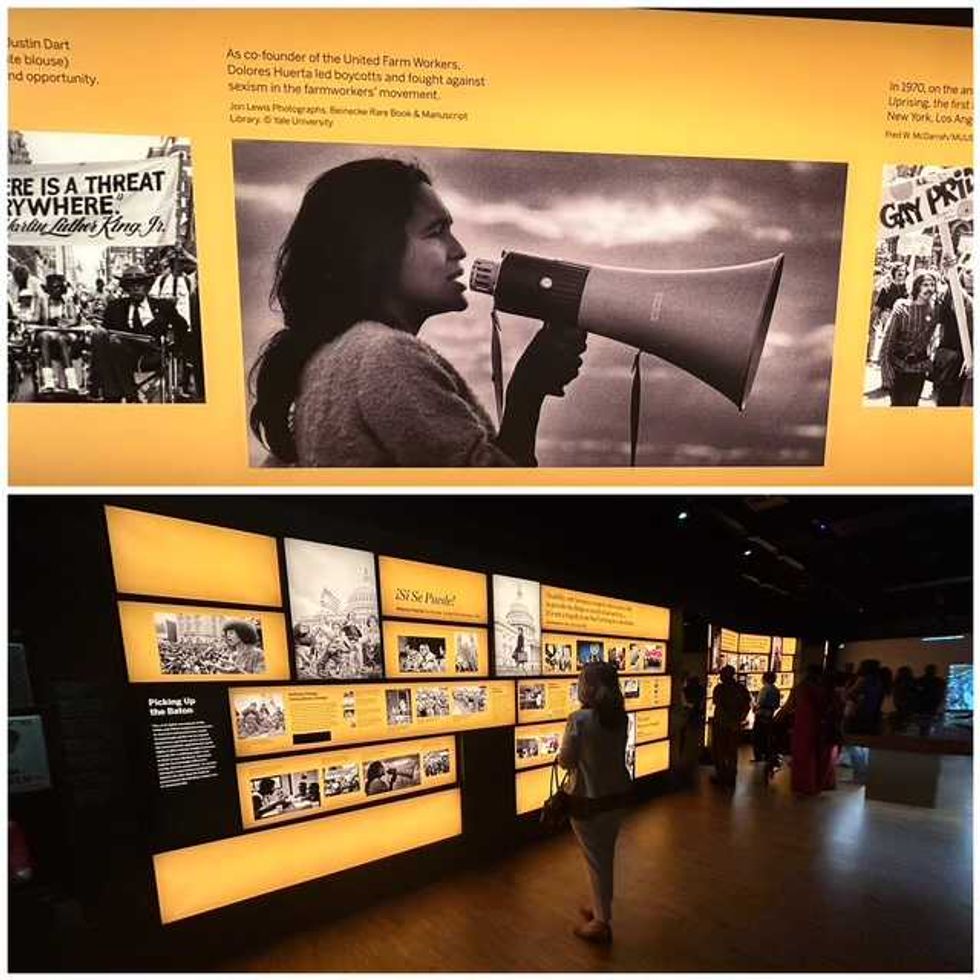 The Democracy exhibition, The Obama Presidential CenterHugo Balta
One moment that stayed with me was seeing Dolores Huerta honored in the permanent “Democracy” exhibition. Her lifelong fight for labor rights and civil rights is presented not as a relic of the past, but as a living reminder of what democracy demands of us. Her presence in the museum is a testament to the power of collective action — and a reminder of how far we have drifted from those values.
As we approach 250 years of the American experiment, the Obama Presidential Center stands as both a celebration and a warning. It showcases the fight to realize America's promise and makes clear how fragile democratic equality truly is. Democracy is not a peak we reach and then rest upon. It is a climb without a summit — a struggle that requires constant vigilance, courage, and renewal.
Walking through the Center, I felt the elation of how far we’ve come and the ache of how far we’re falling. But I also felt something else: resolve. Because even when we slip, even when the path feels steep, the work of moving upward — toward justice, toward equality, toward a more perfect union — is always worth fighting for.
The Obama Presidential Center is a testament to that truth. And as it opens its doors, it invites us to remember who we are, what we’ve overcome, and what we must continue to strive for — together.
Hugo Balta is the executive editor of The Fulcrum and the publisher of the Latino News Network, and twice president of the National Association of Hispanic Journalists.