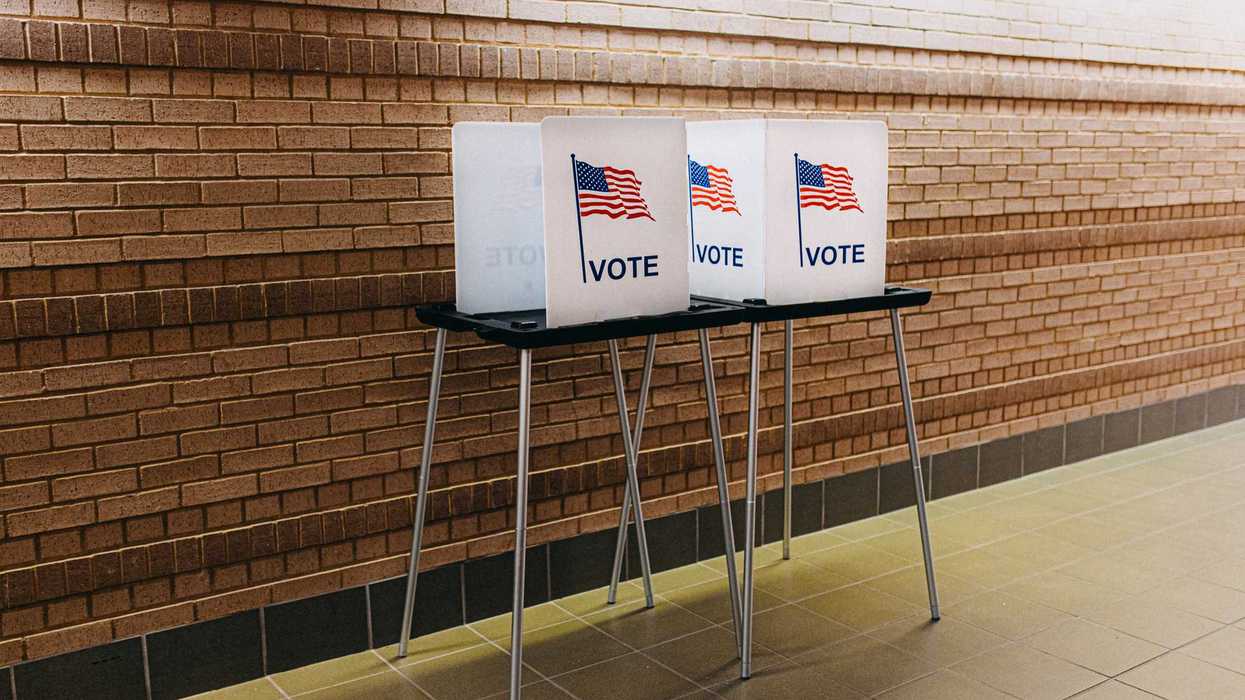

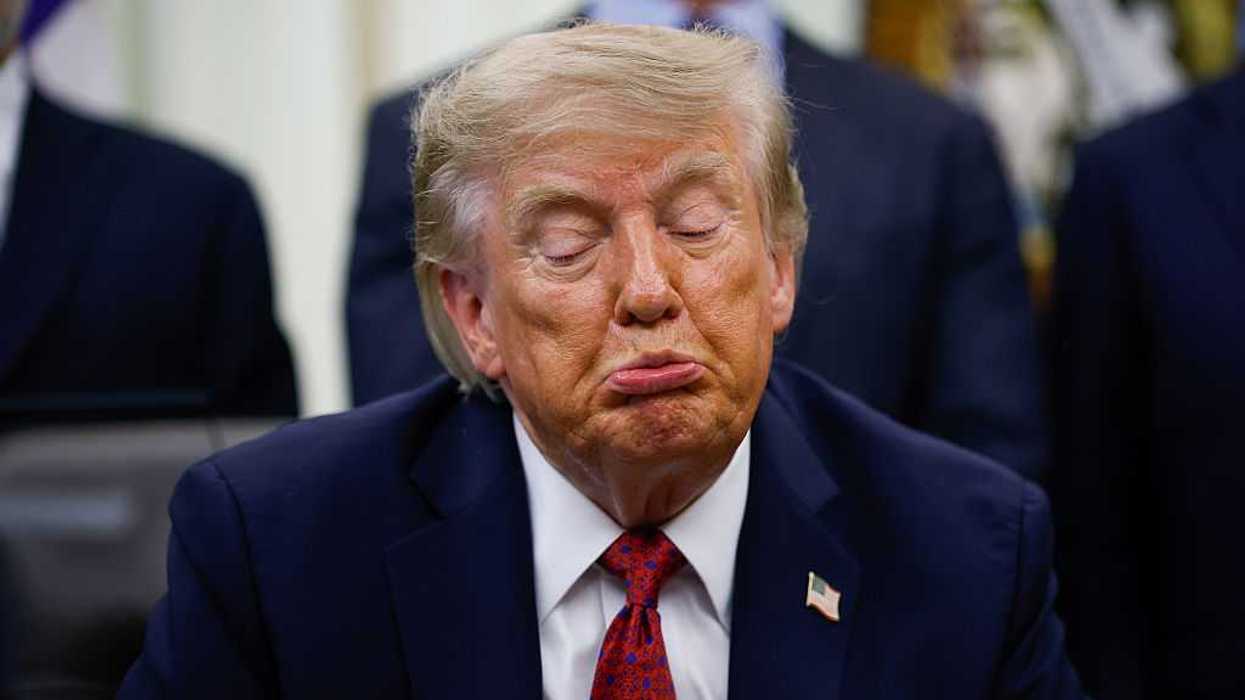
In mid-July, President Trump gave a lengthy primetime address on election integrity in order to promote the "SAVE America Act." The bill would require voters to provide proof of citizenship at the ballot box, but it has drawn criticism.
However, over the speech's runtime, elections themselves are never the true subject.
Instead, President Trump dedicates much airtime to building up the specter of immigration as the opponent his election reforms are meant to defeat, rather than enumerating the merits of his policy—ultimately reflecting the true center of his platform.
The speech's preamble highlights the successes of the Trump presidency, including steps taken against inflation, tax cuts from the so-called Big Beautiful Bill, and what the president sees as foreign policy wins.
What the president really wants to talk about is election fraud, and when he brings it up, he points at China for being responsible for the results of the 2020 election as well as long-term voter information theft. Later on, he makes references to election fraud being used in Venezuela to rig the election for the regime's benefit. Undocumented immigrants voting in elections is already an extremely rare occurrence.
Based on data compiled from the Heritage Foundation's own election fraud database and analyzed by the American Immigration Council, there have been a total of just 89 cases of proven noncitizen voting nationwide since the year 2000 — and the large majority of those
involved lawful permanent residents, not undocumented immigrants, who in many cases said they didn't realize green-card holders were barred from voting.
Cases specifically involving undocumented immigrants number just 16 in total over that same 25-year span. While this still isn't good, nor does it rule out unreported cases, it's nowhere near the scale the president implies when he cites a DHS figure of 278,000 noncitizens supposedly registered to vote.
Throughout his speech, President Trump emphasizes the specter of immigration more than the substance of election security itself. Early on in the speech, he touts border security as a significant achievement against a political backdrop highly sensitive to the violence ICE agents were displaying at the time, and to the continued arrests of noncriminals and citizens. He uses this rhetoric to not only justify ICE's actions to date, but also to prime the audience for their continued application going forward.
Further, some of the required documentation could be an issue even for lifelong American citizens to provide. Over half of the American public doesn't hold a passport — American or otherwise — meaning that under a proof-of-citizenship mandate, tens of millions of eligible voters would need to track down and produce documents, like a birth certificate, that many people don't have readily on hand. Critics of the SAVE Act have pointed to this gap as the bill's more concrete, near-term risk: not that it stops fraud that barely exists, but that it creates a new paperwork barrier for citizens who do have the right to vote.
That DHS figure, notably, has not held up well since the speech. The number originated from letters Homeland Security Secretary Kristi Noem's department sent to California, Nevada, New Jersey and Pennsylvania in mid-July, claiming a combined total of more than 250,000 noncitizens on their rolls; Trump rounded that up to 278,000 in the address itself. Officials in all three states that responded publicly pushed back hard, calling the claim unsubstantiated and asking DHS to hand over its methodology and underlying data. Nevada's secretary of state called the number "wildly speculative," and Pennsylvania's secretary of the commonwealth said the state's rolls were properly maintained and asked DHS to share its list of names for independent review. New Jersey's own investigation, prompted by the DHS letter, found a Motor Vehicle Commission data error had led to roughly 6,600 self-identified noncitizens being registered — and about 400 who'd cast ballots — a fraction of the 35,000 DHS had claimed for that state alone.
By late August, DHS had walked the number back, telling Nevada it could confirm only 185 cases from an initial list, with the rest still needing "additional review." In other words, the headline statistic that anchored the immigration section of a primetime presidential address didn't survive basic follow-up from the very states asked to verify it.
The clearest example is married women who've changed their surname. Roughly 84 percent of women who marry take their spouse's name, and estimates from voting-rights researchers put the number of American women without a birth certificate matching their current legal name at close to 70 million; the SAVE Act's text doesn't spell out a path for using a marriage certificate or name-change order alongside that birth certificate to close the gap. Republican sponsors of the bill, including Rep. Chip Roy, have dismissed the concern as "absurd armchair speculation," arguing the legislation already directs states to set up a process for resolving name discrepancies.
Democrats and voting-rights groups counter that the bill's text doesn't guarantee that outcome, and that it shifts the burden of proving eligibility from the government onto the voter for the first time. Whichever reading holds up, the dispute underscores the same asymmetry running through the speech: the harm the SAVE Act is pitched to prevent is measured in the dozens, while the population that could be caught up in its paperwork requirements is measured in the tens of millions.
Taken together, the speech's structure tells its own story. A president ostensibly addressing the nation about the mechanics of election security spent the bulk of his airtime not on ballot design, machine audits, or chain-of-custody procedures, but on China, Venezuela, and the looming threat of noncitizens at the ballot box.
Isabel Papp is a summer fellow with The Fulcrum and a student at Northwestern University, double‑majoring in Journalism and Political Science. A bilingual journalist, she is a proactive, equity‑centered storyteller committed to elevating underrepresented voices.