


"A bad system will beat a good person every time" is a famous quote by Dr. W. Edwards Deming, the American statistician most often credited with the Japanese economic miracle after WWII. Even talented, hardworking people cannot overcome a flawed, dysfunctional, or unfair system, making system improvement more crucial than solely blaming individuals for failures.
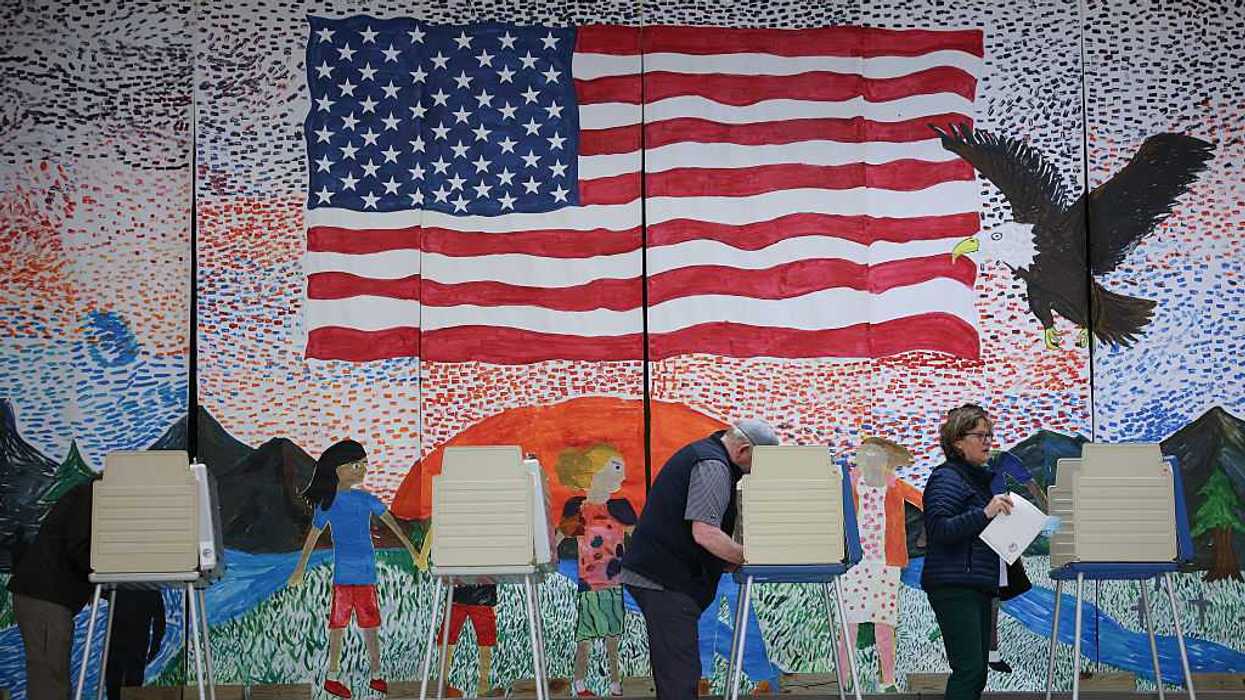
Fixing “bad systems” is viewed by political scientists and reform organizations as the primary path to reducing America’s political dysfunction. Current systemic structures often create "misaligned incentives" that reward extreme partisanship and obstruction rather than governance. The most prominent electoral system reforms proposed by experts include:
Open or "Top-Four" Primaries: Replacing closed party primaries with non-partisan systems (like those in Alaska ensures that general election candidates must represent a wider spectrum of voters).
Ranked Choice Voting (RCV): This system allows voters to rank candidates by preference, forcing politicians to appeal to a broader base rather than just their partisan fringe.
Proportional Representation: States moving away from "winner-take-all" districts toward a proportional system would ensure parties earn seats based on their actual share of the popular vote, potentially breaking the two-party duopoly.
Ending Partisan Gerrymandering: Using Independent Redistricting Commissions instead of allowing politicians to draw voting maps can create more competitive elections and less extreme legislators.
Remedying the Winner-Take-All (WTA) Electoral College: Absent a constitutional amendment, fix unintended WTA practice that has created the polarizing battleground state phenomena.
Due to space limitations, this article will only deal with the Winner-Take-All (WTA) Electoral College, which has plagued the United States for over 225 years.
Modern implementation of the Electoral College violates the original expectations and designs of the U.S. Constitution's Framers in several key ways:
While the Constitution allows state legislatures to determine the method of choosing electors, the Framers did not mandate the winner-take-all system currently used by forty-eight states. This system causes concentration of campaign attention on a few "swing states" while rendering millions of votes in "safe states" effectively irrelevant.
The Framers envisioned electors as "dispassionate" and "wise" individuals who would exercise independent judgment to choose the best-qualified president. This transformation from deliberative agents to "party hacks" or rubber stamps has effectively eliminated the "wisdom" the Framers believed qualified them for the role.
By the election of 1796, it was clear that electors were operating as agents of political parties rather than independent actors. This shift toward hyper-partisanship directly contradicts the Framers' goal of a "transient" and "detached" body of electors.
Although the Framers initially rejected a direct popular vote due to logistical challenges, many argued that the system was still intended to be grounded in the "wishes of the voters."
Today, the system is fundamentally altered from the original expectations of the Framers by the emergence of political parties, state-level winner-take-all laws, and the reduction of electors to party agents rather than independent deliberators.
"Nothing is more powerful than an idea whose time has come." -- Victor Hugo (1802-1885). With regard to the Electoral College, that idea is the National Popular Vote Interstate Compact (NPVIC).
NPVIC is an agreement among U.S. states and the District of Columbia to award all their electoral votes to the presidential ticket that wins the overall popular vote in all fifty states and the District of Columbia. It is considered a pragmatic, voluntary state-based initiative because it aims to ensure the winner of the national popular vote wins the presidency without requiring a constitutional amendment, operating instead within the existing Electoral College framework by utilizing states' constitutional authority to appoint electors. If enough states join the NPVIC to reach a total of 270 electoral votes, the United States will effectively shift from a winner-take-all (WTA) regime to a national popular vote system for electing the President.
With Virginia’s adoption, the National Popular Vote Interstate Compact has been adopted by eighteen states and the District of Columbia, which collectively hold 222 electoral votes. The compact requires 270 electoral votes (a majority of the 538 total) to take effect. It currently needs forty-eight more electoral votes to become active.
In 2026, NPVIC will be a relevant issue in a number of state elections, particularly in Arizona, Michigan, Nevada, North Carolina, Pennsylvania, and Wisconsin. As the compact needs forty-eight more electoral votes to hit the 270-vote threshold, these purple or contested states are key battlegrounds where legislative control could determine whether they join the nineteen jurisdictions already signed on.
Without the "battleground state" phenomenon, the effectiveness and strategic deployment of money in U.S. politics would shift from concentrated, localized spending to a more diluted, nationalized, or purely proportional approach. Some models suggest that if a national popular vote replaced the Electoral College, the overall amount of money spent on advertising could decrease in typical elections, as the "winner-take-all" incentive to tip a single state with massive ad buys disappears. Instead of tailoring messages to specific regional interests, e.g., tariffs, in swing states, large donations would fuel national campaigns focusing on broad, national policy, potentially diminishing the ability of localized interests to use money to influence policy. In future presidential elections, broad national policy, it is likely to include affordability.
Hugh J Campbell, Jr, CPA, is a Governance, Risk & Compliance (GRC) professional and a student of W. Edwards Deming, the American Statistician, often credited as the catalyst for the Japanese Economic miracle after WWII.









The President Invited Iran to Bomb My Home