



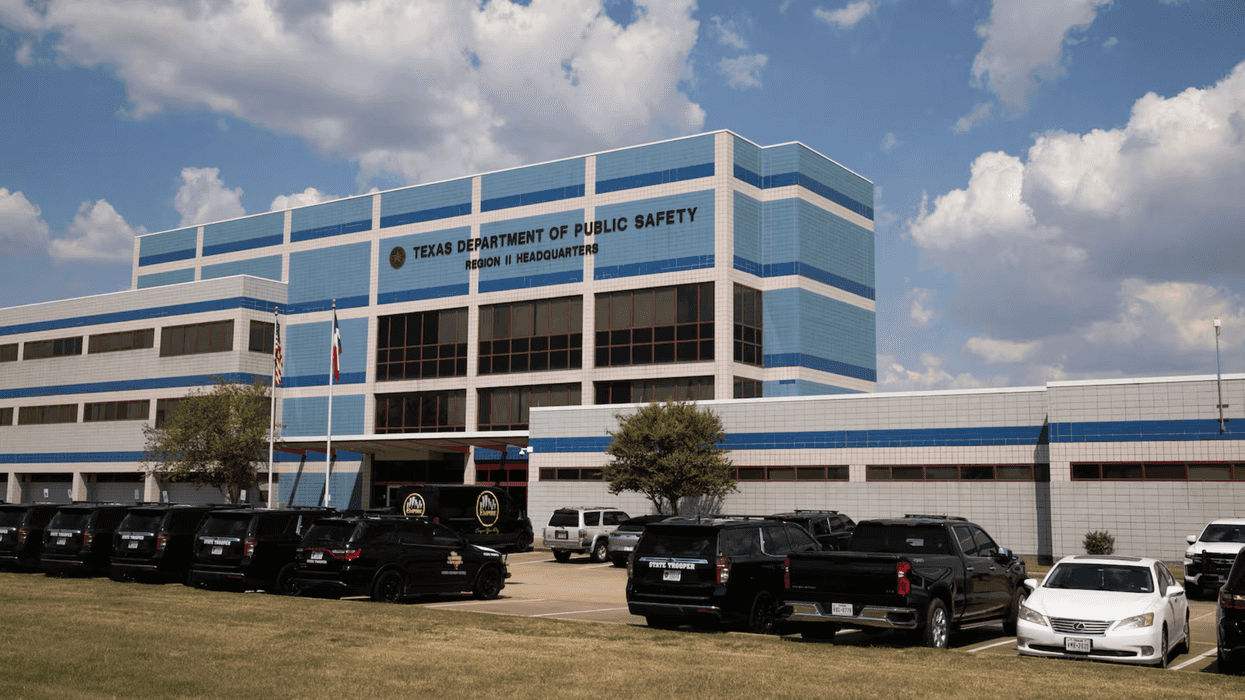

The Texas Secretary of State’s Office is now checking whether 2,724 registered voters it flagged as potential noncitizens may have already provided proof of citizenship to the Texas Department of Public Safety, elections division director Christina Adkins said during a meeting with county election administrators earlier this month. That check comes after county elections officials found the federal database used to generate the list flagged some voters who had already given citizenship documentation to DPS when they registered to vote.
Texas officials in October sent counties the list of potential noncitizens generated by checking the state’s voter roll of more than 18 million registered voters against a federal database used to verify citizenship. Soon after the state released the list, counties began to investigate the flagged registrants and mail notices asking them to provide documented proof of citizenship.
County election officials have since confirmed some of the flagged voters were citizens, though a total number was not immediately available. In addition, they found that hundreds of the flagged voters had registered through DPS, which requires proof of citizenship, such as a passport, and keeps copies of such documents on file.
In Travis County, for example, voter registrar Celia Israel asked the state to check the registrants flagged as potential noncitizens in the county against DPS records. The Texas Secretary of State’s Office did so, and found that out of the 97 individuals flagged as potential noncitizens in the county, 11 had already provided proof of citizenship.
Adkins during the meeting said that Travis County officials were the only ones who had requested that the state conduct the check of the records through DPS, according to a recording of the Secretary of State Office’s meeting with county election officials obtained by Votebeat. Now, the state is conducting these checks for flagged voters statewide.
The Texas Secretary of State’s Office had previously told Votebeat and the Texas Tribune that it did not initially check the registrants flagged as potential noncitizens against DPS’ records before sending the list to county election officials to investigate.
That decision prompted a March lawsuit from voting rights groups and some Texas voters who said the state should have done so. The lawsuit is still pending in federal court.
In the meantime, local election officials in some counties have already removed some flagged voters from the voter rolls after they did not respond to requests to provide proof of citizenship.
It’s not clear why the Texas Secretary of State’s Office is checking the list of potential noncitizens against DPS records now and how county election officials will be directed to respond to the findings. The Secretary of State’s Office declined to comment for this story.
Officials push for additional safeguards to use the SAVE database
The federal database state election officials used to identify potential noncitizens is known as the Systematic Alien Verification for Entitlements, or SAVE, database. The Trump administration overhauled SAVE last year, making it free for states to use and easier to search, and it has urged election officials around the country to use it to search for potential noncitizens on their voter rolls.
Experts and election officials have raised concerns about the SAVE database’s accuracy and reliability, and advocacy groups have filed a federal lawsuit challenging the administration’s changes and how SAVE is being used.
According to the recording, Adkins said the state did not initially check the list of potential noncitizens identified by SAVE against DPS records because that agency already uses the SAVE database.
“Initially, we didn’t think that there would be any kind of substantial difference, but obviously, we have found that there are some discrepancies,” Adkins said in the meeting.
Adkins said the discrepancies affected a “small fraction” of the total list and could be a result of outdated information kept by the SAVE database or by DPS — for example, some of the individuals flagged by the SAVE database may have recently become naturalized citizens — or due to clerical errors.
“No dataset is going to be 100% perfect,” she told county officials. “That’s why we can’t cancel voters outright” without additional investigation.
Adkins said another reason the state didn’t check DPS records before sending the lists to counties in October is because DPS must manually check each record, which takes a long time, and would have left counties with less time to investigate ahead of the March 3 primary election. Federal law restricts election officials’ ability to conduct systematic voter list maintenance within 90 days of a federal election, meaning the window for counties to investigate ahead of the primary ended in early December.
“We wanted to get that data in your hands, where you could at least address some of the kind of low-hanging fruit, is the way I would say it,” Adkins said.
In an emailed statement after this story initially published, DPS officials said the agency is working with the Secretary of State’s Office to “review and provide information from the Driver License System as it relates to registered voters, and requests to verify voter citizenship status are being prioritized.”
During an interim House Elections Committee hearing earlier this month, state lawmakers discussed how the state can ensure that only U.S. citizens are registered to vote. At that hearing, Travis County election officials told lawmakers the state’s move to cross-check the results from the SAVE database with DPS data should be the standard moving forward. Others told lawmakers to consider the amount of time and resources it takes election officials — in counties already strapped for funding — to investigate whether a registrant is a potential noncitizen.
Last year, Texas lawmakers proposed a bill that would require Texans to provide documented proof of citizenship to register to vote, but it failed to pass before the end of the legislative session. The bill was among the most sweeping proof-of-citizenship proposals introduced anywhere in the country, applying not only to new applicants for voter registration but also retroactively to 18.6 million voters already registered in the state.
Natalia Contreras is a reporter for Votebeat in partnership with The Texas Tribune. She is based in Corpus Christi. Contact Natalia at ncontreras@votebeat.org.
Texas Is Cross-Referencing Its List of Potential Noncitizen Voters With Driver’s License Records was originally published by Votebeat Texas and is republished with permission.










The President Invited Iran to Bomb My Home