
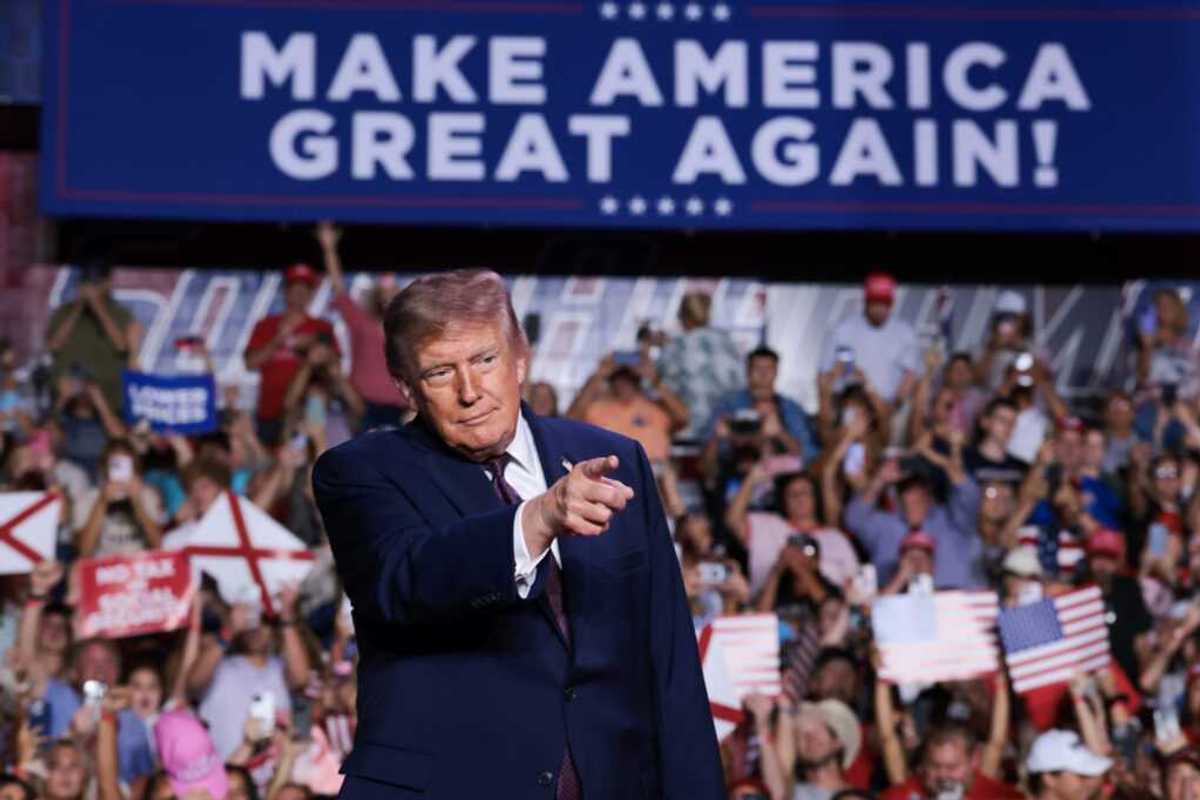



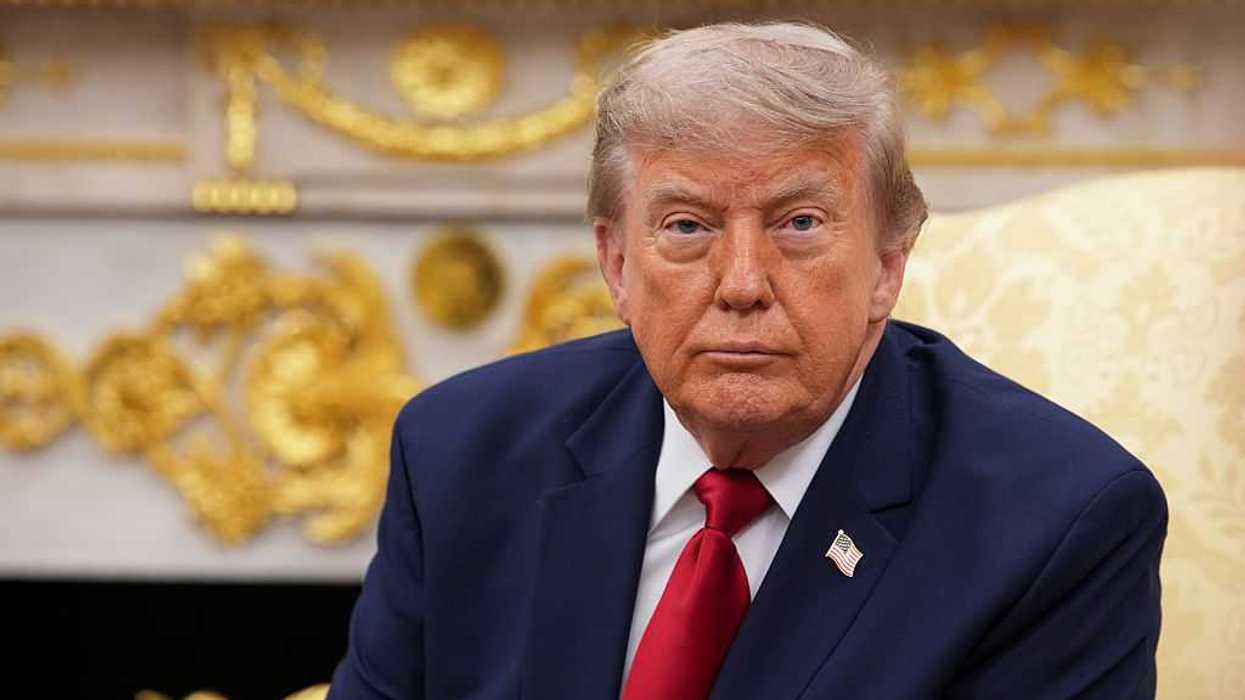

President Donald Trump blasted ICE’s decision to suspend most vehicle stops after agents fatally shot two men just six days apart in Texas and Maine, declaring on his social media site: “We CANNOT give up one of ICE’s most important and effective Crime Fighting tools, THE TRAFFIC STOP!” His response made the stakes unmistakably clear. Instead of acknowledging the loss of life or the urgent need for accountability, Trump rushed to defend the very tactic that produced these deadly encounters. Once again, he signaled that the wellbeing of people — immigrants or citizens — matters far less to him than protecting his political agenda.
Trump’s posture toward ICE has always been rooted in escalation. He has framed undocumented immigrants as threats, encouraged aggressive enforcement, and rewarded secrecy over transparency. The consequences of that approach are now visible in a series of fatal encounters that reveal an agency operating without meaningful oversight.
The two most recent ICE killings — one in Biddeford, Maine, the other in Houston, Texas — are not isolated tragedies. They are flashing red sirens warning that a federal agency armed with guns and legal authority is functioning without basic safeguards. In Maine, agents shot and killed 26‑year‑old Colombian national Johann Sebastian Guerrero during a traffic stop; in Houston, they killed Lorenzo Salgado Araujo, a Mexican man driving to work. In both cases, agents wore no body cameras, offered conflicting accounts, and left families — and the public — with nothing but their word. When an agency can take a life and leave behind no evidence, that is not law enforcement. That is impunity — the predictable outcome of a political climate that has spent years dehumanizing undocumented immigrants.
The Maine shooting is even more alarming because Guerrero was not the person ICE intended to arrest. Sen. Angus King said ICE briefed him that Guerrero — identified by community groups as a 26‑year‑old Colombian national — was mistakenly targeted. King also confirmed that agents were not wearing body cameras, leaving investigators and the public with no independent record of what happened. A man who was never wanted by ICE ended up dead, with no video, no transparency, and no accountability — a stark reminder of how dangerously opaque and error‑prone the agency’s enforcement practices have become.
The Houston killing reveals the same pattern. Salgado Araujo, a Mexican national on his way to work, was shot and killed by ICE agents who claim he tried to ram an officer with his car — a narrative his family strongly disputes. As in Maine, ICE officers were not wearing body cameras, leaving no independent evidence of what occurred and no way to verify the government’s account. The absence of video forces the public to rely solely on ICE’s version of events, eroding trust and underscoring how easily deadly force can be used without scrutiny.
Earlier this year, the Minnesota shootings showed how deeply ICE’s lack of transparency has damaged public confidence. Renee Good, a 37‑year‑old mother of three, and Alex Pretti, a 37‑year‑old ICU nurse, were both killed by federal officers during January protests against an immigration enforcement surge in Minneapolis. State investigators say ICE withheld key evidence for months, including body‑camera footage that should have been turned over immediately. That delay stalled the investigation and left families in limbo, forced to grieve without answers while federal officials controlled the narrative. The Minnesota cases reveal the same pattern seen in Maine and Houston: deadly force, disputed accounts, and an agency that treats transparency as optional — even when lives are lost.
Illinois offers yet another example. In Franklin Park, an ICE agent fatally shot Silverio Villegas González during a 2025 enforcement operation, later telling investigators his injuries were “nothing major” — a detail that sharply undercuts ICE’s claim that deadly force was necessary to protect officers from serious harm. ICE also delayed the release of key records, mirroring the same secrecy and stonewalling seen in Minnesota, Maine, and Houston. When an agent can kill someone and then describe his own injuries as minor, it raises fundamental questions about whether deadly force was justified at all — and exposes how ICE’s internal accounts often collapse under scrutiny.
Taken together, these cases show a consistent pattern: an agency emboldened by political rhetoric that casts immigrants as threats and protected by a system that rewards secrecy over accountability. Trump’s repeated portrayal of undocumented people as “invaders” and “poison” has not only dehumanized millions — it has created the political permission structure in which ICE’s most extreme actions are tolerated, excused, or ignored. When leaders strip people of their humanity, agencies feel licensed to strip them of their rights.
ICE’s impunity is not accidental; it is structural. The agency operates inside a deportation‑industrial complex where private prison corporations like CoreCivic and GEO Group profit from detention, lobby for harsher enforcement, and thrive under weak oversight. Their business model depends on opacity, and ICE’s enforcement practices — shrouded in secrecy, resistant to scrutiny — help keep that model alive.
This profit motive flourishes in a political climate shaped by Trump’s dehumanizing language. When people are labeled “animals,” “invaders,” or “poison,” violence becomes easier to justify, secrecy becomes easier to defend, and detention becomes a business opportunity. When agencies operate in the dark, violence becomes easier to hide. When corporations profit from detention, violence becomes part of the business model.
The killings across the country demand more than outrage — they demand a national reckoning with an agency allowed to operate outside democratic norms. ICE must be required to wear body cameras during all enforcement operations, ban face coverings that obscure identity, release incident footage within a defined timeframe, end contracts with private detention companies, and submit to independent oversight with real investigative power. These are not radical demands — they are the bare minimum for any agency that carries weapons, conducts raids, and makes life‑and‑death decisions in our communities.
As a journalist and advocate for equitable civic information, I have spent years listening to immigrant families who live with the daily fear of ICE. Their stories are not abstractions. They are parents who worry about being taken from their children, workers who fear being targeted at job sites, students who wonder whether their school will be next. They see agents arrive in masks, without cameras or accountability.
The deaths of people at the hands of the Trump administration are warnings we cannot afford to ignore. ICE’s current model is unsustainable, unsafe, and incompatible with democratic values. If we fail to act, more families will suffer the same fate as the loved ones of Johann Sebastian Guerrero, Lorenzo Salgado Araujo, Renee Goode, Alex Pretti, and Silverio Villegas González.
Trump’s refusal to confront ICE’s deadly pattern is not just a policy failure. It is a moral one. And it is costing lives.
The question now is not whether ICE needs reform. It is whether the country is willing to confront a president who treats human suffering as collateral damage in the service of his political ambitions. The families of those killed by ICE are watching. Immigrant communities are watching. The nation is watching.
And history will remember who chose silence — and who demanded accountability.
Hugo Balta is the executive editor of The Fulcrum and the publisher of the Latino News Network, and twice president of the National Association of Hispanic Journalists



 Ben Droz
 Ben Droz





The President Invited Iran to Bomb My Home