


Skip to content
Search

Latest Stories

Top Stories

Student-Led AI Initiative Aims to Tackle Misinformation

News

person reading a computer screen
man using computer inside room

PRINCETON JUNCTION, NJ — As generative artificial intelligence reshapes the digital landscape, a New Jersey student researcher is using the technology to combat media bias. Shaurya Jindal, an AI researcher and student at West Windsor-Plainsboro High School South, has launched Cogito News, an educational platform designed to build modern media literacy skills.

Cogito News was founded in response to growing concerns about partisan framing and selective sourcing in contemporary journalism. Recognizing that cognitive biases often influence how news is packaged and consumed, Jindal sought to build a tool that helps users critically evaluate the information they encounter daily. The platform's real-world impact and timely relevance were highlighted when Jindal was my guest on The Fulcrum Democracy Forum, an interview series dedicated to civic renewal and examining innovative approaches to strengthening democratic systems.


- YouTube youtu.be

The central innovation of Cogito News discussed across these civic platforms is its automated Bias Detector algorithm. The platform's mechanics are straightforward yet technologically sophisticated: users paste a URL or source text into the dashboard, and the platform routes it through two independent, open-source AI models. The system then analyzes subtle linguistic cues, rhetorical framing, and sourcing patterns to map the narrative inclination along a political spectrum of left, center, or right leanings.

Jindal's work on the platform aligns with his broader academic focus on artificial intelligence, dataset engineering, and machine learning models. His previous research, including comparative analyses of prominent model architectures like VGG-16, ResNet50, and YOLO, provided the foundational framework necessary to optimize the open-source linguistic models used for Cogito News. By deploying open-source models, the platform demonstrates how lightweight AI architecture can be repurposed for localized, high-impact educational utilities without requiring the massive compute infrastructure of enterprise frontier labs.

Beyond its technological components, Cogito News is primarily positioned as an educational utility. Jindal envisions using the tool in classrooms and with everyday readers to help them break down complex articles, spotlight systemic framing biases, and foster a healthier, more analytical approach to consumption in the digital age.

Hugo Balta is the executive editor of The Fulcrum and the publisher of the Latino News Network.

Read More

An aerial view of a Flock camera

An aerial view of a Flock camera in Burbank, California. U.S. President Donald Trump expressed support for Flock cameras, saying he likes the AI-powered surveillance technology because of its use by law enforcement, despite concerns that it infringes on privacy.

(Photo by Justin Sullivan/Getty Images)

Flock Cameras Are Coming Down – but We Need More To Dismantle the Surveillance State

Chances are, you’ve seen one in your neighborhood. Flock cameras have become a major flashpoint for voters in the leadup to the midterms. The concept sounds straight out of 1984 — a network of government-owned cameras that track your movements — it’s no wonder that Americans across party lines are demanding their states and towns sever ties with the controversial company. Surveillance fears are only getting stronger as we enter the AI era.

But the problem isn’t just Flock. These cameras, Automated License Plate Readers or ALPRs to be exact, are a symptom of a larger “surveil first, ask questions later” attitude that has been adopted by local and federal government for decades. In recent years, the federal government has been dramatically expanding the nation’s surveillance infrastructure. This has taken many forms, from facial recognition technology at the airport, to law enforcement monitoring your mail, to the government watching what you’re posting on your personal social media pages. Since April, many Democrats and Republicans in Congress have united to stop what would effectively be a blank check for surveillance via FISA reauthorization, demanding surveillance reforms such as closing the “data broker loophole”, which allows the government to buy Americans’ personal data without a warrant.

Keep ReadingShow less
​Young adult woman accessing artificial intelligence

Young adult woman accessing artificial intelligence, managing digital information, and exploring future technology within an office setting

Getty Images

When One Person Can Do the Work of a Team

The harder question is how many capable people organizations will need. My latest lesson about artificial intelligence did not come from a research report or technology conference. It came from running the Security and Sustainability Forum.

Until recently, I depended heavily on an assistant to manage much of the website and webinar production process. Now I can do many of those tasks myself with Claude and ChatGPT. They help me develop content, revise web pages, solve technical problems, and manage projects that once required considerably more human support.

Keep ReadingShow less
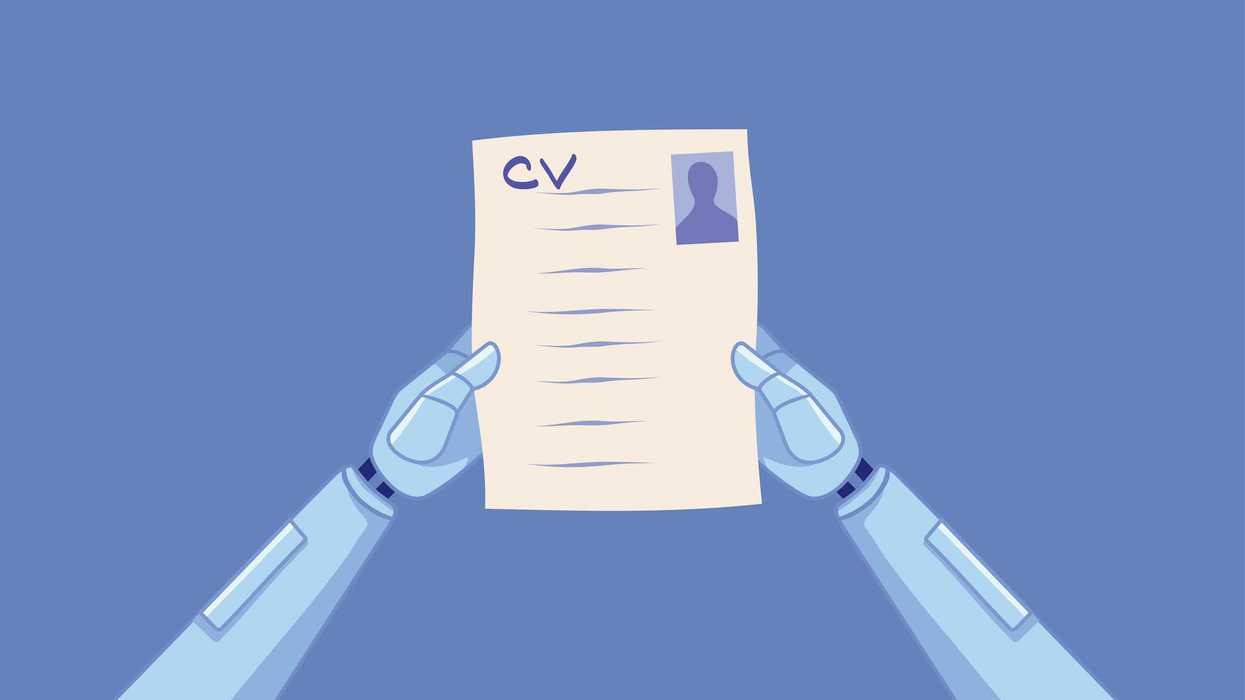
Robot Holding a Resume Doing HR Work Vector Illustration

AI résumé screening can filter out qualified candidates before a human ever looks. Here's why transparency and human oversight in hiring matter.

nicoletaionescu/Getty Images

When AI Screens the Resume, Who Gets a Fair Shot at Work?

A job seeker can spend hours tailoring a résumé, checking qualifications and writing a thoughtful application, believing the next step will be a person deciding whether to schedule an interview.

Increasingly, that assumption may be wrong.

Keep ReadingShow less
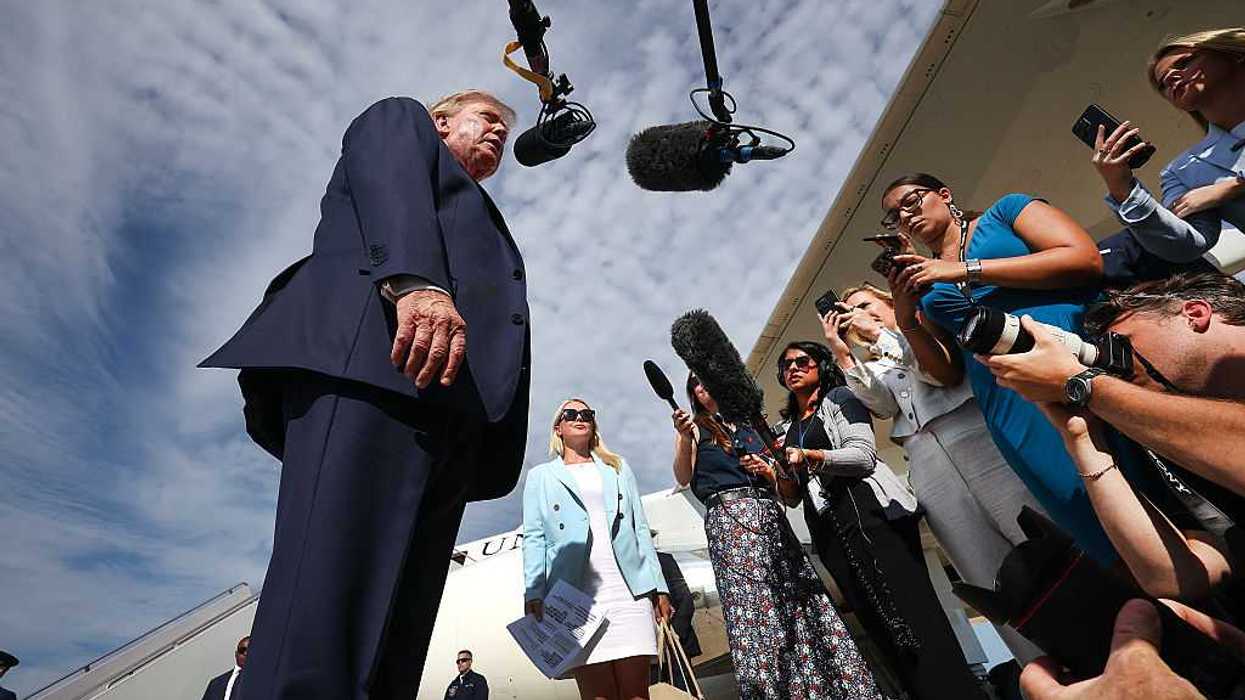
President Trump answers questions from reporters.

U.S. President Donald Trump answers questions from reporters before boarding Air Force One on August 21, 2026 in Joint Base Andrews, Maryland.

(Photo by Win McNamee/Getty Images)

Trump’s White House Press Ban Violates 1st Amendment

The principle is simple. Just like politicians are not supposed to pick their voters, government officials don’t get to pick the reporters who cover them.

If they did, the First Amendment would be meaningless. and we would no longer live in anything resembling a constitutional republic. That is why President Trump’s September 18 announcement that he is banning reporters from CNN, MSNow, and Politico from the White House is so dangerous.

Keep ReadingShow less