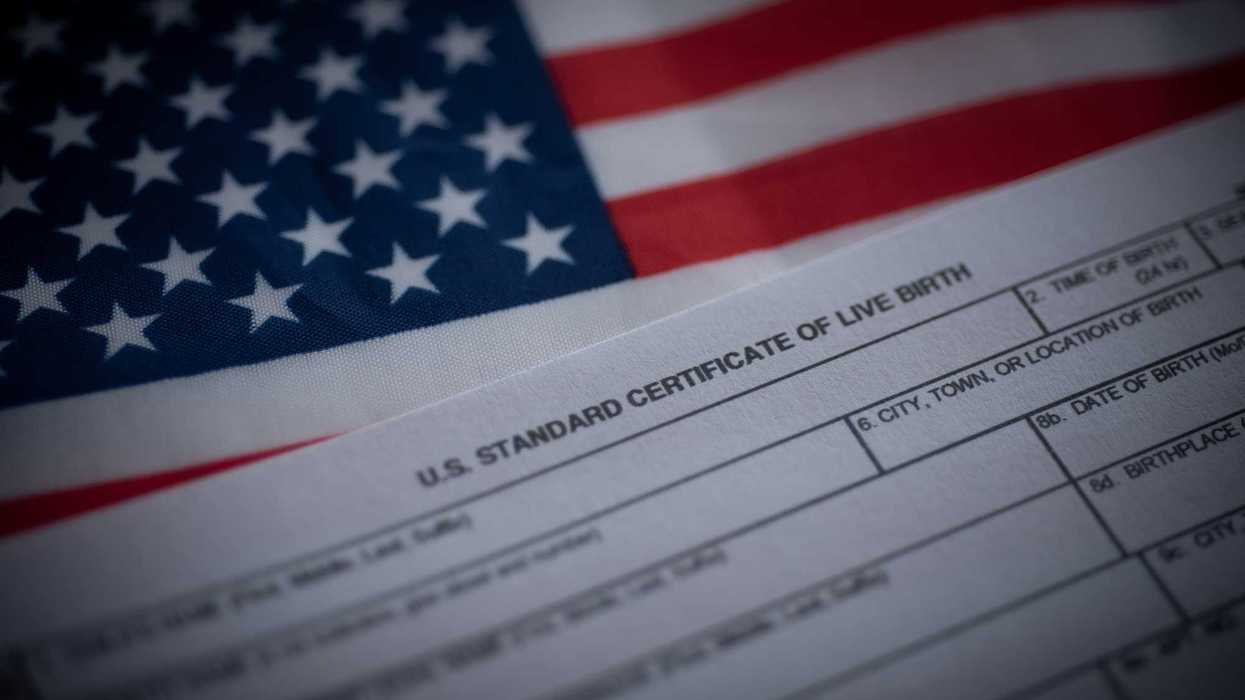
The Trump Administration’s latest executive orders targeting birthright citizenship are not just legally dubious—they are a direct challenge to the Constitution, the Supreme Court, and the millions of Americans whose citizenship is guaranteed by the Fourteenth Amendment.
Less than six weeks after the Court reaffirmed in Trump v. Barbara that “birthright citizenship is the law of the land,” the administration has returned with new orders designed to narrow who counts as American. legal experts view these actions as an attempt to “override constitutional guarantees” through executive fiat, despite the Court’s clear ruling.
This moment demands clarity: birthright citizenship is not a policy preference. It is a constitutional promise. And when a president attempts to rewrite that promise unilaterally, the threat is not theoretical—it is immediate, targeted, and deeply destabilizing.
Civil‑rights organizations have responded with urgency. Voto Latino called the orders “a direct assault on the Fourteenth Amendment,” and President and CEO María Teresa Kumar warned, “This is not about policy. This is about power — and about stripping millions of Americans of their constitutional rights.” Executive Director Beatriz Lopez added that the orders represent “a dangerous attempt to undermine the very foundation of American citizenship,” noting that Latino families and mixed‑status households would bear the brunt of the harm.
The Hispanic Federation issued one of the strongest rebukes. Frankie Miranda, its President and CEO, said the administration had shown “their obstinate efforts to violate the U.S. Constitution, undermine immigrant communities, target people of color, and disregard separation of powers.” He reminded the public that the Supreme Court had already rejected the administration’s previous attempt, stating, “Birthright citizenship is the law of the land, and no executive order can overturn a right so directly embedded within the Fourteenth Amendment.”
Miranda also highlighted the cruelty of singling out U.S. territories—especially Puerto Rico—in these orders. “Families in U.S. territories…are uniquely and cruelly singled out in this latest attack, threatening millions of Americans who already face their unique set of challenges.” His warning underscores a truth often ignored in national debates: attacks on citizenship do not fall evenly. They fall hardest on communities of color, immigrant families, and Americans living in territories whose political power is already constrained.
Constitutional scholars see little legal path forward for these orders. The Fourteenth Amendment’s Citizenship Clause has been “consistently upheld for more than a century,” and the Court’s recent ruling leaves “little room for reinterpretation.” Yet the administration’s persistence reveals something deeper than a legal strategy—it reveals a political project aimed at redefining who belongs in America.
That project must be confronted directly. As Miranda put it, “We are confident that these orders will not survive judicial scrutiny,” but litigation alone is not enough. He urged Congress to “reassert its authority to push back on these un‑American attacks.” Voto Latino echoed that call, insisting that lawmakers must defend the Constitution and the communities targeted by these unlawful orders.
The fight over birthright citizenship is no longer a hypothetical debate or a fringe argument. It is now a test of whether the nation will uphold one of its most fundamental guarantees: that all people born on U.S. soil are equal in their citizenship, equal in their rights, and equal in their belonging. The administration’s latest orders challenge that principle at its core. The response must be as strong as the threat—rooted in law, history, and the lived reality of the Americans whose citizenship is not up for negotiation.
Trump’s Birthright Citizenship Orders Are an ‘Un‑American Attack’ was first published by the Latino News Network and republished with permission.
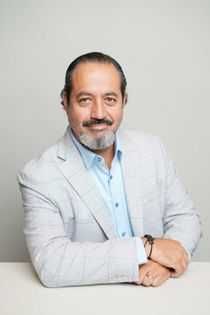
Hugo Balta is the executive editor of The Fulcrum and the publisher of the Latino News Network, and twice president of the National Association of Hispanic Journalists.