

Skip to content
Search

Latest Stories

Follow Us:
Top Stories

Video: Democracy in the balance?

Democracy in the Balance? The Polarized Politics of Political-Economic Reform
At a moment of political division and policy uncertainty, many believe American democracy is in serious danger. Inequality, polarization, the stoking of anger, and the exploitation of weaknesses in our political system all threaten the representative government we once took for granted. We cannot go backward, so how do we move forward to assure that the years of struggle that led to our democracy were not in vain? The Network for Responsible Public Policy discusses in its forum: Democracy in the Balance.


Read More

A New Norm of DHS Shutdown & Long Airport Lines

Travelers wait in a TSA Pre security line at Miami International Airport on March 17, 2026, in Miami, Florida. Travelers across the country are enduring long airport security lines as a partial federal government shutdown affects the Transportation Security Administration officers working the security lines.

(Joe Raedle/Getty Images/TCA)

A New Norm of DHS Shutdown & Long Airport Lines

If you’ve ever traveled to France, chances are you’ve come up against this all-too-common phenomenon. You get to the train station and, without warning, your train is out of service. Or a restaurant is oddly closed during regular business hours.

“C’est la grève,” you may hear from a local, accompanied by a shrug. It’s the strike.

Keep ReadingShow less
Constitutional Barriers to Nationalizing Elections
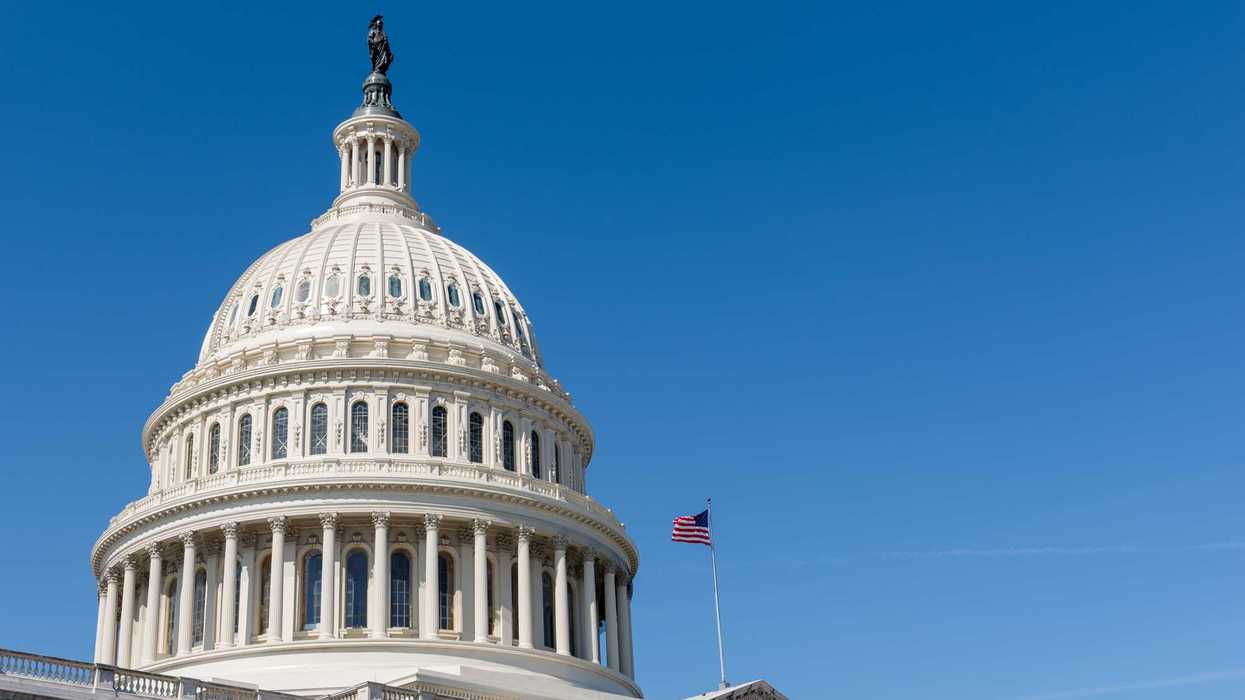
US Capitol
US Capitol

Constitutional Barriers to Nationalizing Elections

In the run-up to the midterms, President Trump continues to call for nationalizing congressional elections. He has sought to initiate the process through executive orders, such as one proposing to set “a ballot receipt deadline of Election Day for all methods of voting.” The words and spirit of the United States Constitution—the bedrock textualism and originalism of conservative constitutional interpretation—say he can’t nationalize elections.

Unlike some consequential constitutional questions, it’s not a close call.

Keep ReadingShow less
Unpacking War Powers in the U.S.-Iran Conflict: Who Decides When America Goes to War?

Smoke billows after overnight airstrikes on oil depots on March 8, 2026 in Tehran, Iran.

(Photo by Majid Saeedi/Getty Images)

Unpacking War Powers in the U.S.-Iran Conflict: Who Decides When America Goes to War?

What Is The War Powers Resolution of 1973?

The War Powers Resolution of 1973 is a law enacted by Congress that limits the U.S. president’s ability to wage or escalate military operations overseas. Passed on November 7, 1973 amid the Vietnam War, the War Powers Resolution reasserts Congress’ constitutional power “to declare war” and “to raise and support Armies.” A key provision of the War Powers Resolution requires the president to submit a report to Congress within 48 hours of military deployment in the absence of an official declaration of war by Congress detailing:

  • The circumstances requiring U.S. forces;
  • The constitutional or legislative justification for the president’s actions;
  • The estimated duration of U.S. involvement in the hostilities.

If Congress does not formally declare war or enact special authorization for continuation of the U.S’ involvement in a conflict within 60 days of the report’s submission, the president must withdraw U.S. troops from the hostilities. If Congress does declare war, the president is instructed under the War Powers Resolution to report to Congress periodically on the status of the hostilities no less than once every 6 months.

Keep ReadingShow less
Protestors holding signs, including one that says "let the people vote."

Attendees hold signs advocating for voting rights and against the SAVE America Act at a rally to outside the U.S. Capitol on March 18, 2026 in Washington, DC.

Getty Images, Heather Diehl

SAVE America Act Debate Begins; Mullin for DHS Hearing

Both chambers of Congress are in session this week and next. The House will probably function about like it has been - lots of votes (often by voice) on uncontroversial bills; many fewer votes on Republican priority bills. Lots of hearings this week and a few legislator updates.

Committee Meetings

Both chambers have a busy week with 64 total committee meetings scheduled.

Keep ReadingShow less