



Skip to content
Search

Latest Stories

Follow Us:
Top Stories

Podcast: The call the unite

Tim Shriver on the Braver Angels podcast
Youtube

Are calls for unity too weak and too generic to move Americans? What are the hard truths that stand in the way of unity?

Educator, activist, and author Tim Shriver joined the Braver Angels podcast to talk about his new book, "The Call to Unite," and the budding nationwide movement to unite America.


The Call to Unite | Tim Shriver with John Wood, Jr. & April Lawsonwww.youtube.com

Read More

AI, Reality, and the Pygmalion Effect: Why Human Judgment Still Matters
Woman typing on laptop at wooden table with breakfast.

AI, Reality, and the Pygmalion Effect: Why Human Judgment Still Matters

When the World goes Mad, one must accept Madness as Sanity, since Sanity is, in the last analysis, nothing but the Madness on which the Whole World happens to agree. (George Bernard Shaw)

Among the most prolific and famous playwrights of the 20th century, Shaw wrote “Pygmalion,” the play upon which “My Fair Lady” was based. Pygmalion was a Greek mythological figure, a sculptor from Cyprus, who fell in love with the statue he created. Aphrodite turned his sculpture into a real woman, promoting the idea that the “created” is greater than the “creator.”

Keep ReadingShow less
Humanoid Educators Will Widen Inequality—And Only Tech Overlords Will Benefit
a sign with a question mark and a question mark drawn on it

Humanoid Educators Will Widen Inequality—And Only Tech Overlords Will Benefit

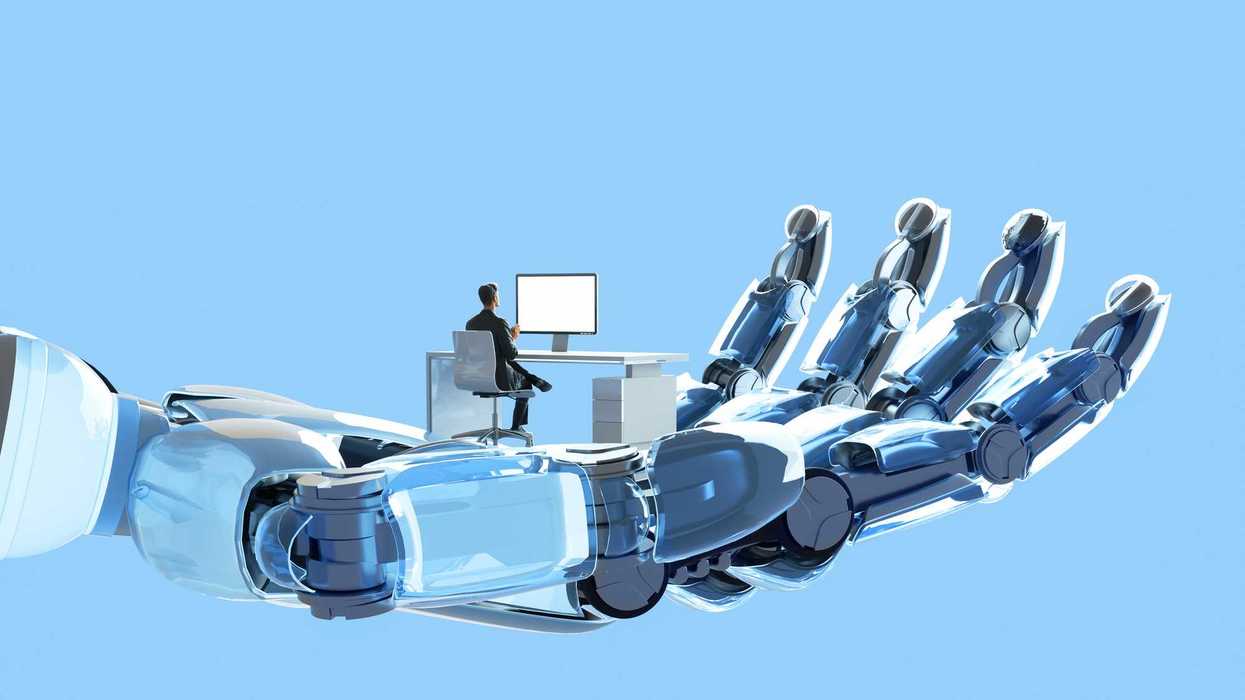
In March, First Lady Melania Trump hosted an AI-powered humanoid robot at the White House during the Fostering the Future Together Global Coalition Summit, and introduced Plato, a humanoid educator marketed as a replacement for teachers that could homeschool children. A humanoid educator that speaks multiple languages, is always available, and draws on a vast store of information could expand access in meaningful ways. But the evidence suggests that the risks outweigh the benefits, that adoption will be uneven, and that the families most likely to adopt Plato will bear those risks disproportionately.

Research on excessive technology use in childhood has found consistent results. Young children and teenagers who spend too much time with screens are more likely to experience reduced physical activity, lower attention spans, depression, and social anxiety. On the same day that Melania Trump introduced Plato, a California jury ruled that Meta and YouTube contributed to anxiety and depression in a woman who began using social media at age 6, a reminder that the consequences of under-tested technology on children can be severe and long-lasting.

Keep ReadingShow less
An illustration of a block with the words, "AI," on it, surrounded by slightly smaller caution signs.

The future of AI should be measured by its impact on ordinary Americans—not just tech executives and investors. Exploring AI inequality, labor concerns, and responsible innovation.

Getty Images, J Studios

The Kayla Test: Exploring How AI Impacts Everyday Americans

We’re failing the Kayla Test and running out of time to pass it. Whether AI goes “well” for the country is not a question anyone in SF or DC can answer. To assess whether AI is truly advancing the interests of Americans, AI stakeholders must engage with more than power users, tokenmaxxers, and Fortune 500 CEOs. A better evaluation is to talk to folks like Kayla, my Lyft driver in Morgantown, WV, and find out what they think about AI. It's a test I stumbled upon while traveling from an AI event at the West Virginia University College of Law to one at Stanford Law.

Kayla asked me what I do for a living. I told her that I’m a law professor focused on AI policy. Those were the last words I said for the remainder of the ride to the airport.

Keep ReadingShow less
Close up of a person on their phone at night.

From “Patriot Games” to The Hunger Games, how spectacle, social media, and political culture risk normalizing violence and eroding empathy.

Getty Images, Westend61

The Capitol Is Counting on Us to Laugh

When the Trump administration announced the Patriot Games, many people laughed. Selecting two children per state for a nationally televised sports competition looked too much like Suzanne Collins’ Hunger Games to take seriously. But that instinct, to laugh rather than look closer, is one the Capitol is counting on. It has always been easier to normalize violence when it arrives dressed as entertainment or patriotism.

Here’s what I mean: The Hunger Games starts with the reaping, the moment when a Capitol official selects two children, one boy and one girl, to fight to the death against tributes from every other district. The games were created as an annual reminder of a failed rebellion, to remind the districts that dissent has consequences. At first, many Capitol residents saw the games as a just punishment. But sentiments shifted as the spectacle grew—when citizens could bet on winners, when a death march transformed into a beauty pageant, when murder became a pathway to celebrity.

Keep ReadingShow less