




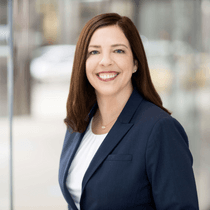
Alex Edgar has heard the line more times than he can count: Gen Z is our hope. Gen Z will fix this. And every time, from panel stages to private conversations, he gives the same answer.
“No, no, no; you’re not getting out of this so easy,” he said. “We have to do this together.”
Young people, he argues, simply don’t hold power in American society in a way that lets them make the changes they’re constantly told to make. And a generation that has watched movement after movement — March for Our Lives, the climate strikes, Black Lives Matter — produce incremental wins that were later rolled back has drawn a hard conclusion: not just that they can’t make change from the outside, but that even inside the institutions, they wouldn’t be allowed to. “The onus is so on our existing leaders to reach out their hands toward our younger leaders,” he said.
Edgar, a member of the Democracy Architects Council fellowship from the Bridge Alliance Education Fund and Civics Unplugged, has spent his young career building the structures that make that handoff possible. As youth engagement manager at Made By Us, he co-founded Youth250, an effort to put young people at the center of America’s 250th anniversary; work that has reached millions, engaged thousands of organizations, and earned him a spot on the Forbes 30 Under 30 list for social impact. He is the first Gen Z board member of Points of Light, the youngest-ever appointee to the Census Bureau’s 2030 Advisory Committee, and a Simi Valley, Calif., native who spent his childhood begging his parents to let him quit Cub Scouts. He made Eagle Scout instead.
The through line, he says, was service; a father who taught community college for more than 40 years, a mother deeply involved in the PTA, volunteering “whether I liked it or not” every month of his childhood. The catalyst came in high school, when a mass shooting in the town next door pushed him into organizing, then March for Our Lives, then a citywide youth voter registration drive during the pandemic. At UC Berkeley, where he led campus voter engagement, he grew frustrated that civic engagement had been reduced to voting — so he co-created and taught an undergraduate course, Civic Engagement 101, at the Goldman School of Public Policy to show students everything else it could be.
That instinct for unlikely rooms recently produced one of his most unexpected bylines: a Fox News op-ed on young men, isolation, and service, co-authored with Neil Bush. Edgar knows the topic can read as a culture-war flashpoint, and he refuses to frame it as a zero-sum contest. “Young men and boys not doing well is bad for young women and girls,” he said, arguing the divide is “far more about class than it is gender.”
The 250th anniversary presents a similar trap, and Youth250 was built to walk between its two camps: American pessimism on one side, American exceptionalism on the other. Most Americans, Edgar says, live in between. When his team asked the hundreds of applicants to the Youth250 Bureau a deliberately open question — are you patriotic, why or why not? — the answers refused to sort by politics. The most striking pattern: first- and second-generation immigrants who said their family’s story was exactly why they were so patriotic.
Within the Democracy Architects Council, Edgar describes himself as the only fellow who has worked deep inside the formal democracy field, and he’s come away skeptical of its borders. “Even the fact that there is a democracy space is antithetical to the type of work that we want to be doing,” he said. The field’s weakness, in his telling, is that elite institutions often prize being perceived as experts over elevating the people most directly affected. The council, he believes, is a rare bet in the other direction: trusting young people with visioning, then connecting that vision to people with the resources to act on it.
Asked to finish the sentence “By 2035, American democracy will ___ if we do our jobs,” Edgar didn’t hesitate long: “actually be representative.”
And his ask of anyone reading this is characteristically intergenerational. If you’re young, have a real conversation with an older person you’re not related to, about who they are, not what they think politically. If you’re older, do the reverse. “We are so age-segregated as a country,” he said. “The lack of connection across difference... is one of the most powerful opportunities in our democracy that does not get tapped into.”
The Democracy Architects Council, presented by The Bridge Alliance Education Fund and Civics Unplugged, offers a paid, one-year fellowship for eight fellows ages 18 to 28, each selected for their work across a distinct sector of democratic life.
Kristina Becvar is the executive director of the Bridge Alliance Education Fund.












The President Invited Iran to Bomb My Home