


From Emmaus, Pennsylvania and Staten Island to Veterans of Foreign Wars posts in Kansas, Tennessee, N. Carolina and more, as well as the Ohio State Fair's butter cow theme (and deviled egg recipes), the celebration of America 250 continues throughout the rest of the sesquicentennial year.
Added to the recent Sail250 tall ship event culminating in Boston’s harbor attended by millions was part of the country’s s 1776 official birthdate of independence, but the persistent calls for Black freedom of the last two centuries are still ignored.
Two men, a century apart, stood before audiences and did the same audacious thing: they read the historic words aloud. In Rochester, New York, on July 5, 1852, Frederick Douglass took the founding scripture of the republic and turned it into an indictment: “What, to the American slave, is your Fourth of July?”
In 1967, at Morehouse College’s centennial commencement, President Benjamin E. Mays opened not with celebration but with a catalog of slander — Thomas Jefferson and John C. Calhoun, Louis Agassiz and Henry Grady — the learned apparatus that had declared the newly emancipated “a little less than human.”
Strip away the century between them and both men make one demand: refuse the status the country assigns you. “A man does not have to accept the view,” Mays told the Morehouse men, “that because he is a Negro, certain things were not meant for him.”
That is the whole Black freedom tradition in a single breath.
But Mays did something Douglass could not yet do — he predicted the current era. Discrimination in the future, he warned, “will not be administered by poor whites and the people who believe in segregation but by the ‘liberals’ who believe in a desegregated society but not an integrated society.”
Mays said they would “wine and dine with us in the swankiest hotels, work with us, and still discriminate against us when it comes to money and power.” He named the practice: our institutions are “by design kept on short grass.”
You only need to look at the ground beneath us.
The National Urban League titled its 2025 State of Black America report a “State of Emergency.” That emergency continues in President Donald Trump’s recent false screed in the National Address propagating election lies as the Voting Rights Act erases access; affirmative action is eliminated; and the machinery of fair treatment in schools, businesses, institutions and organizations is switched off.
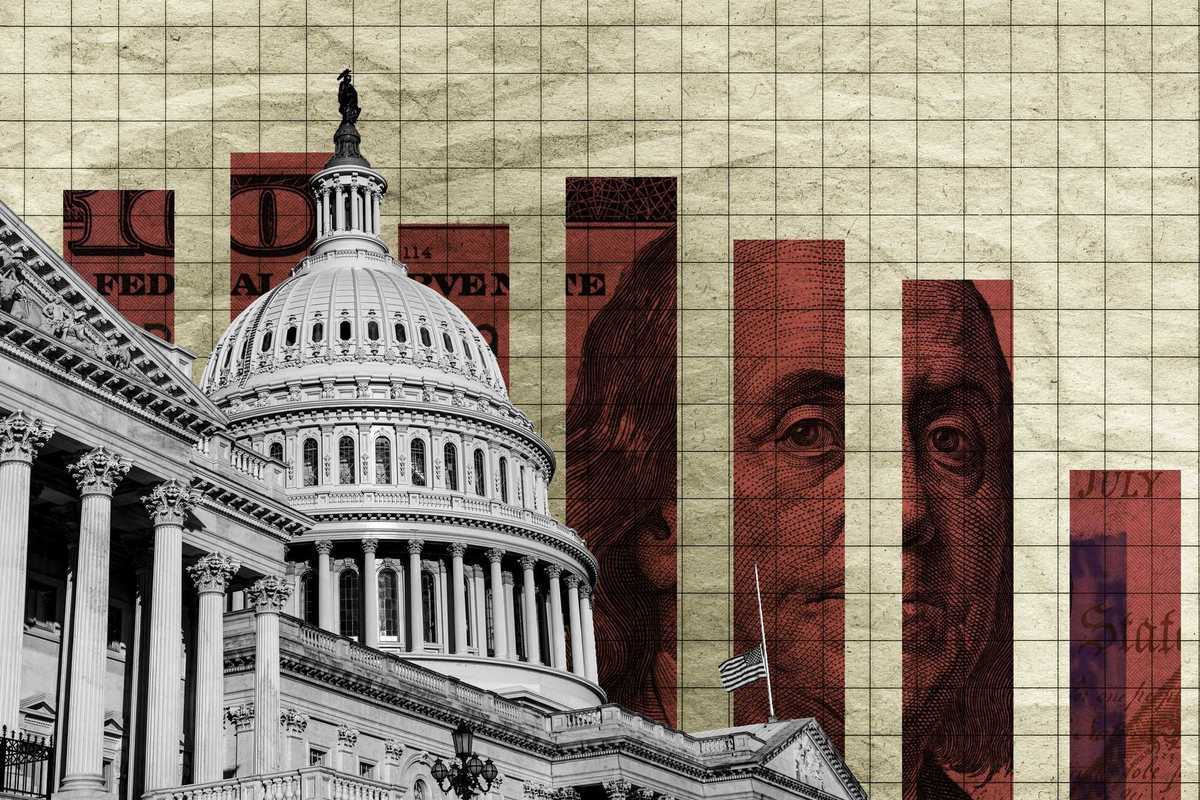
The deepest number is a paradox: Black wealth is rising while the racial wealth gap widens. Black families’ median net worth jumped nearly 58 percent from 2019 to 2022, yet the dollar gap grew past $240,000 — because a small share of a large base compounds faster than a large share of a small one.
Black households hold about 13 cents for every white dollar at the median. That is Mays’s short grass rendered as arithmetic, and Douglass’s promissory note is still marked as insufficient funds.
The Black freedom struggle always carried an economic-justice wing, and it was the engine room, not the fringe. A. Philip Randolph was a socialist. Bayard Rustin, who architected the 1963 March on Washington for Jobs and Freedom, was a democratic socialist.
And Rev. Dr. Martin Luther King, Jr. — Mays’ own student — was murdered in Memphis in 1968 where he was launching a Poor People’s Campaign with sanitation workers that fused race and class. “What good is the right to sit at a lunch counter,” King asked, “if you cannot afford a hamburger?”
Out of King’s Southern Christian Leadership Conference where I served as Executive Director and Chief Operating Officer, came Operation Breadbasket, then PUSH, then Jesse Jackson, Sr.’s Rainbow Coalition — his insistence in 1984 and 1988 that a Black preacher could assemble a multiracial, working-class majority around economic justice.
The late Jackson drew that blueprint; the new movement inherits it whether it knows the names or not. But an honest elder audits the ledger: the Rainbow moved the platform and never captured enough machinery to convert votes into durable Black wealth.
Those views deserve respect, not ridicule. They represent the voice of a people who have buried too many children waiting for beautiful theories to pay out. Pragmatism is not timidity; it is scar tissue.
Along with Jackson, Douglass and Mays were not only prophets — they were builders, editors, fundraisers, and institution-makers who held the prophet’s fire and the steward’s ledger in the same two hands. They displayed radical ends with disciplined means.
Which calls up the hardest question: in a technologically disruptive, media-savvy age, how do Black folks survive?
The threat is concrete — Black workers are far likelier to hold the jobs automation eats first, in customer support, office work, food service, and production, while too thin a pipeline runs into the fields the new economy rewards.
Survival is the short-grass mind. The word this moment demands is sovereignty — moving from labor to ownership of equity, intellectual property, and capital. Moving from being the audience on platforms to owning the platforms and the story that runs on them.
The entrepreneurial signal is already there: Black-owned firms grew about 57 percent from 2017 to 2022. But they remain roughly three percent of American companies and one percent of revenue.
Formation is not the bottleneck; capital, contracts, and scale are. The fight Mays named — equal consideration for the tax and philanthropic dollar — is today the fight for venture capital, credit, and procurement. Politics that does not move capital toward ownership is decorative.
The through-line from Douglass to now is simple: the freedom this country grants on paper, it withholds in capital. Every generation’s task is to convert the paper into property and the property into power.
This generation’s task is to make certain that when the AI economy is finished being built, Black entrepreneurs are counted among its owners — and not merely among its displaced. Take us off the short grass, and we will show you what we grow.
Dr. Lamell J. McMorris is the founder of Phase 2 Consulting, and Greenlining Realty USA; serves as Senior Vice Chair of the National Urban League Board of Trustees and is author of The Power to Persist. He is the former Executive Director and Chief Operating Officer of the Southern Christian Leadership Conference.