

On November 19, 1863, President Abraham Lincoln concluded the Gettysburg Address with a vision of democracy that has endured for more than a century:
“That this nation, under God, shall have a new birth of freedom, and that government of the people, by the people, for the people, shall not perish from the earth.”
More than 160 years later, the United States must confront a difficult question: Does our government meet its own standard for a democracy?
"Of the People"
A government “of the people” must be a governing body that reflects the population it serves in both composition and lived reality. But even beyond race and gender, Congress is operating from entirely different realities than the people it represents. One member of Congress is over the age of 90, born before the first lobotomy was ever performed in America. Nineteen members are over 80, graduating high school before the Civil Rights Act passed (1964), before the Supreme Court struck down sex-based discrimination (1971), and before the moon landing (1969). In other words, nearly 20 people writing federal law today came of age before many of the rights and protections we now consider baseline ever existed.
Nearly 100 members are in their seventies, already adults before the internet was invented (1990), before the first Black Miss America (1983), and before the wave of national conversations that followed Columbine (1999). Another 137 members are in their sixties, born during the last lobotomy operation in America, and shaped politically long before the first woman became Speaker of the House or before same-sex marriage was legalized nationwide. Meanwhile, there are only 37 members in their thirties and just one person under 30.
Beyond fixed demographics, members of Congress are also overwhelmingly affluent compared to the average American. As of 2021, the median net worth of a congressmember was $1.28 million. with roughly 1 in 10 members holding enough wealth to place them in the top 1 percent, In the Senate alone, at least 73 percent of members are millionaires in a country where only about 7 percent of people are. Additionally, the wealth of Congresspeople continues to increase. Even during the height of COVID, while millions of Americans worried about losing their jobs, members of Congress were making over $150 million in stock trades.
And running for office has become prohibitively expensive in ways that push most people out before they ever begin. In 2024 alone, House candidacies cost nearly $1.9 billion, Senate candidacies another $1.6 billion, and presidential campaigns cost over $2.6 billion. Individual congressional races can cost anywhere from hundreds of thousands of dollars to well over $10 million, demanding money and access to wealthy donor networks, as well as the ability to campaign full time without financial insecurity. For many candidates, fundraising itself becomes a full-time job. Representative Maxwell Frost had to quit his full-time job, work 10 to 12 hours a day on his campaign, max out his credit cards, and drive for Uber just to get by during his campaign. After winning, his credit was so damaged that he struggled to rent an apartment.
While wealth doesn’t negate the capacity for empathy or effective leadership, it does shape perspective. When pathways to office are only accessible to those with certain financial means, the range of lived experiences represented in government narrows accordingly. If a system no longer allows for the rise of ordinary leaders, it forces a reconsideration of what representation truly means. A democracy that cannot produce leaders from ordinary life has ceased to be governed by ordinary people.
"By the People"
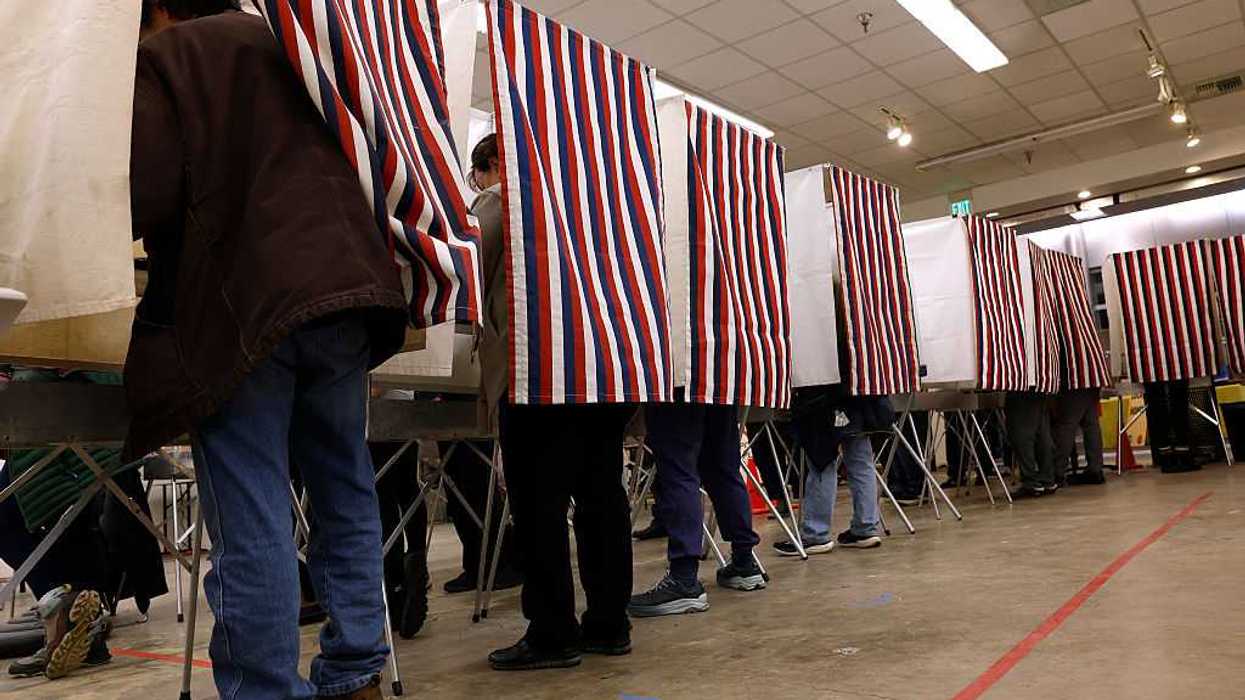
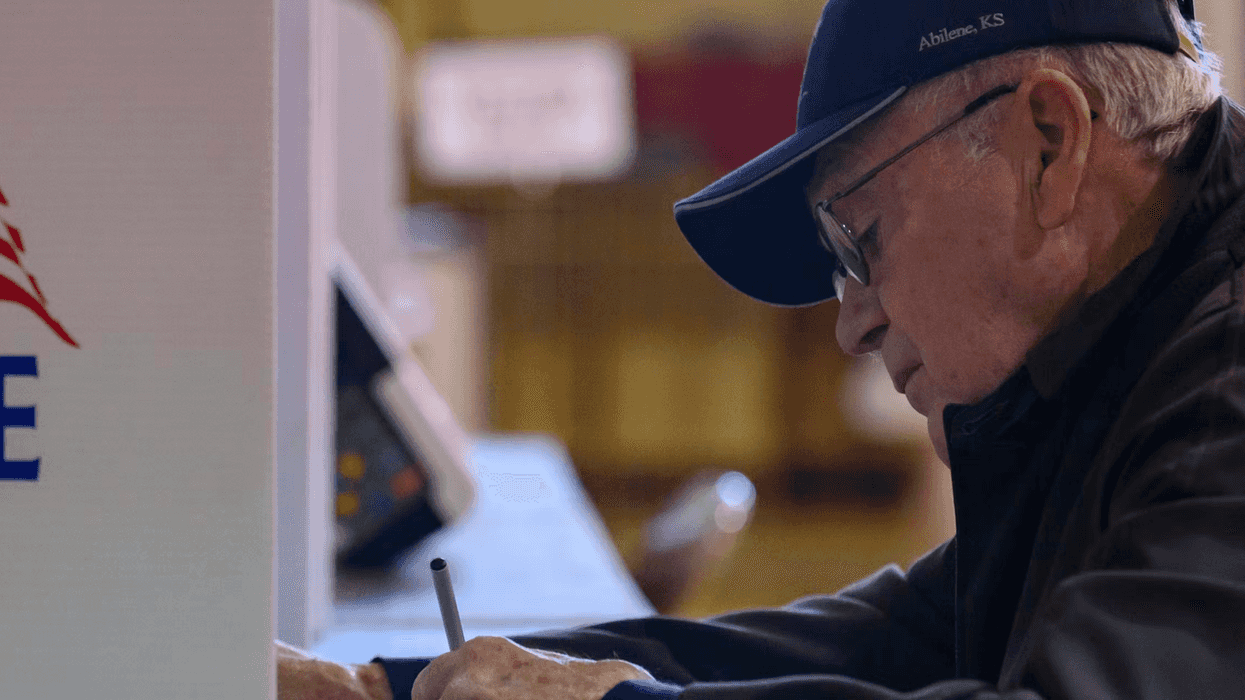
A government is not democratic simply because elections occur, but because citizens possess meaningful power over their outcomes.
For much of the twentieth century, the Voting Rights Act of 1965 served as one of the most effective tools for preventing racial discrimination in voting. That is, until 2013, when Shelby County v. Holder struck down the coverage formula determining which jurisdictions were required to obtain federal approval before changing their voting laws. Within hours of the ruling, Texas announced it would implement a strict voter identification law that had previously been blocked because the state failed to demonstrate it wouldn’t harm Black and Latino voters. Mississippi and Alabama quickly implemented voter ID requirements of their own, while North Carolina enacted what a federal court later described as a voter suppression law targeting African Americans with "almost surgical precision," reducing early voting capacity, eliminating same-day registration, and imposing new identification requirements. Between 2012 and 2018, counties formerly subject to federal oversight closed at least 1,688 polling places.
Furthermore, modern gerrymandering has allowed politicians to manipulate representation before voters ever enter the booth. Traditionally, states redrew congressional maps once every ten years, but since the summer of 2025, 10 states have changed their congressional maps mid-decade, a rate the National Conference of State Legislatures describes having not seen since the 1800s.
And once again, these limitations are further compounded by the increasing centrality of money in American elections. In Citizens United v. Federal Election Commission (2010), the Supreme Court ruled corporations, unions, and other organizations have a First Amendment right to spend unlimited amounts of money on independent political advocacy. In the last presidential election before Citizens United, outside groups spent roughly $574 million on federal elections. By 2024, outside spending reached nearly $4.5 billion, while Super PAC spending exploded from $62.6 million in 2010 to more than $4.1 billion. This money is concentrated among a tiny group of wealthy donors, where the share of federal election spending coming from the top 100 donors rose from just 1.5 percent before Citizens United to roughly 14 to 16 percent.
Democracy does not disappear all at once. It wears away piece by piece with every barrier to voting, every manipulated district, and every dollar that buys greater political influence that shifts power away from citizens and toward those already positioned to wield it. Leaving a democracy that preserves the ritual of elections while steadily hollowing out their meaning.
"For the People"
Of the three principles, “for the people” is arguably the most essential. Even if representation is imperfect, access to office is uneven, and participation in elections is constrained, a democracy might still claim legitimacy if those in power act in accordance with the needs and expressed will of the people. However, Congress only aligns with the public opinion on major issues only 55% of the time.
Importantly, the dying bills are those affecting people’s livelihoods and bills Americans have supported with vigor. Pew Research found that 62% of Americans supported raising the federal minimum wage to $15. Navigator Research found that 76% of Americans want Congress to create a national paid family and medical leave program. APM Research Lab found that 86% of Americans supported universal background checks for firearm sales. KFF found that only 82% of Americans wanted Congress to increase Medicaid spending, or keep spending the same. Nearly four years after the Supreme Court overturned Roe v. Wade (1973), Pew Research found that 60% of Americans still said abortion should be legal in all or most cases. Despite this, these proposals have repeatedly struggled to become federal law. Meanwhile, tax policies disproportionately benefitting higher-income households, reductions in social spending, and efforts to weaken programs like Medicaid continue to receive serious consideration.
The people are not confused about what they need. They are asking for safer communities, livable wages, paid time off to care for their families, affordable health care, and basic control over their own bodies. But we are met with a governing system that can hear the public clearly and still chooses to act in their own best interest.
American democracy has never been fully realized. From its founding, America has struggled to live up to the very principles it proclaims. And yet, the defining story of American democracy has never been perfection, but expansion through constitutional amendments and social movements.
The truth is that every generation inherits two Americas: the nation that exists and the nation it claims to be. The distance between those two is the measure of our democracy, and our democratic legitimacy is determined by whether we are deepening the divide or caring enough to turn around and close the gap.
The phrase “of the people, by the people, for the people” is a measure by which democratic systems should be evaluated, and when necessary, challenged. When a government fails to meet that standard, we must hold them accountable. Democracies collapse when citizens mistake democratic symbols for democratic substance, therefore our responsibility cannot also be symbolic. It means practical actions and voting with the seriousness of a people who understand that public officials work for the public. They are not above being challenged, called out, organized against, or voted out. Because a true democracy does not ask the people to endure leaders who fail them. It gives the people the power to replace them.
Ashley Staggers serves as Director of the Fostering Youth Success Alliance (FYSA) at Children's Aid, where she leads statewide policy, advocacy, youth engagement, and partnership efforts to improve outcomes for young people with foster care experience.
Ashley wrote the article in her personal capacity, and the views expressed are her own and do not represent those of Children’s Aid.