

Skip to content
Search

Latest Stories

Follow Us:
Top Stories

Closed Primaries Let 7% of Voters Choose 87% of Congress

A small, partisan electorate decides races long before most Americans can vote.

Opinion

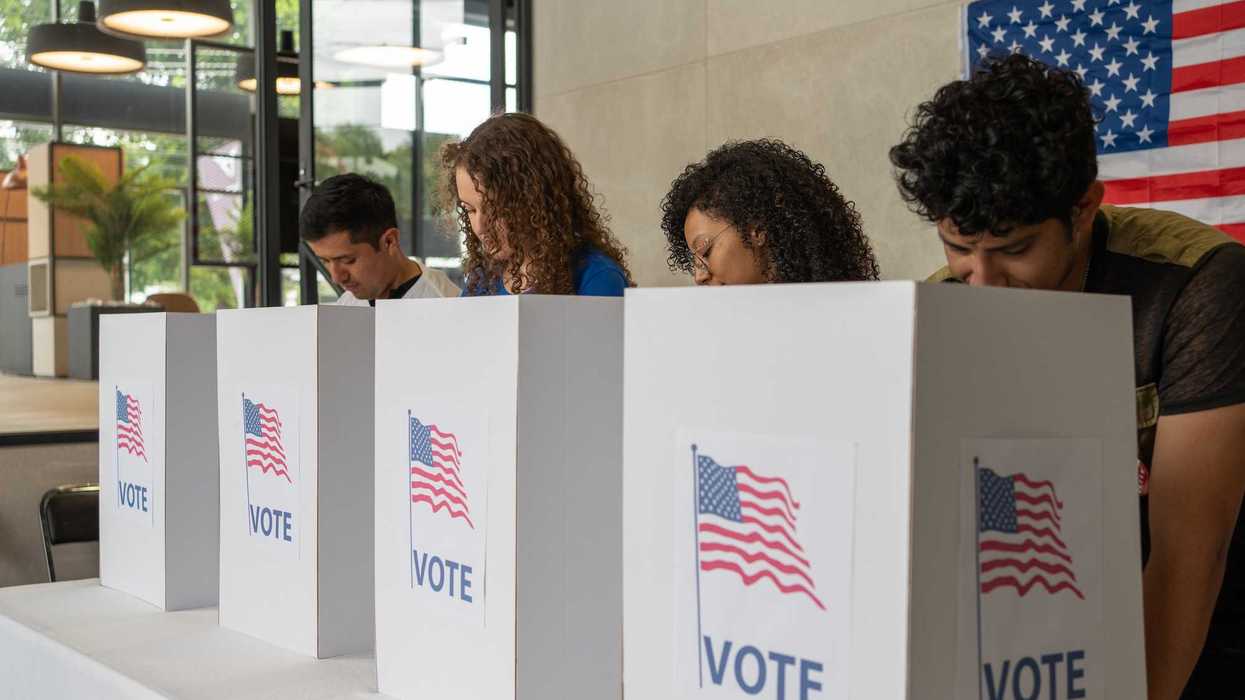
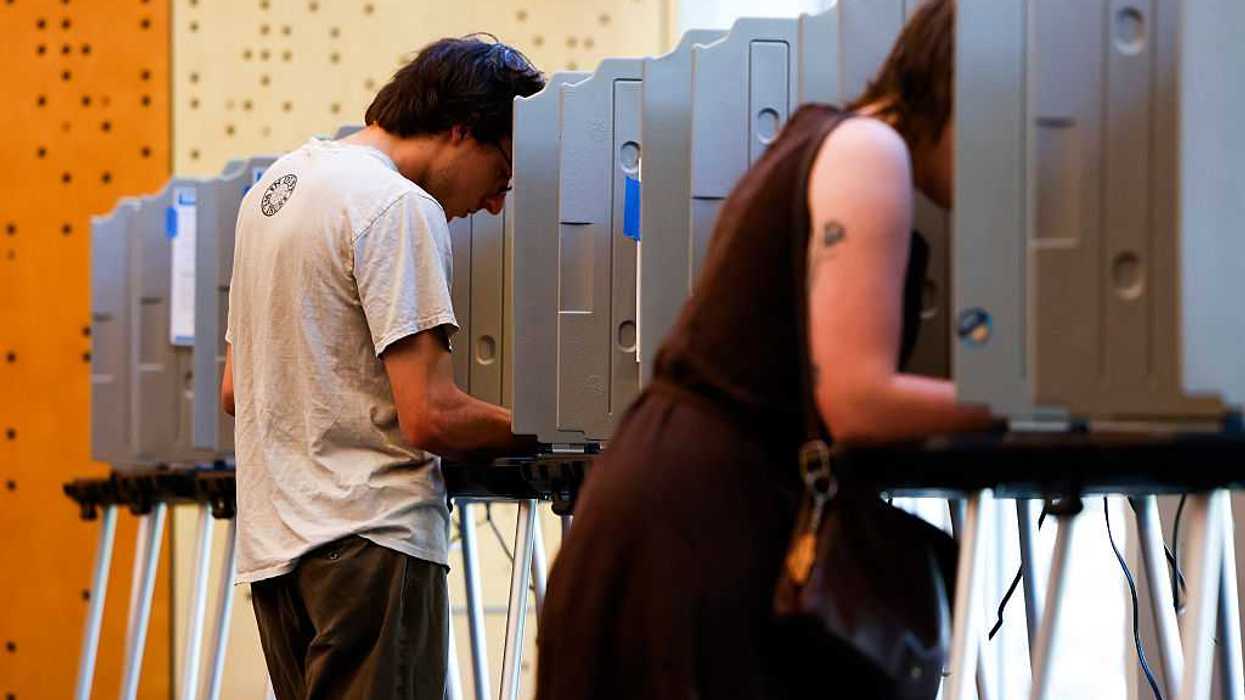
Two people at separate voting booths, filling out a ballot.

Voters cast their ballots in Colorado's primary election at the Central Library on June 30, 2026 in Denver, Colorado. Voters are deciding on candidates for Colorado Governor, US Senate and other races.

Michael Ciaglo/Getty Images

Consider this wacky football scenario: What if only fans who declared their team loyalty before the game are allowed to watch the Super Bowl? Yep, unless you pick a team, you can’t get into the stadium. This is similar to how closed primary elections work, in which only registered voters of a specific political party can participate in that party's primary. That’s the brilliant analogy the Unite America Institute uses in a new, short explainer video describing the highly undemocratic system that dominates American primary elections.

“In most elections, the real contest is not the general election but the party primary held months before,” said Beth Hladick, Policy Director at Unite America. The new video is part of a year-long fellowship project: the Democracy and Public Service Initiative, a partnership between the National Academy of Public Administration and the Bridge Alliance.


The numbers demonstrate the staggering impact of shutting millions of Americans out of our election system. Unite America Institute research shows that, because of our closed primary system, in 2024, 7% of voters elected 87% of Congress. How does this happen? In most congressional districts, the outcome is effectively decided in the primary, not in the general election. Because so many districts are heavily skewed toward one party, the winner of that party's primary is almost guaranteed to win the seat. But with closed primaries, only registered party members can participate, and voter turnout is typically very low—sometimes just a fraction of eligible voters. The 7% figure refers to the small share of eligible voters who actually participate in these deciding primaries, meaning that fewer than one in ten of the electorate chooses nearly nine out of ten members of Congress. “It feels like telling half the fans they can only go to the game after it’s basically over,” said Ted Delicath, co-creator of the video.

Unite America advocates a simple reform to the system: all-candidate primaries. In an all-candidate primary, all voters can participate regardless of party affiliation, and every candidate appears on the same ballot. The top vote-getters, regardless of party, advance to the general election. “No party gate, no separate stadium entrance. No, ‘You picked the wrong jersey, so you can’t come in,’” said Hladick. And Unite America Institute’s research shows that all-candidate primaries not only increase voter turnout but also could reduce partisanship in our governance system. “It suggests that reform can help create the conditions for better problem-solving, more collaborative governance, and coalition-building,” said Hladick.

Want to make a difference? Learn more about how primary reform works, share the explainer video with friends, or reach out to your elected representatives to let them know that you want a fairer, more open election system. Join organizations advancing electoral reform or volunteer in your community to help empower more voices in our democracy.

Watch the video here: https://www.youtube.com/watch?v=-jBJYzPpTf4


Bradford Fitch is a Senior Advisor to the Bridge Alliance, former CEO of the Congressional Management Foundation, and author of “Citizen’s Handbook for Influencing Elected Officials."

Read More

People attend a rally with signs that read, "Abolish ICE," and "Money out of politics."

People hold signs as Democratic Congressional candidate Brad Lander speaks during an election eve rally at Silo on June 22, 2026 in the East Williamsburg neighborhood of the Brooklyn borough in New York City.

Michael M. Santiago / Getty Images

Facts Don’t Win Elections. Stories Do.

As a student, I was taught that politics is a contest of ideas. Experience has shown me otherwise.

In a recent New York Times interview with Ezra Klein, conservative activist Chris Rufo captured this reality succinctly: “While we should have the facts on our side, and while we should use logic, by itself, it’s insufficient. Politics operates on a deeper level, an emotional level. Politics occurs on the field of sentiment and public opinion much more than on the field of abstract argumentation.”

Keep Reading Show less
A crowd of protestors standing on a sidewalk, many holding protest signs.

Suffragists protest President Woodrow Wilson in Chicago in October 1916, four years before ratification of the 19th Amendment. The history of voting rights has never been a clean march forward; even rights later treated as inevitable were won through pressure, backlash and years of state-by-state organizing.

Universal History Archive

What 250 Years of Voting Rights Battles Tell Us About Today

Happy Fourth of July, on this 250th anniversary of the United States. We’re living through extraordinary times in American democracy, as President Trump presses for greater federal control over elections and redistricting slips loose from its once-a-decade rhythm. As always, Votebeat is focused on an essential part of it: who gets to vote, who makes the rules, and what those votes are worth.

That question has loomed over the nation from the beginning. Voting history is often framed as a steady expansion from white male landowners to everyone else. The truth is messier. States have always experimented with expanding the franchise, retracting it, and expanding it again.

Keep Reading Show less
Texas Is Cross-Referencing Its List of Potential Noncitizen Voters With Driver’s License Records

Texas Department of Public Safety Region II Headquarters on Oct. 1, 2025 in Houston. The state is using DPS records to cross-check a list of registered voters it flagged as potential noncitizens using a federal database.

Antranik Tavitian for The Texas Tribune

Texas Is Cross-Referencing Its List of Potential Noncitizen Voters With Driver’s License Records

The Texas Secretary of State’s Office is now checking whether 2,724 registered voters it flagged as potential noncitizens may have already provided proof of citizenship to the Texas Department of Public Safety, elections division director Christina Adkins said during a meeting with county election administrators earlier this month. That check comes after county elections officials found the federal database used to generate the list flagged some voters who had already given citizenship documentation to DPS when they registered to vote.

Texas officials in October sent counties the list of potential noncitizens generated by checking the state’s voter roll of more than 18 million registered voters against a federal database used to verify citizenship. Soon after the state released the list, counties began to investigate the flagged registrants and mail notices asking them to provide documented proof of citizenship.

Keep Reading Show less
The American Experiment at the Brink Due To  Minority Rule

Can America overcome minority rule? Examining the Electoral College, NPVIC, campaign finance, and democratic reform in the 21st century.

adamkaz / Getty Images

The American Experiment at the Brink Due To Minority Rule

The challenge for continuing the American Experiment is recovering from the "Second Gilded Age" (1980s to the present). As of early 2026, the U.S. national debt is 122% to 125% of Gross Domestic Product (GDP). This situation has been exacerbated since 2000, when the U.S. national debt as a percentage of GDP was 33% to 35%. Americans can attribute this worsening situation to two non-popular vote presidents, Bush-43 and Trump-45. Directly, during their terms, and indirectly, with the aftermath of the 2008 Great recession and the aftermath of the COVID-19 pandemic. In 1894, toward the end of the 19th century “Gilded Age," the U.S. national debt was approximately 7% of gross domestic product GDP.

Minority rule occurs when a numerical or ideological minority holds the power to consistently thwart the will of the majority or govern over them. It thrives through the coordinated reinforcement of specific electoral, institutional, and legal mechanisms.

Keep Reading Show less