



Galveston County’s decision to redraw local precinct lines this year between the primary and general elections means some voters could cast general election ballots in contests where they had no say in the primary, unless the courts intervene.
Election experts say they’re not aware of any prior instance where this has happened. Galveston County’s latest round of changes is adding new complications to a long-running lawsuit over the maps the county had adopted in 2021, and voting rights advocates say the new maps could further dilute Black and Latino voting power in the county.
When the county redistricted in 2021, county leaders openly said their goal was to draw lines that would be friendly to electing a commissioners court with a Republican majority. Voting rights groups and the U.S. Department of Justice subsequently filed a federal lawsuit on behalf of Galveston County voters, claiming the map was unconstitutional and violated the Voting Rights Act because it eliminated the only majority-minority commissioners court precinct. The challenge before the court now alleges the county intentionally dismantled that precinct because of race. That case is still pending.
Then, this past June, commissioners voted to redraw precinct boundaries throughout the county for commissioners, constables, and justices of the peace — once again citing partisan aims behind the change. Voting rights advocates again sued, this time on behalf of three county residents in Texas state courts, saying the move to redistrict between a primary and a general election violates state and federal laws. That case is now pending before the Texas Supreme Court.
Here’s what we know:
Why are Galveston County commissioners redrawing lines now?
Galveston County Judge Mark Henry in June told the Houston Chronicle that the latest map accomplishes his goal of turning Galveston County Republican. Henry did not respond to a request for comment from Votebeat.
But the unusually timed change could serve another purpose for the county too, coming as it continues to argue against legal challenges to the 2021 map. A day after Galveston County commissioners approved the newest map, the county told the federal judge overseeing the federal case over the 2021 map that the changes rendered the lawsuit over that map moot, according to court documents.
“This Court no longer has jurisdiction to consider declaratory or injunctive relief relating to implementation of the 2021 Map,” Galveston County lawyers said in their court filing.
Earlier this month, U.S. District Court Judge Jeffrey Brown of the Southern District of Texas rejected that argument. In an order that effectively kept the 2021 challenge alive, he described the timing of the new maps as “highly suspicious.” Brown noted that the county could have redrawn lines to accomplish their partisan aims at any time since the 2021 map was issued, but chose to do so between the 2026 primary and general elections even though the change was unlikely to shift partisan outcomes until the 2028 election.
“If the defendants really cared about improving Republican partisan performance, they would have changed the 2021 map before the primary election to encourage a Republican to run for Justice of the Peace in that now-Republican-leaning precinct in 2026,” he wrote.
Is the commissioners’ move to redraw precinct lines after a primary election and about 70 days ahead of the November midterm election legal?
That question is now before the Texas Supreme Court. The plaintiffs say that it isn’t legal, but Galveston County officials argue that it is.
What do the Galveston County residents suing the county argue?
Plaintiffs argue that the county cannot hold the March primary under one set of precinct boundaries and then conduct the November midterm election under another.
The plaintiffs say the county should be required to hold a new primary because otherwise, some voters who can vote for an office in November would never have had the chance to vote for that same office in the primary election. In addition, they argue some candidates would not have had the chance to run for office because they weren’t in the correct precinct at the time of the primary. Plaintiffs say moving forward with the new map violates state and federal laws requiring all voters to be treated equally and fairly.
“This is a matter of federal equal protection. You have to run your elections in a manner that allows equal access to them,” said Mark Gaber, Campaign Legal Center’s senior director of redistricting litigation. “Galveston County is just dispensing with that part of the process and just deciding who the candidates are.”
What do Galveston County leaders say?
Galveston County officials did not respond to a request for comment.
But in an Aug. 10 filing with the Texas Supreme Court, the county argued that state law does give them the authority to redraw precinct lines between a primary and a general election. They also argue that redrawing the lines doesn’t mean that the county must conduct a new primary in order for voters to cast ballots in November. County attorneys in the filings said that state law does not “freeze precinct boundaries in place once a primary occurs.”
What’s the status of the lawsuit?
The latest case filed in state court has followed a convoluted legal route, but is now pending a decision in the Texas Supreme Court. The court could request additional information, or rule based on the existing record.
What are the implications for voters?
The shifting boundaries have confused voters who aren’t sure who their candidates are or which district they’ll belong to come November, said Sarah Chen, senior supervising attorney with the Texas Civil Rights Project. And depending on how the court rules, they could shift again.
“I think people are still even trying to understand what the impact is because it happened so quickly and so just like out of the blue,” Chen said.
Which Galveston County communities are most affected?
Under the 2021 redistricting, county commissioners redrew Precinct 3, historically a predominantly Black and Latino district that was the county’s only majority-minority district, significantly but did not change the justice of the peace and constable boundary lines within it. The 2026 map does, and likely eliminates the only remaining majority-minority justice of the peace and constable districts that remained.
Brown, the federal judge overseeing the 2021 case, in his order described that as “the primary partisan change under the new map,” but said it likely wouldn’t kick in until the 2028 election.
“People in our community are enraged. It doesn’t make any sense why they keep doing this to Precinct 3,” Lucille McGaskey, a resident of the precinct who isn’t one of the plaintiffs in either lawsuit, told Votebeat in an interview. “For years we’ve built a coalition of Black and Latino voters to have a seat at the table, and now it feels like we can’t even have that. We only have this precinct, Precinct 3.”
Administratively, is redrawing precinct lines now doable for election officials?
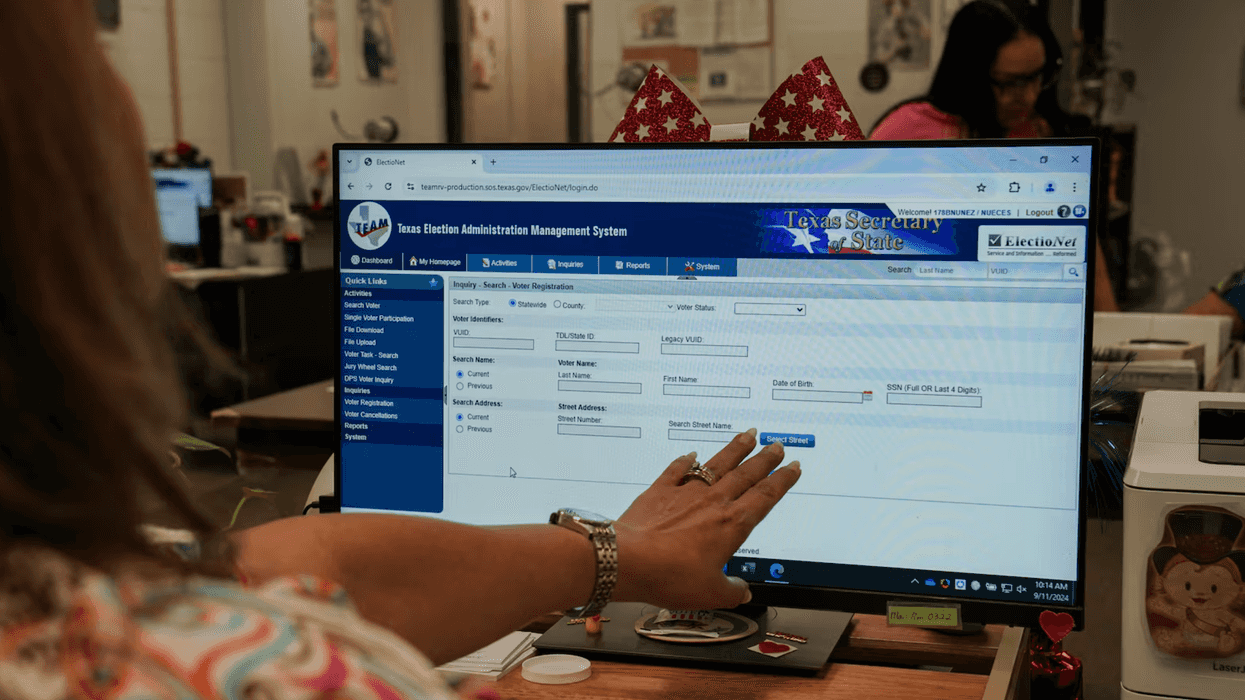
Galveston County Clerk Dwight Sullivan, who oversees the county’s elections, did not respond to a request for comment. But other Texas election officials have told Votebeat that redistricting is a time-consuming task that requires a lot of attention to detail to make sure that voters’ addresses are aligned with the correct boundaries. Redistricting now, in the midst of ongoing legal challenges and on a tight timeline, could create more opportunities for errors — a concern Texas election officials are already familiar with, as the state’s mid-cycle congressional redistricting and ensuing legal challenges left them scrambling.
The first deadline election officials are up against ahead of the November election is coming up on Sept. 19, when ballots must be mailed to military and overseas voters who have already requested them. By then, election officials must know which precincts voters will be assigned to.
Has this been done before?
Gaber and Chen said they had never heard of something like this happening anywhere else, and if allowed to go ahead, it could set a new precedent.
“I think it’s such a dangerous precedent for something far worse than just gerrymandering. It’s like changing the rules in the middle of the election to discard the votes of the voters and to prevent candidates from running,” Gaber said.
Could other places also decide to redraw lines before the November election?
Yes, it’s a possibility, if the courts don’t step in.
Chen pointed to the recent U.S. Supreme Court ruling that weakened Section 2 of the Voting Rights Act. Prior to the decision, plaintiffs could prove a claim under Section 2 by showing evidence of a disparate impact on minority voters, regardless of whether the mapmakers intended it. Now, they must be able to show a “strong inference that intentional discrimination occurred,” the high court’s conservative majority declared, a much higher bar.
Earlier this year when the ruling came out, experts warned that it could undo decades of progress that expanded the voting power of Black and Latino voters in Texas and elsewhere.
“We all knew there was going to be this wave of local redistricting,” following Louisiana v. Callais, Chen said. “And we’re preparing for that. We just didn’t expect it to happen so soon. It is like, mindfully disruptive and illogical according to the norms of our democracy to try to redistrict in June and after a primary election.”
What We Know About Galveston County’s Redistricting and What It Means for Voters was originally published by Votebeat Texas and is republished with permission.
Natalia Contreras covers election administration and voting access for Votebeat in partnership with the Texas Tribune. Natalia is based in Corpus Christi. Contact her at ncontreras@votebeat.org.