
For months, the Trump administration has been accusing its political enemies of mortgage fraud for claiming more than one primary residence.
President Donald Trump branded one foe who did so “deceitful and potentially criminal.” He called another “CROOKED” on Truth Social and pushed the attorney general to take action.
But years earlier, Trump did the very thing he’s accusing his enemies of, records show.
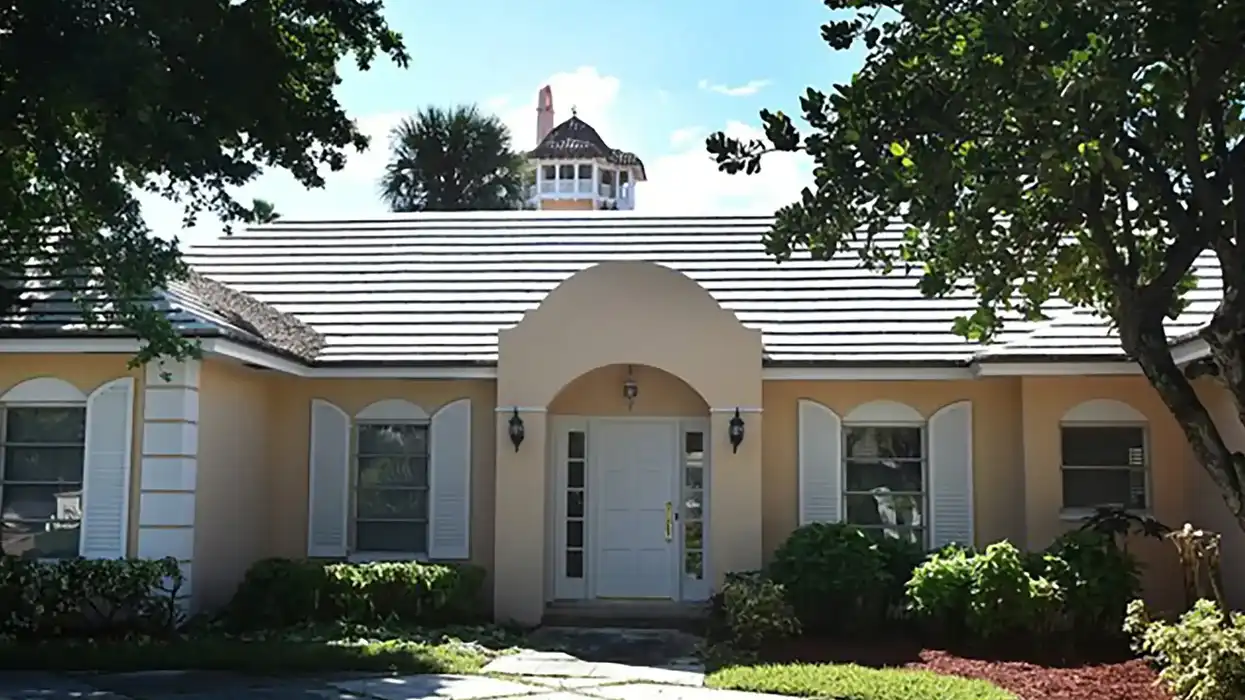
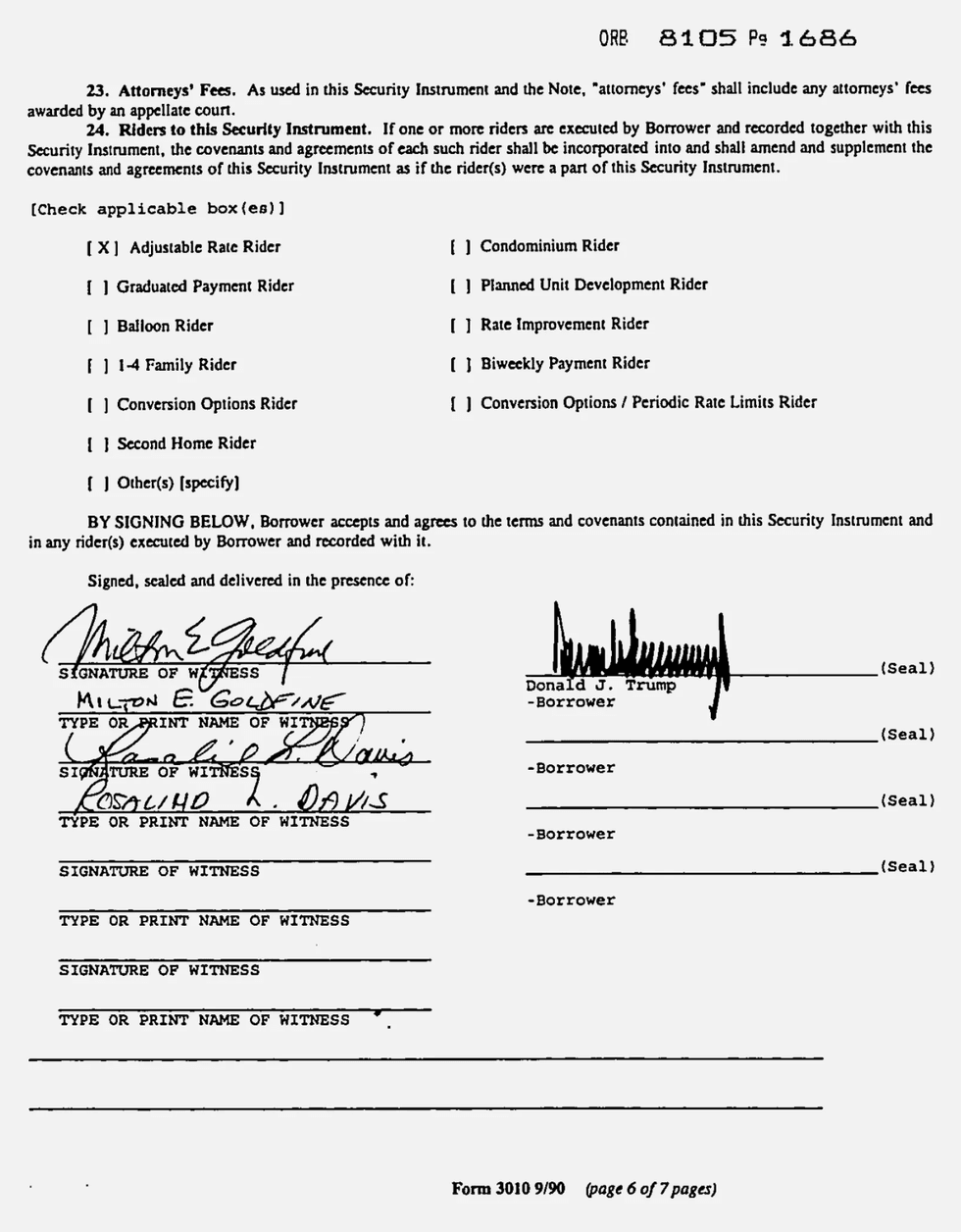
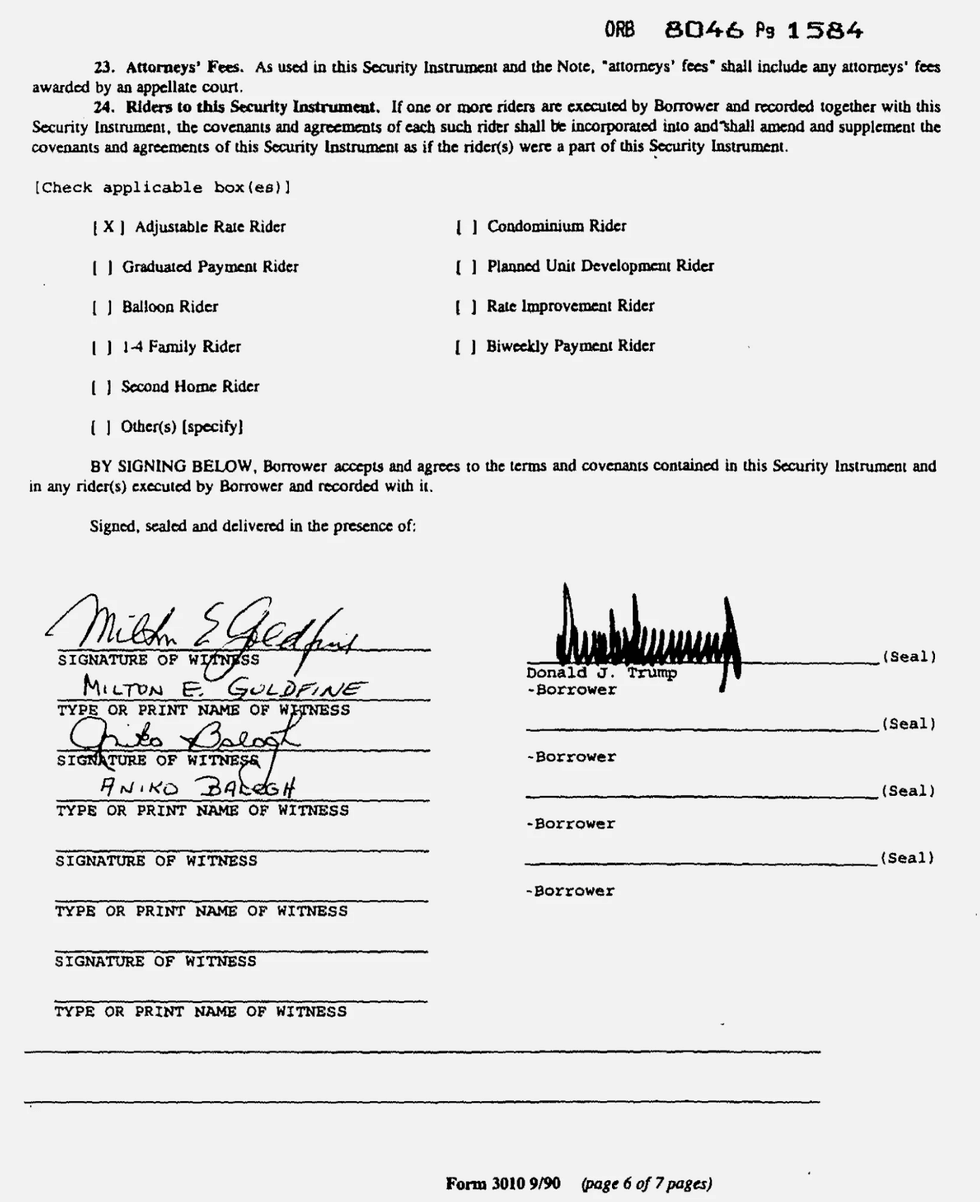
In 1993, Trump signed a mortgage for a “Bermuda style” home in Palm Beach, Florida, pledging that it would be his principal residence. Just seven weeks later, he got another mortgage for a seven-bedroom, marble-floored neighboring property, attesting that it too would be his principal residence.
In reality, Trump, then a New Yorker, does not appear to have ever lived in either home, let alone used them as a principal residence. Instead, the two houses, which are next to his historic Mar-a-Lago estate, were used as investment properties and rented out, according to contemporaneous news accounts and an interview with his longtime real estate agent — exactly the sort of scenario his administration has pointed to as evidence of fraud.
At the time of the purchases, Trump’s local real estate agent told the Miami Herald that the businessman had “hired an expensive New York design firm” to “dress them up to the nines and lease them out annually.” In an interview, Shirley Wyner, the late real estate agent’s wife and business partner who was herself later the rental agent for the two properties, told ProPublica: “They were rentals from the beginning.” Wyner, who has worked with the Trump family for years, added: “President Trump never lived there.”
Despite signing a mortgage that pledged he would live in each house, Trump listed both homes as rentalsMortgage law experts who reviewed the records for ProPublica were struck by the irony of Trump’s dual mortgages. They said claiming primary residences on different mortgages at the same time, as Trump did, is often legal and rarely prosecuted. But Trump’s two loans, they said, exceed the low bar the Trump administration itself has set for mortgage fraud.
“Given Trump’s position on situations like this, he’s going to either need to fire himself or refer himself to the Department of Justice,” said Kathleen Engel, a Suffolk University law professor and leading expert on mortgage finance. “Trump has deemed that this type of misrepresentation is sufficient to preclude someone from serving the country.”
Mortgages for a person’s main home tend to receive more favorable terms, like lower interest rates, than mortgages for a second home or an investment rental property. Legal experts said that having more than one primary-residence mortgage can sometimes be legitimate, like when someone has to move for a new job, and other times can be caused by clerical error. Determining ill intent on the part of the borrower is key to proving fraud, and the experts said lenders have significant discretion in what loans they offer clients. (In this case, Trump used the same lender to buy the two Florida homes.)
But in recent months, the Trump administration has asserted that merely having two primary-residence mortgages is evidence of criminality.
Bill Pulte, the Federal Housing Finance Agency director who has led the charge, said earlier this year: “If somebody is claiming two primary residences, that is not appropriate, and we will refer it for criminal investigation.”
Trump hung up on a ProPublica reporter after being asked whether his Florida mortgages were similar to those of others he had accused of fraud.
In response to questions, a White House spokesperson told ProPublica: “President Trump’s two mortgages you are referencing are from the same lender. There was no defraudation. It is illogical to believe that the same lender would agree to defraud itself.”
The spokesperson added, “this is yet another desperate attempt by the Left wing media to disparage President Trump with false allegations,” and said, “President Trump has never, or will ever, break the law.”
The White House did not respond to questions about any other documents related to the transactions, such as loan applications, that could shed light on what Trump told the lender or if the lender made any exceptions for him.
At the time Trump bought the two Florida properties, he was dealing with the wreckage of high-profile failures at his casinos and hotels in the early 1990s. (He famously recounted seeing a panhandler on Fifth Avenue around this time and telling his companion: “You know, right now that man is worth $900 million more than I am.”) In December 1993, he married the model Marla Maples in an opulent ceremony at The Plaza Hotel. And in Florida, he was pushing local authorities to let him turn Mar-a-Lago, then a residence, into a private club.
Trump bought the two homes, which both sit on Woodbridge Road directly north of Mar-a-Lago, and got mortgages in quick succession in December 1993 and January 1994. The lender on both mortgages, one for $525,000 and one for $1,200,000, was Merrill Lynch.
Each of the mortgage documents signed by Trump contain the standard occupancy requirement — that he must make the property his principal residence within 60 days and live there for at least a year, unless the lender agreed otherwise or there were extenuating circumstances.
But ProPublica could not find evidence Trump ever lived in either of the properties. Legal documents and federal election records from the period give his address as Trump Tower in Manhattan. (Trump would officially change his permanent residence to Florida only decades later, in 2019.) A Vanity Fair profile published in March 1994 describes Trump spending time in Manhattan and at Mar-a-Lago itself.
Trump’s real estate agent, who told the local press that the plan from the beginning was to rent out the two satellite homes, was quoted as saying, “Mr. Trump, in effect, is in a position to approve who his neighbors are.”
In the ensuing years, listings popped up in local newspapers advertising each of the homes for rent. At one point in 1997, the larger of the two homes, a 7-bedroom, 7-bathroom Mediterranean Revival mansion, was listed for $3,000 per day.
Even if Trump did violate the law with his two primary-residence mortgages in Florida, the loans have since been paid off and the mid-1990s is well outside the statute of limitations for mortgage fraud.
A spokesperson for Bank of America, which now owns Merrill Lynch, did not answer questions about the Trump mortgages.
“It’s highly unlikely we would have original documents for a 32-year-old transaction, but generally in private client mortgages the terms of the transactions are based on the overall relationship,” the spokesperson said in a statement, “and the mortgages are not backed by or sold to any government sponsored entity.”
Trump’s two mortgages in Palm Beach bear similarities to the loans taken out by political rivals whom his administration has accused of fraud.
In October, federal prosecutors charged New York Attorney General Letitia James over her mortgage. James has been one of Trump’s top targets since she brought a fraud lawsuit against the president and his company in 2022.
A central claim in the case the Trump Justice Department brought against her is that she purchased a house in Virginia, pledging to her lender that it would serve as her second home, then proceeded to use it as an investment property and rent it out. “This misrepresentation allowed James to obtain favorable loan terms not available for investment properties,” according to the indictment.
Trump’s Florida mortgage agreements appear to have made a more significant misrepresentation, as he claimed those homes would be his primary residence, not his secondary home as James did, before proceeding to rent them out.
James has denied the allegations against her, and the case was dismissed last month over procedural issues, though the Justice Department has been trying to reindict her.
The circumstances around Trump’s mortgages are also similar to the case his administration has made against Lisa Cook, a member of the Federal Reserve Board of Governors.
Trump declared he was firing Cook earlier this year over her mortgages, as he has sought to bend the traditionally independent agency to his will and force it to lower interest rates. Cook, who denied wrongdoing, has sued to block the termination and continues to serve on the Fed board as that legal fight continues.
In a letter to Cook, Trump specifically noted that she signed two primary residence mortgages within weeks of each other — just as records show he did in Florida.
“You signed one document attesting that a property in Michigan would be your primary residence for the next year. Two weeks later, you signed another document for a property in Georgia stating that it would be your primary residence for the next year,” Trump wrote. “It is inconceivable that you were not aware of your first commitment when making the second.”
He called the loans potentially criminal and wrote, “at a minimum, the conduct at issue exhibits the sort of gross negligence in financial transactions that calls into question your competence and trustworthiness.”
The Trump administration has made similar fraud allegations against other political enemies, including Democrats Sen. Adam Schiff and Rep. Eric Swalwell, both of whom have denied wrongdoing.
In September, ProPublica reported that three of Trump’s Cabinet members have called multiple homes their primary residences in mortgage agreements. Bloomberg also reported that Secretary of the Treasury Scott Bessent did something similar. (The Cabinet members have all denied wrongdoing.)
Pulte, the Federal Housing Finance Agency head, has denied his investigations are politically motivated. “If it’s a Republican who’s committing mortgage fraud, we’re going to look at it,” he has said. “If it’s a Democrat, we’re going to look at it.”
Thus far, Pulte has not made any publicly known criminal referrals against Republicans. He did not respond to questions from ProPublica about Trump’s Florida mortgages.
Trump’s Own Mortgages Match His Description of Mortgage Fraud, Records Reveal was first published on ProPublica and republished with permission.
Justin Elliott is a ProPublica reporter covering business and politics.
Robert Faturechi is a Pulitzer Prize-winning reporter at ProPublica.
Alex Mierjeski is a research reporter at ProPublica based in New York.