
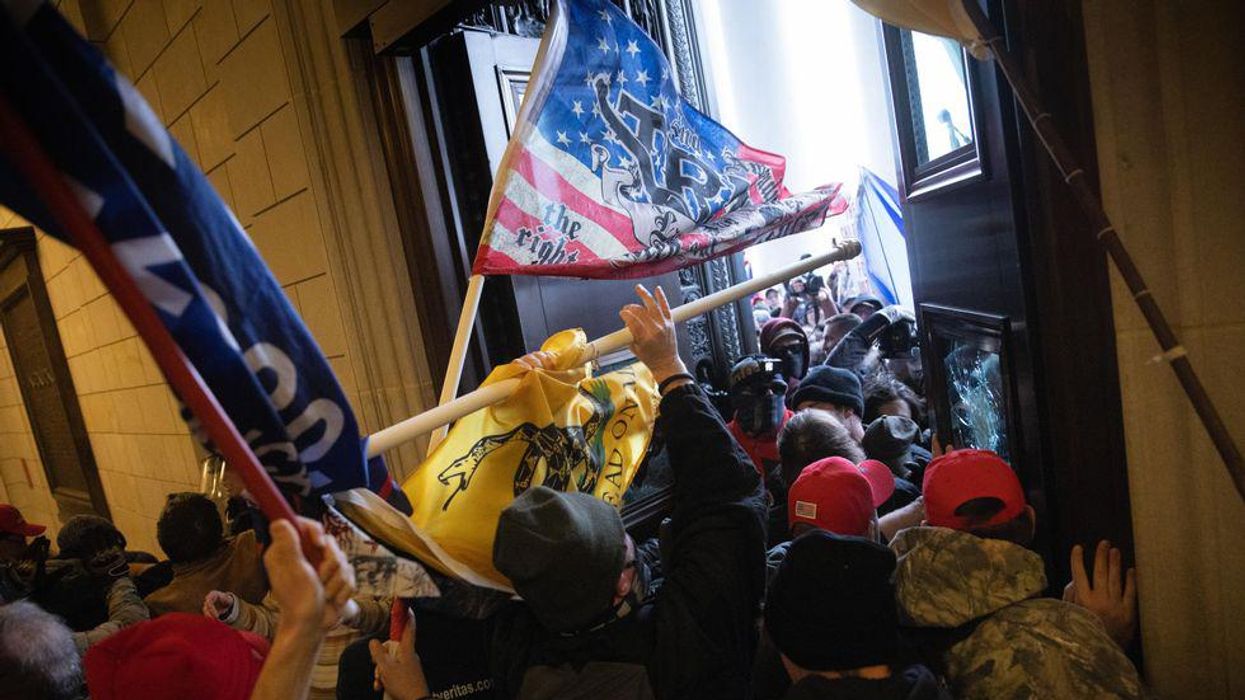

Beyond the brazen venality and disdain for the other branches of government, Trump’s attempted sham IRS lawsuit settlement and $1.776 billion slush fund raise the prospect of a new and frightening danger. That is the use of funds from the government to support and incentivize the same people who attacked our government on January 6 to do it again, as new elections loom, only now as well-funded, better- armed, paramilitary-like mobs.
Fortunately, one district court has temporarily enjoined the establishment of the settlement slush fund, and another is demanding explanations from the administration. The Acting Attorney General says the President is abandoning the slush fund, but as of this writing, nothing is in place to confirm its formal abandonment or to ensure that something like it will not resurface. No matter what happens, the fact that a President and his enablers have created this danger would, in more ordinary times, be grounds for impeachment. It should be an alarm bell for continual vigilance.
The Lawsuit Was a Pretext
Trump was suing and controlling the defense of a suit about something that occurred while Trump himself oversaw the government and for which the government would have no liability in the first place (a leak of Trump data by a private contractor, not the IRS) Trump waited to file the suit until he was back in office, with a DOJ and IRS he controlled. But by then the statute of limitations had expired.
Instead of moving to dismiss, Trump’s DOJ, led by an acting Attorney General who was recently Trump’s personal criminal lawyer, never made an appearance or filed any papers in the case. Then, shortly before it was ordered to file briefs justifying the case's existence, the DOJ dropped it. No “settlement” was presented to the court for approval.
The Settlement Fund Would Have Been a Sham
The administration pretends the settlement would be covered by a pre-existing Judgment Fund established by Congressional legislation. It needs this cover because the President has no independent power to appropriate funds from the treasury; that is a power reserved exclusively to Congress. (The Treasury Department’s general counsel resigned shortly after the settlement was announced.)
The Judgment Fund does not provide that cover. At most, it might allow compensation for people other than Trump harmed by the act at issue in the lawsuit Trump dropped—a leak of Trump’s data. But the slush fund did not even purport to be related to the data leak. It was to compensate people for unspecified, unrelated acts of government law-enforcement “weaponization.”
And then there is the Constitution. The terms of the Fourteenth Amendment to the same Constitution Trump relied on to pardon the intended fund beneficiaries who stormed our Capitol forbade the Government from compensating insurrectionists.
The “1776” Settlement Fund Was Set Up as A Slush Fund
There would be no Congressional or judicial oversight of this proposed giveaway of nearly $ 1.8 billion in taxpayer dollars. There was no requirement for public disclosure of how or to whom the funds would be disbursed. Implementation was entrusted to five people to be selected by Trump’s DOJ, all of whom the President could fire at will. All kinds of Trump cronies or MAGA supporters—even Trump enterprises-- might conceivably be beneficiaries. To get votes to approve the slush fund, the Acting Attorney General even presented a document to Republican Senators showing that several of them could have expected to be among its beneficiaries.
We Have Every Reason to Be Scared
A slush fund like this could be misused in many ways, but there is no mistaking its ultimate aim and objective. 1776 was used for a reason: it sounds patriotic, but it is a code word for the January 6 insurrectionists. A principal goal of this fund was always to find a convenient way to give generous rewards to the “victims” of the government’s defense of the Capitol on January 6— “victims” who are, in reality, the people who attacked it.
We should be very fearful of where the goal may lead. Every day, we hear the administration’s lies about election integrity. We see the tireless full-court press for voter suppression legislation. We have had foretastes already of the deployment of the National Guard, ICE, and even the postal service to turn away voters and undermine states’ electoral processes.
Controlling sources of compensation, whether through the slush fund settlement or some other means, gives Trump a new tool from the autocrat’s playbook: rewards for the insurrectionists and encouragement for them to do it again. This time, they would be primed in advance and would have other administration-appointed allies. This time, compensation from the slush fund would allow them to be well-resourced and well-armed. This time, they might succeed.
We may think that the courts, Congress, and public outcry from the rest of us have prevented this scenario from happening. But even if the slush fund is abandoned, the proposal has only whetted the insurrectionists’ appetite for generous compensation, as some already have; the lawsuit-settlement maneuvers leave no doubt about the President’s appetite to facilitate it. We are right to take heart in temporary victories. But we should be appalled that kowtowing to unitary executive power has allowed us to even approach the point where any of this could conceivably occur.
James B. Kobak, Jr., has been a lawyer in New York for over fifty years. He is a former President of the New York County Lawyers Association and currently chairs the National Center for Access to Justice. He prepared this article as a volunteer with Lawyers Defending American Democracy.

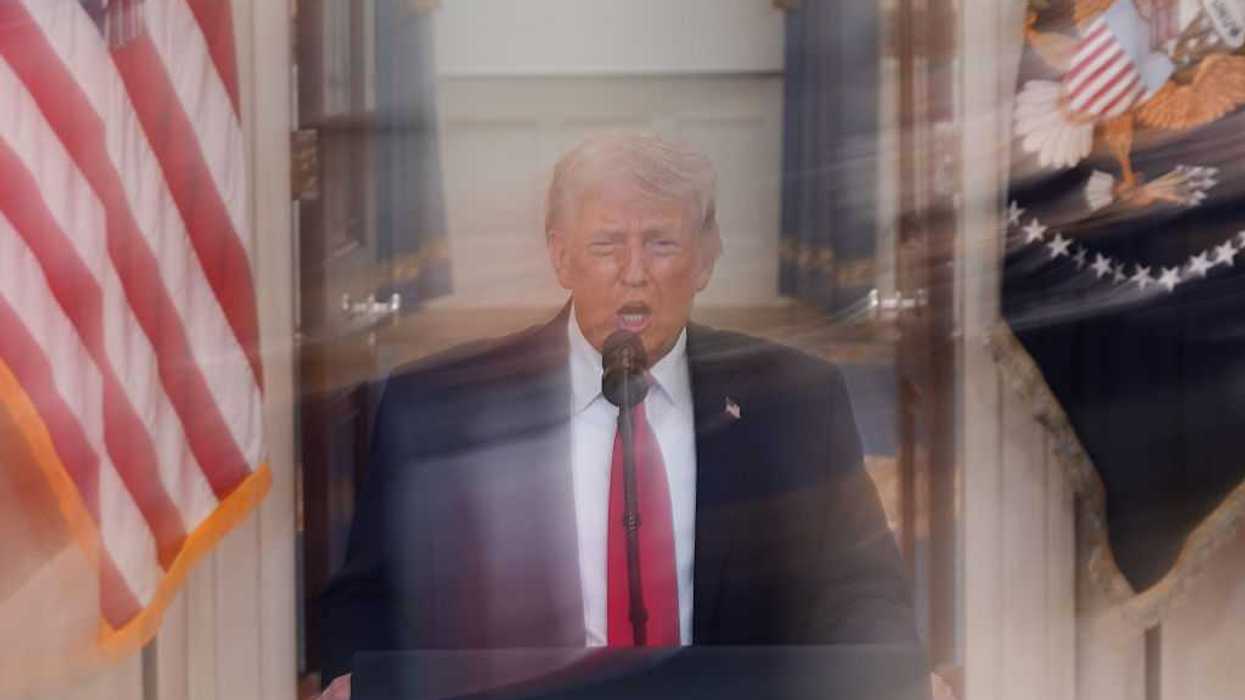






U.S. President Donald Trump speaks during a“ Steel Across America” event ahead of the 25th anniversary of the Sept. 11th attacks on the Ellipse near the White House on Sept. 8, 2026 in Washington, D.C. President Trump welcomed 9/ 11 first responders to the Tunnel to Towers Foundation’ s“ Steel Across America” event featuring a 16,900- pound, 21- foot steel beam recovered.
For Trump, even 9/11 is an opportunity
There was a reason organizers of the 9/11 ceremony in Manhattan told President Trump he could not speak at this year’s memorial service.
A good one, it turns out.
Because in a speech he gave on Tuesday in Washington, he did exactly what they were presumably worried about — he made it about himself.
According to The New York Times, Trump had wanted a speaking role at the service, but the National Sept. 11 Memorial and Museum, which oversees the site, said no, as they’ve maintained for the past decade-plus that the venue and event should be nonpartisan.
Trump has long used awful tragedies to either puff himself up, trash political opponents, or sell lies to the American people.
He blamed a deadly plane crash at Washington National Airport last year on diversity, equity and inclusion policies. He blamed Puerto Ricans for the devastation they endured after Hurricane Maria in 2017. He reportedly considered withholding disaster relief after the California wildfires based on the way affected regions voted. In an interview on Fox News meant to commemorate the 75th anniversary of D-Day in Normandy, he used the occasion to slam former House Speaker Nancy Pelosi…with graves of the dead behind him.
And now, as we approach the 25th anniversary of what many New Yorkers consider the darkest day in modern history, Trump has done it again.
He told a rambling, nonsensical story — one he’s told before — about going to Ground Zero just after terrorists flew two commercial jets into the twin towers. In the story, which no one has been able to verify, despite multiple attempts, he says firefighters had to carry him out of One Liberty Plaza, also known as the U.S. Steel Building, because they thought it was about to collapse.
As CNN fact checker Daniel Dale notes, there’s no evidence Trump went into this building, especially at a time when NYPD and NYFD had locked down the area. There’s no evidence that building was collapsing — in fact, it was deemed structurally sound and reopened within two months of the attacks. There’s no evidence he was carried out of it by firefighters.
But the lie isn’t even the worst part. Pretend it was all true — why would the leader of our country, and a New Yorker, decide to make that tragic day about himself?
Because that’s who Donald Trump is. He’s a malignant narcissist.
He’s also, incidentally, a terrible and ineffectual president, who’s made ill-fated decisions that he has to keep defending, and there’s nothing he won’t do to make himself look and feel better.
Within the first two minutes of his speech, he was cravenly using 9/11 to justify and promote his dumb war in Iran — two events separated by 25 years and 6,000 miles.
“And I will tell you, we’re right now fighting because we have a certain nation that wanted a nuclear weapon, they were very close to getting it, and now they have no chance at getting it. They will never have a nuclear weapon. Iran will not have a nuclear weapon. And they’ve been punished greatly. As you know, we’ve really taken it to them.”
As a New Yorker who lived through 9/11, still one of the worst days of my life, I’m utterly sickened by Trump’s crass, political, and self-promotional framing of that awful day.
And I’m relieved he won’t be given a platform to do it again on Friday’s anniversary in lower Manhattan.
Because for Trump, everything is his for the taking, and absolutely nothing is sacred.
S.E. Cupp is the host of "S.E. Cupp Unfiltered" on CNN.