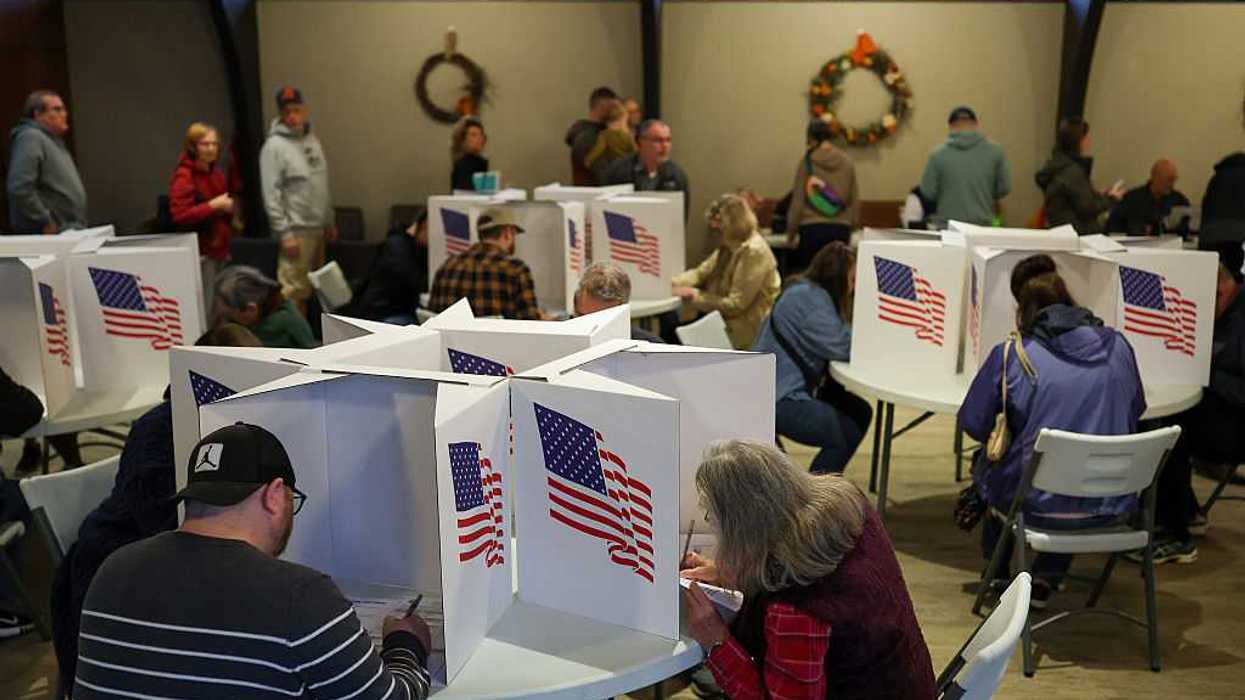
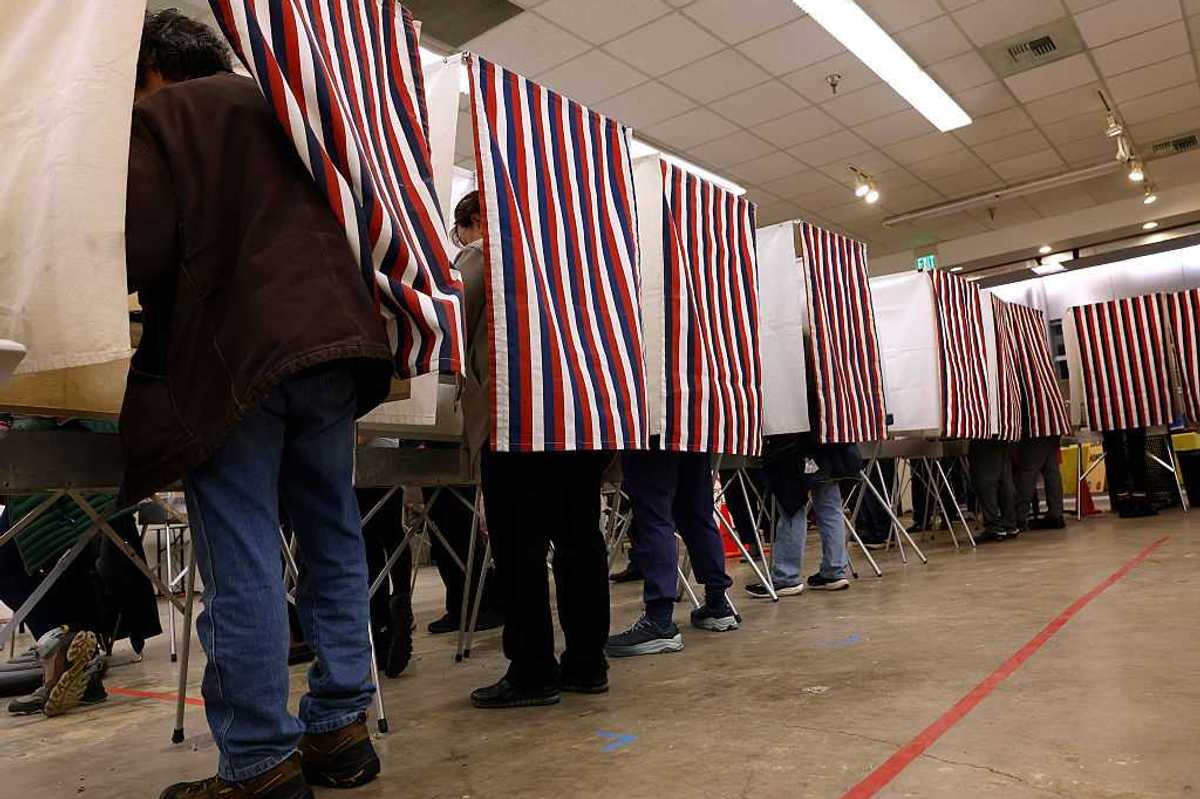

Picture a 55-year-old woman in Berkeley, California, the week the mail brings her voter information guide. She opens the booklet at her dining table, puts on her glasses, and reads it in Vietnamese. Inside are a sample ballot, statements from candidates who are vying for different positions, whether for governor, Congress, or, better still, a plain explanation of each local measure she needs to vote either yes or no on. The guide tells her to fill in each oval with a black or blue pen. By the time she picks up that pen, she already knows who to vote for based on the candidates' statements and their plans for the city.
Ahead of the Nov. 3 general election, Alameda County prints its guide in English, Chinese, Spanish, Tagalog and Vietnamese and asks voters which language they want. Ballots began going out Oct. 5 in the same five languages, so residents can vote alone, without asking a neighbor, family member, or even a stranger what the paper says.
The Voting Rights Act requires translated election materials in communities like hers, and it matters. Spanish-language assistance raised turnout among citizens with limited English, and language coverage has been linked to higher Latino registration and Asian American turnout.
Now picture another 55-year-old lady half a world away, in Bali-Nyonga, a village in Cameroon's Northwest Region.
No guide arrives in her mail. Cameroonians do not receive comparative voter guides. Most voters depend heavily on rallies, which do not reach every city, let alone every village. Some, especially in sub-urban areas, have to depend on radio, television and newspapers for news about candidates. Elections Cameroon, known as ELECAM, publishes in English and French, the two official languages.
Ethnologue counts about 280 living languages in Cameroon. English and French are the official languages. Daily life runs far beyond that pair. Fulfulde is a common tongue across much of the north. Ewondo travels through the Center. Duala has long been spoken along the coast. In the West, Bamileke languages such as Ghomala' fill homes and shops. Across the Northwest and Southwest, Cameroonian Pidgin English fills taxi parks and street corners. Linguists estimate that roughly half the population speaks Pidgin in some form.
The Northwest Region alone holds a dense map of Grassfields languages, part of the wider Bantoid branch of Niger-Congo. Mungaka is the language of Bali Nyonga. In nearby Bali Kumbat, people speak Mubako, also called Mumbake, a different tongue. Bafanji, often called Fanji, is spoken on the Ndop Plain. Lamnso' is widely used among the Nso people. Kom is another major Northwest language.
The 2005 census found that about three in 10 people ages 15 and older could read or write in neither English nor French. Sometimes civil society fills the gap, as when NEWSETA's Ballot Buddy materials reached voters in Fulfulde. It is the exception.
On election day, the grandmother in Bali faces a stack of papers. She speaks her village language at home and Pidgin in the market. She never learned to read English or French. On election day, the notice on the wall and the paper in her hand are in those two languages only.
Each candidate has a separate ballot in that candidate's color, with a name, party, and logo. What does the ballot ask of her? The colors help her find a name. She slips one into an envelope and discards the rest. They do not tell her what anyone promises. The same is true for a herder near Garoua who speaks only Fulfulde, or a market woman in Bafoussam who speaks Ghomala, or another whose granddaughter speaks Fanji fluently but was never taught to write it.
Formal schooling has long run mainly through English and French. In 1979, Cameroonian linguists adopted an Alphabet to help communities write their languages. Groups such as the local language have run mother-tongue literacy classes in places such as Nso and Kom. A 1998 education law opened space for national languages in schools. Practice still lags. Many Cameroonians speak a mother tongue every day and never learn to write it.
Research suggests language shapes not only whether people vote, but whom they choose. In South Africa, wards where governments recognized residents' mother tongues showed higher turnout. In Benin, town-hall meetings on policy platforms, compared with ordinary rallies, reduced a village's dominant candidate's vote share. In India, where ballot symbols help voters who cannot read, candidates who got their preferred symbol gained about 22 percent more vote share. Logos matter. They cannot explain a plan.
Paul Biya has been in power since 1982; that's the same year some of our parents were born. On Oct. 27, 2025, the Constitutional Council declared Paul Biya the winner of the presidential election with 53.66 percent, on an official turnout of about 58 percent. Challenger Issa Tchiroma Bakary claimed victory and alleged fraud. Official tallies show Tchiroma won Douala, while Biya's strongest shares came from largely rural departments.
Whatever the truth of the fraud claims, another question deserves attention. Biya has led since 1982. What if, in many villages, his name was the only name people had known all their lives, because no other plan reached them in a language they understood? What if some who stayed home never heard, in their own tongue, a reason to vote?
These are questions for everyone. Could the government print guides in Fanji, Fulfulde, Duala or Pidgin? Could parties publish platforms in local languages, and radio stations explain them? Could schools and families teach children to write the languages they speak, as Kenya does with Kiswahili?
What if every village's election papers were written in the language people already use at home? What would a ballot notice look like in Mungaka, Fanji, Lamnso', Fulfulde or Pidgin?
What if radio and newspapers talked to voters in those languages before election day, not only in the languages of the colonial classroom?
How do people who speak neither English nor French know who to vote for when the paper in front of them does not?
How inclusive is an election, in language and representation, when hundreds of living languages stop at the polling station door?
What if elections themselves pushed people to learn to write their languages? Could a ballot in Mungaka or Pidgin be a reason to read and write it?
Cameroon is not America, and Kenya is not Cameroon. Still, each place has something to teach. Alameda County shows what happens when election officials treat a translated ballot as ordinary work. Kenya shows what a widely written shared language can do for civic information. Cameroon shows what is at stake when a country of hundreds of languages asks citizens to choose leaders in only two.
If citizenship can sound more than one tongue, why shouldn't the ballot?
Pechuqui Laurata is a fall fellow with The Fulcrum and a student at UC Berkeley School of Journalism (Master of Journalism).