
Skip to content
Search

Latest Stories

Follow Us:
Top Stories

A Jalapeño a Day: What America Can Learn From Bridging in the Hispanic Community

A Jalapeño a Day: What America Can Learn From Bridging in the Hispanic Community

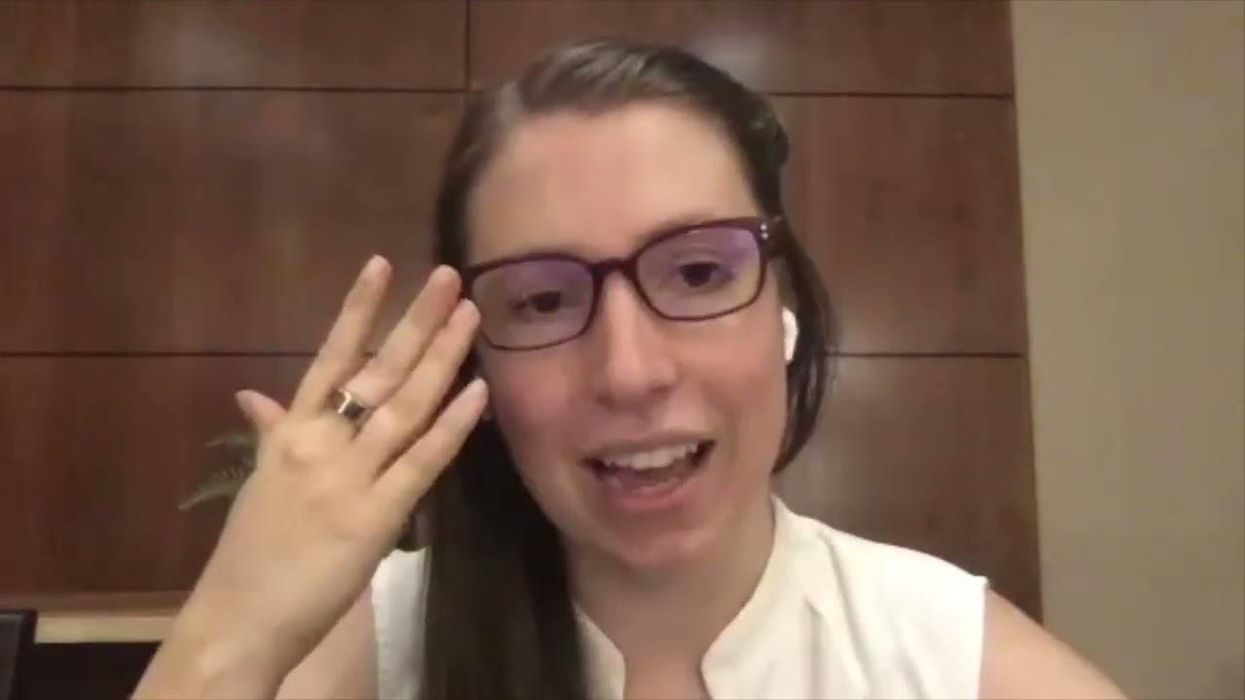
Monica Guzmán and Daniel Acosta-Rivas share intimate stories about growing up in their respective Hispanic contexts and the diversity of the Hispanic world.

They offer riveting insights on why the Hispanic community is underrepresented in organizations like Braver Angels and why Venezuela’s population may, shockingly, be less divided than America’s, illustrating the unique power of its approach to bridge-building. Daniel, originally from Venezuela, currently lives in Washington, D.C. and works for Stand Together.


He is a recent graduate of American University, where he founded the Students for Free Expression chapter. Mónica Guzmán is the director of digital & storytelling at Braver Angels and the author of the bestseller I Never Thought of It That Way.
Read More

A crowd of people at a military base with President Trump speaking in front of them.

U.S. President Donald Trump speaks during a visit to the Fort Bragg U.S. Army base on February 13, 2026 in Fort Bragg, North Carolina.

Nathan Howard/Getty Images

Reagan’s Strength vs. Trump’s Retreat: U.S. Alliances at Risk

How a country treats its allies and its adversaries says everything about what it believes strength means — a question that was already on my mind the night I sat in a movie theater watching "The Brink of War" when news broke.

The film reconstructs the 1986 Reykjavik summit, where President Ronald Reagan and General Secretary of the Communist Party of the Soviet Union Mikhail Gorbachev spent a tense weekend negotiating over the fate of the world's nuclear arsenals.

Keep ReadingShow less
Has Donald Trump lost his golden touch?

President Donald Trump delivers remarks during a meeting with cryptocurrency executives in the Roosevelt Room of the White House in Washington, D.C., on Aug. 19, 2026.

(Jim Watson/AFP via Getty Images/TCA)

Has Donald Trump lost his golden touch?

On Tuesday night, Darline Graham, sister of the late Sen. Lindsey Graham, revealed somewhat awkwardly that she is entirely unprepared to be a U.S. senator.

At a South Carolina debate, she was asked a perfectly reasonable and straightforward question: “Are Taiwan and the South China Sea national security issues for the United States?” And, “If so, why?”

Keep ReadingShow less
A military ship out in the sea.

USS Abraham Lincoln (CVN 72) conducts U.S. blockade operations related to the Strait of Hormuz on April 16, 2026 in the Arabian Sea.

Handout Photo by the U.S. Navy via Getty Images

Reasons to Care about the Sailors Aboard the USS Lincoln

The crew of the USS Abraham Lincoln has been at sea for over 265 days, and over 200 days without a port call. The aircraft carrier left San Diego on November 21, 202 for a routine Pacific deployment, only to be redirected to the Middle East instead for a war Congress never declared and voted not to authorize. Carriers are supposed to pull in every 30 to 45 days for resupply, maintenance, and something resembling a break; the Lincoln has gone nearly five times that long without one–a modern record for a warship.

Consider what that actually means for a human being. You’re living at work, on a ship, with your coworkers, away from your family and friends, and now the ship is starting to fall apart: the water fountains are broken, the water is contaminated, sometimes water needs to be rationed so showers and laundry are secured, the showers are moldy, the toilets are clogged, and the food is rationed, rotten, and can be, as Congressman Mike Levin described, as meager as a half a cup of rice and two tortillas. These are horrible working conditions. Whether or not you believe sailors signed up for this when they joined the military, you must admit, it’s a brutal job.

Keep ReadingShow less
Protestors holding signs at a rally, one reads, "Trump is not above the law."

Protesters gather at a Nobody Is Above the Law rally protesting President Trump's interference in the Mueller investigation on November 08, 2018 in Washington, DC.

Larry French/Getty Images

The Double Standard Presidency: When We Watch Leaders Act Above the Law

Americans are told that no one is above the law. Yet every day, they watch a president behave in ways that would get any ordinary citizen fired, disciplined, confronted, or held accountable — and they watch some Americans excuse it. What makes this moment even more striking is that critics across the political spectrum, including conservatives, now warn that the presidency is operating on a dangerous double standard. This is not a partisan concern. It is a constitutional one. And it is tearing at the fabric of our democracy.

For generations, the Constitution has provided guardrails — separation of powers, checks and balances, oversight mechanisms, and limits on executive authority — designed to prevent any leader from functioning above the law. The framers feared concentrated power more than anything else. They believed that the presidency must be constrained not only by written law but by norms of restraint, dignity, and respect for institutions. Those norms held for centuries because presidents understood that the office was larger than any individual, and Congress understood that oversight was not optional.

Keep ReadingShow less