



Skip to content
Search

Latest Stories

Follow Us:
Top Stories

Video: Braving the gun divide

Braving the Gun Divide | Mark Beckwith & Wilk Wilkinson with Ciaran O'Connor

As the U.S. Congress and the Supreme Court weigh in on gun rights and gun safety, Americans remain bitterly divided on the right to bear arms. Is it possible to bridge this divide on the level of shared values? What can we learn from one another’s lived experiences that influence our thoughts and feelings about deadly weapons? What are the tradeoffs between gun rights and public health, and how do we navigate them as fellow Americans?

Braver Angel's Ciaran O'Connor convenes Mark Beckwith, a longtime gun safety activist, and Wilk Wilkinson, a strong gun rights proponent, for a passionate, emotional conversation. Mark and Wilk don’t see eye to eye, but they do see each others’ hearts. This discussion is a testament to what’s possible when we speak fully, freely, and without fear—with charity for all and malice toward none.
Read More

A President in Sheep’s Clothing and a Democracy in Decline

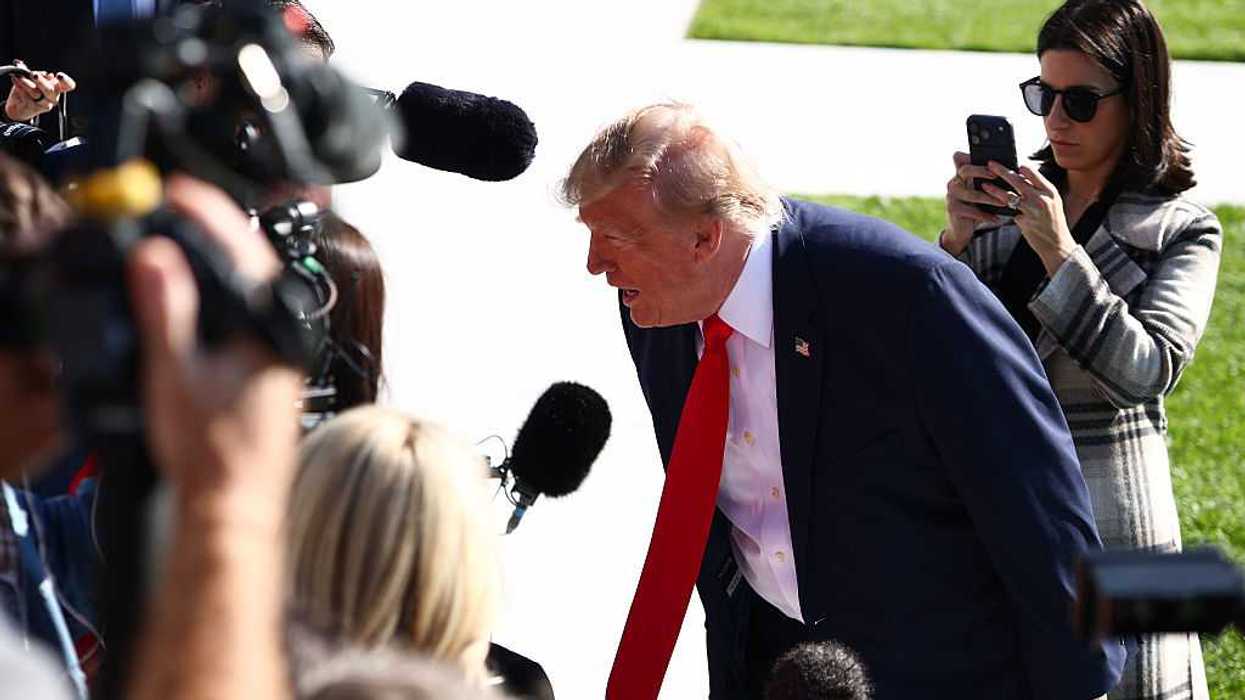
President Donald Trump speaks to members of the media traveling on Air Force One while heading to Miami on March 7, 2026.

(Photo by Roberto Schmidt/Getty Images)

A President in Sheep’s Clothing and a Democracy in Decline

Like a wolf in sheep’s clothing, America’s president is undermining the Republic by evading checks, consolidating power, and attacking democratic norms. He disguises his malicious intentions as innocence while dismantling policies and programs that would help citizens.

In earlier opinions, I wrote about three forces that corrode democracy: hypocrisy, corruption, and confusion. Hypocrisy creates a false image of leadership; corruption erodes public trust and suppresses voter participation; confusion keeps the public from seeing the truth. Together, they weaken the Republic.

Keep ReadingShow less
Donald Trump’s Iran war without rhyme or reason

President Donald Trump speaks to reporters during a news conference at Trump National Doral Miami on March 9, 2026, in Doral, Florida. President Trump spoke on his administration's strikes on Iran.

(Roberto Schmidt/Getty Images/TCA)

Donald Trump’s Iran war without rhyme or reason

If you ask President Trump, he’ll tell you we’ve already won the war in Iran.

When asked for an update by Axios on Wednesday, Trump responded with the kind of upbeat nonchalance and flippant boastfulness you’d usually see when asked about the progress on one of his hotels.

Keep ReadingShow less
Virginia Gov. Abigail Spanberger delivers the Democratic response to U.S. President Donald Trump's State of the Union address on February 24, 2026 in Williamsburg, Virginia.

Virginia Gov. Abigail Spanberger delivers the Democratic response to U.S. President Donald Trump's State of the Union address on February 24, 2026 in Williamsburg, Virginia.

Getty Images, Mike Kropf

Three Questions Linger After State of the Union Speech

Anyone tuning into the State of the Union expecting responsible governance was sorely disappointed. What they got instead was pure Trumpian spectacle.

All the familiar elements were there: extended applause lines, culture-war provocation, even self-congratulation, praising the U.S. hockey team and folding its victory into a broader narrative of national resurgence. The whole thing was show business, crafted for reaction rather than reflection, for clips rather than consensus.

Keep ReadingShow less
When Secrecy Becomes Structural

U.S. President Donald Trump at the White House February 20, 2026 in Washington, DC.

(Photo by Kevin Dietsch/Getty Images)

When Secrecy Becomes Structural

Secrecy is like a shroud of fog. By limiting what people can see and check for themselves, the public gets either a glimpse (or nothing at all), depending on what gatekeepers decide to share. And just as fog comes in layers, so does withholding: one missing document, one delayed detail, one “not available” that becomes routine.

Most adults understand there are things that shouldn’t be shown. Lawyers can’t reveal case details to people who aren’t involved. Police don’t release information during an active investigation. Doctors shouldn’t discuss your medical history at home. The reason is simple: actual harm can follow when sensitive information is revealed too early or to those who shouldn’t be told.

Keep ReadingShow less