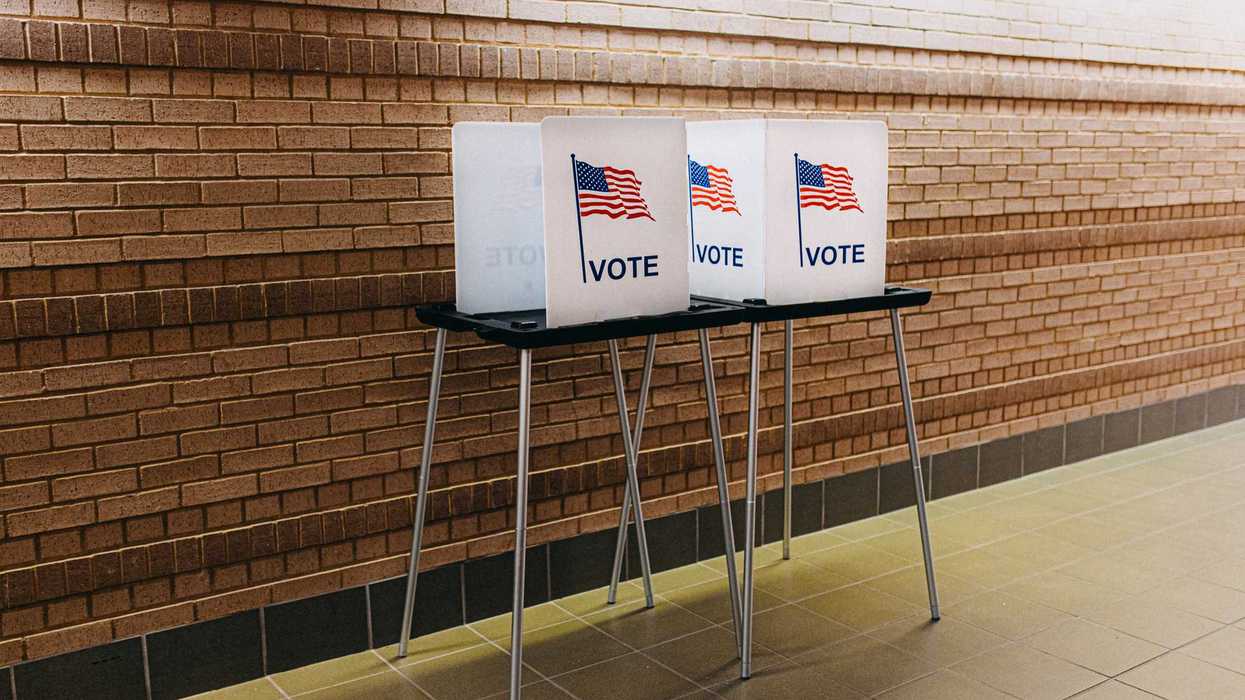


Tallying the results of Washington, D.C.’s first ranked-choice election last month took about 10 days – longer than many voters are used to. In an age when artificial intelligence can generate an answer in seconds, waiting days for election results can feel old-fashioned, inefficient, even suspicious.
But that slowness may be one of its most democratic features.
I come to this question from health informatics, where I study how even AI-generated information that sounds clear, fluent, and helpful still requires careful review before it reaches a patient. The same verification problem applies to elections. The more authoritative a system sounds, the more important it becomes to make sure the output can be checked.
D.C.’s June 16 primary followed a system that requires more than a simple tally: voters rank candidates, and if no candidate receives more than 50% of first-choice votes, lower-performing candidates are eliminated, and votes are redistributed according to voters’ next choices. New York City already uses ranked-choice voting in local primary and special elections.
There is nothing wrong with ranked-choice voting, but it must be carried out with verifiable results. Because election counting is not just a math problem; it is a trust problem, especially in the U.S. today, where election workers face harassment, routine counting delays are recast as fraud, and many voters already doubt institutions before a single ballot is counted.
In this climate, counting ranked-choice votes in a way that allows for public verification might take longer than people are used to. Every ballot must be tied to a voter-verifiable record. Every round of tabulation must be explainable. Every disputed outcome must be auditable by people who can inspect the evidence themselves.
AI is not yet counting votes, but AI and machine-assisted systems are already touching elections before ballots are counted, including information voters receive and how their signatures are reviewed. In 2024, X’s Grok chatbot gave users false information about ballot deadlines; after election officials from five states complained, X changed Grok so election-related questions directed users to Vote.gov, the federal government’s official voting information website. In North Carolina, 10 counties piloted automated signature-verification software for absentee-by-mail ballots in 2024. The pilot did not affect whether any ballot was counted, but later reporting found reliability problems: the software failed to match about 11 percent of signatures, most software-flagged signatures were approved after human review, and technical issues complicated the test. Neither example is the same as artificial intelligence counting votes, but both show how software can shape what voters are told or what happens before a ballot enters the count.
I have seen the problem in my own research. AI systems can cite studies that do not exist, with titles, authors, and journals that look real until you check them. A 2026 Nature analysis warned that hallucinated citations are polluting scientific literature, and OpenAI researchers have warned that some training and evaluation systems reward guessing over acknowledging uncertainty. A system that gives a confident answer may look more useful, even when that confidence is misplaced, than one that says “I don’t know.”
That matters because elections often turn on ballot conditions that are not immediately machine-readable and need human review: stray marks, undervotes, overvotes, damaged ballots, or ambiguous voter intent. In races where the margin between the candidates is narrow, a few disputed ballots can change the result. These questions should not be resolved by a system whose rules, error rates, or decision process the public cannot understand or meaningfully examine. They should be handled through documented procedures, human review, paper records, and public audits.
Human counting is also imperfect. But precisely because humans are fallible, democratic systems have developed safeguards such as paper ballots, bipartisan observation, chain-of-custody rules, cure processes, recounts, and post-election audits. Risk-limiting audits, for example, hand-check samples of paper ballots and can trigger a fuller count if the sample does not support the reported result. Colorado was the first state to conduct a statewide risk-limiting audit in 2017; today, all Colorado counties conduct one before results are certified. Other states have since adopted, required, or piloted risk-limiting audits.
The best election systems do not ask voters to trust either a person or a machine. They produce evidence. That is where current policy is behind the curve. States have moved quickly to regulate AI-generated deepfakes in campaign communications, because fake videos and robocalls can mislead voters. But far less attention has been paid to the AI inside election administration itself. That gap should close before AI moves deeper into election administration, especially into decisions that could affect whether a ballot is accepted, cured, rejected, or counted.
Federal and state governments should establish clear standards for AI used in anything election-related. The Brennan Center for Justice has called for such safeguards around quality, transparency, consistency, certification, and monitoring. Election offices should have to explain to the public what an AI system does, who checks it, and how voters can verify the evidence. AI systems whose rules, error rates, or decision process the public cannot understand or meaningfully examine should not make final decisions about whether a ballot counts.
Voters have a role, too. Ask your local election officials whether AI tools are being used anywhere in election administration and how those decisions can be audited. Ask how voters will know if the AI setup gets something wrong. And volunteer as a poll worker. You don't need a background in elections; local officials train you. Democracy needs more people who understand how ballots are handled, checked, and verified.
AI may soon be able to produce election results in seconds. That does not mean it should. The labor of democracy is not a bottleneck that needs streamlining. It is part of the safeguard.
A Democracy Cannot Run on an AI Model was first published by Common Dreams and is republished with permission.
Davis Austria is an assistant professor of health informatics conducting AI research at Xavier University of Louisiana, a Hopelab HBCU Translational Science Fellow, and a Public Voices Fellow with The OpEd Project.