The Unity Forum presented by Alumni for Freedom & Democracy and the Fulcrum is a cross‑partisan civic education program that strengthens reasoned discourse and advances a more open society. Each episode features respected experts who help audiences make sense of current events, elevate civil dialogue, and deepen public understanding of the social, legal, and institutional challenges confronting the nation.
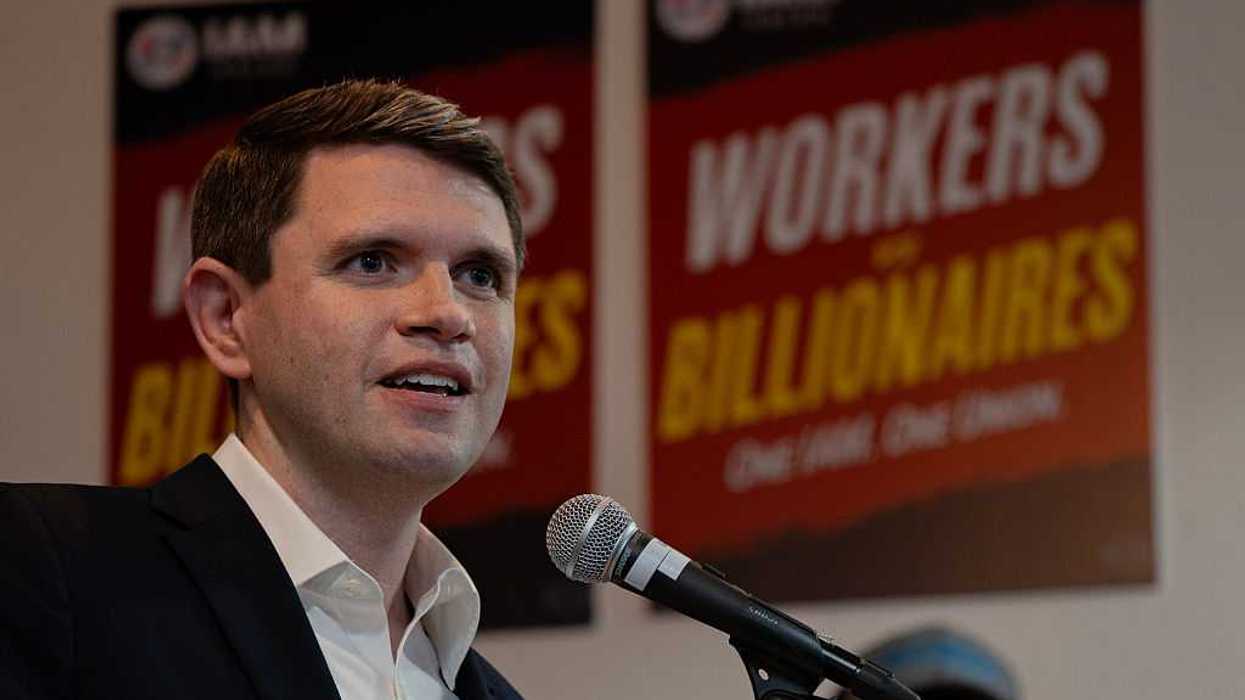
In a recent conversation, Unity Forum founder Chris Malone spoke with David Becker, Executive Director and Founder of the Center for Election Innovation & Research (CEIR). Becker is one of the nation’s most experienced election law experts, having led Pew’s elections program, spearheaded the creation of ERIC—the interstate system that has helped states update tens of millions of voter records—and served seven years as a senior trial attorney in the Department of Justice’s Voting Section. He also co‑authored The Big Truth and serves as CBS News’ election law contributor.
What follows synthesizes Becker’s key insights on election security, misinformation, the courts, and the resilience of American democracy from a recent Unity Forum webinar.
Election Officials Under Threat—and the Work to Protect Them
Becker began by thinking about how dramatically the environment for election officials has changed since he founded CEIR in 2016. What was once a largely anonymous profession has become a frontline target for harassment, doxing, false conspiracy theories, and even threats of violence. Secretaries of state, county clerks, local administrators, and volunteer poll workers have all encountered unprecedented pressure.
In response, CEIR created the Election Official Legal Defense Network, recruiting thousands of pro bono attorneys nationwide to assist officials whose jobs, safety, or livelihoods have been threatened. Becker emphasized that many need a lawyer to advise them when they are pressured to take illegal or improper actions.
Although these challenges exist, Becker noted that the last four federal general elections—2018, 2020, 2022, and 2024—were among the highest‑turnout and most scrutinized in American history. Yet each withstood intense legal and public examination. As Becker put it, the fact that the party controlling the federal government lost the presidential election in 2016, 2020, and 2024 is powerful evidence that no one is “putting a thumb on the scale.”
Our elections, he argued, are more trustworthy today than ever before thanks to the professionalism of election officials across the country.
What Citizens Should—and Should Not—Worry About
When asked about the biggest election integrity issues facing voters, Becker began by clarifying what isn’t a problem.
- Paper ballots and audits: Every state except Louisiana (which will convert in 2028) already uses paper ballots. Every state audits election results by hand. Machines are not connected to the internet and remain under strict chain‑of‑custody controls. Paper ballot audits are already standard.
- Non‑citizens voting: Becker cited New Jersey’s recent discovery of 400 non‑citizens who voted due to a system fault—just 0.009% of statewide ballots. Federal reviews of 68 million records found 99.96% were citizens.
- Voter roll accuracy remains extremely high.
- Mail voting: Used since the Civil War, mail voting is secure and widely relied upon by both parties. Mail voting security is well‑established.
The real threat, Becker argued, is disinformation—especially claims that elections are chaotic, inaccessible, or rigged. Foreign adversaries learned long ago that hacking U.S. election systems is nearly impossible due to decentralization. Instead, they aim to “hack our heads” by weakening trust.
Becker urged voters to be skeptical of claims that reinforce their biases and to rely only on official sources such as Vote.gov and state election offices.
Vote‑by‑Mail and Early Voting: Secure, Legal, and Widely Available
Becker offered a historical reminder: mail voting expanded largely because Republican lawmakers in western and rural states championed it for their constituents. Until 2020, it was broadly uncontroversial.
A recent Supreme Court case affirmed the legality of counting ballots cast on or before Election Day but delivered shortly afterward—a practice used in 14 states. In a 5–4 decision written by Justice Barrett, the Court ruled that nothing in federal law or the Constitution prohibits this.
Early in‑person voting is available in 47 states, and Becker personally prefers it. It delivers flexibility, community, and the advantage of early ballots typically being among the first reported on election night. It is secure, nonpartisan, and widely used.
The Courts: A Balancing Force Amid Turbulence
Becker emphasized that courts have regularly upheld the rule of law in voting disputes. In 2020, every lawsuit challenging the results failed because challengers produced no evidence. Defamation cases against conspiracy theorists also collapsed, with Fox News settling for nearly $800 million and Rudy Giuliani and Carrie Lake conceding liability.
He highlighted the importance of the Elections Clause (Article I, Section 4), which gives state legislatures primary authority over elections and none to the president. Courts have enforced this principle, blocking executive orders that attempted to dictate election policy to states.
Becker also noted that the Department of Justice recently lost 16 out of 16 lawsuits seeking sensitive voter data—decisions issued by judges appointed by both parties.
With the election approaching, courts are unlikely to permit major changes to election rules. Becker warned against “sore losers” filing lawsuits after losing, arguing that disputes must be brought before elections, not after results are known.
AI, Deepfakes, and the New Disinformation Landscape
Becker divides election misinformation into two categories:
- Campaign‑related misinformation, such as deepfakes targeting candidates.
- Process‑related misinformation, which aims to confuse voters about how elections work.
Becker believes the latter is far more dangerous. AI can generate false alerts about polling place closures, traffic, or mail ballot deadlines. Becker noted that federal fact‑checking infrastructure built during the first Trump administration and maintained under Biden has been dismantled, leaving election officials and voters to fill the gap.
He stressed that AI may not dramatically worsen the situation—not because AI is harmless, but because the disinformation environment is already saturated.
Becker warned of grifts on both the right and left falsely claiming our national elections are stolen. He was unequivocal: no national election in American history has been stolen. Even the contested 2000 election was resolved under the rule of law.
Federal Agents at Polling Places? Not Going to Happen
Responding to concerns that federal enforcement officers might appear at polling places, Becker was emphatic: “ICE won’t be at the polls. Troops won’t be at the polls.”
He cited federal law (18 U.S.C. § 592), logistical impossibility, political backlash, and the decentralization of voting—most ballots are cast early or by mail. Fear‑based messaging, he argued, is an authoritarian tactic designed to suppress turnout.
January 3rd Scenarios and the Decline of Guardrails
Becker acknowledged that scenarios described by David French—such as attempts to block duly elected members from being seated—are possible but unlikely to succeed. The House does not exist until 218+ members take the oath, and attempts to manipulate certification would face judicial and procedural barriers.
He noted that organizations, including CEIR, are preparing for such contingencies to guarantee a smooth transition regardless of who wins.
Still, Becker warned that the mere fact these scenarios are being discussed reflects the erosion of institutional guardrails.
A Call to Joy, Participation, and Civic Renewal
Despite the challenges, Becker ended in a positive mood. Fear, he argued, is intentional—used by those who distrust the American voter. The antidote is joy, participation, and civic engagement.
He urged Americans to:
- Recruit 50 people to vote.
- Engage with 10 people who disagree politically.
- Volunteer as poll workers
- Celebrate democracy’s 250th anniversary.
MAKE YOUR VOICE UNMISTAKABLY CLEAR:
The highest midterm turnout in modern history is 50%. Becker believes Americans can surpass it in 2026.
Elections are the living safeguard of our constitutional republic. They are the mechanism through which the American people renew their consent, reaffirm their voice, and remind every leader that power flows upward from the citizenry, not downward from the state.
As David Becker reminded us, those who fear the American voter want us anxious, divided, and overwhelmed. They want us to believe our system is fragile, our institutions are broken, and our participation doesn’t matter. But the truth is exactly the opposite.
For 250 years, our democracy has endured because ordinary people—neighbors, families, poll workers, volunteers, and voters of every background—show up. They choose involvement over apathy, clarity over confusion, and courage over fear.
Every ballot cast is an act of faith in the American experiment. Every election celebrates our common inheritance.
And you can make that celebration stronger.
If Becker’s insights connected with you, listen to the full Unity Forum interview HERE. Then turn what you learn into action.
David Nevins is the publisher of The Fulcrum and co-founder and board chairman of the Bridge Alliance Education Fund.