
Skip to content
Search

Latest Stories

Follow Us:
Top Stories

Video: A conversation with John Powell

2022 Recipient of the Convergence Bridge-Building Leadership Award

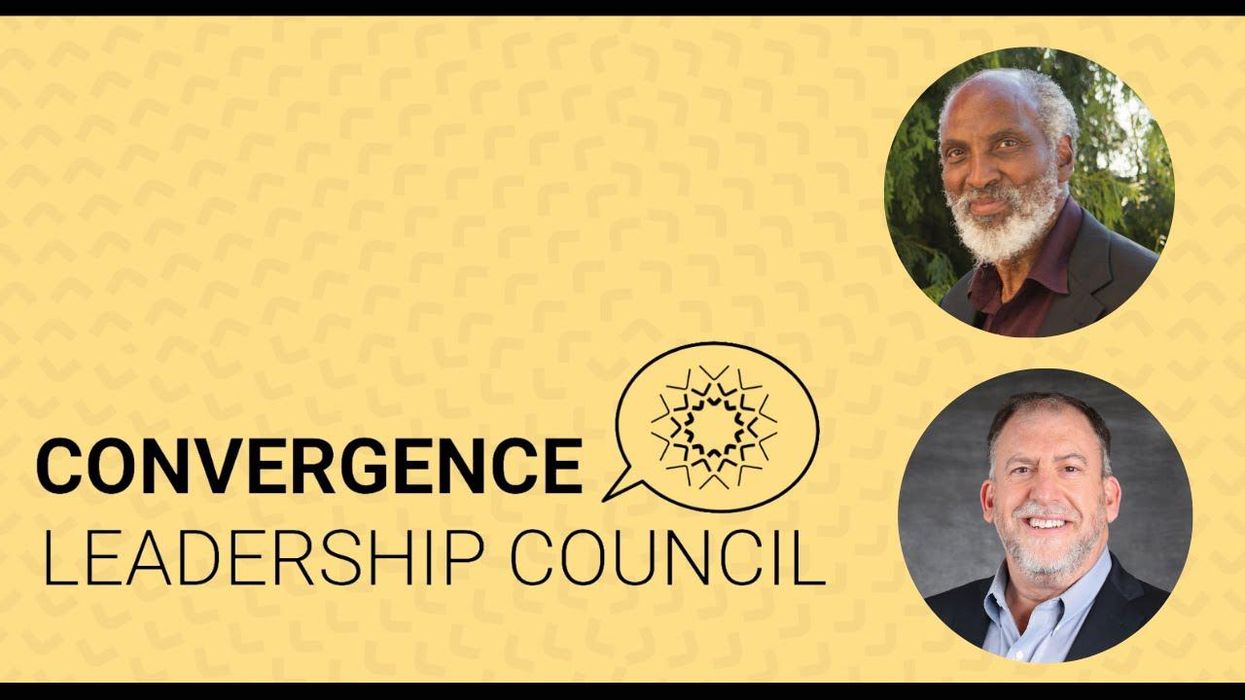
A Conversation with john powell: 2022 Recipient of the Convergence Bridge-Building Leadership Award


Each year, Convergence presents the Leadership Award to someone who demonstrates exceptional bridge-building efforts across party lines and embodies the imperative to bring people together to solve problems. This year’s award, presented at the June 22 Convergence Leadership Council Meeting, recognizes John Powell.


Read More

Trump’s Venezuela Agenda Isn’t Justice — It’s Profit

Venezuela flag and oil tanker

AI generated image

Trump’s Venezuela Agenda Isn’t Justice — It’s Profit

President Donald Trump convened more than a dozen major oil executives at the White House on Friday afternoon to explore potential investment opportunities in Venezuela, coming just days after the United States removed President Nicolás Maduro from power.

Trump invoked a national emergency to protect Venezuelan oil revenues controlled by the U.S. government from being seized by private creditors, casting the move as essential to safeguarding American national security and preserving stability across the region.

Keep ReadingShow less
Can Things Get Even Worse for Mike Johnson?

Speaker of the House Mike Johnson (R-LA) lat the U.S. Capitol on January 7, 2025 in Washington, DC.

(Photo by Heather Diehl/Getty Images)

Can Things Get Even Worse for Mike Johnson?

Two weeks ago, a column in the Fulcrum warned that Speaker Mike Johnson was entering a political season defined by "ritual human sacrifice," noting that in a Trump‑branded GOP, someone must absorb the blame when governing goes sideways. In this context, the "sacrifice" refers to the erosion of institutional norms, accountability, and the potential jeopardy of individual reputations. Jonah Goldberg wrote that "Mike Johnson might as well be tied to a stake in the lion’s den."

That line feels understated now, as cascading crises over the past several days have closed in even further around Speaker Johnson.

Keep ReadingShow less
Trump and Kamala Harris debating for the first time during the presidential election campaign.

Republican presidential nominee, former U.S. President Donald Trump and Democratic presidential nominee, U.S. Vice President Kamala Harris debate for the first time during the presidential election campaign at The National Constitution Center on September 10, 2024 in Philadelphia, Pennsylvania.

Getty Images, Win McNamee

Trump’s Rhetoric of Exaggeration Hurts Democracy

One of the most telling aspects of Donald Trump’s political style isn’t a specific policy but how he talks about the world. His speeches and social media posts overflow with superlatives: “The likes of which nobody’s ever seen before,” “Numbers we’ve never seen,” and “Like nobody ever thought possible.” This constant "unprecedented" language does more than add emphasis—it triggers fear-based thinking.

Reporters have found that he uses these phrases hundreds of times each year, on almost any topic. Whether the subject is the economy, immigration, crime, or even weather, the message is always the same: everything is either an unprecedented success or failure. There’s no middle ground, nuance, or room for finding common ground.

Keep ReadingShow less
Nicolas Maduro’s Capture: Sovereignty Only Matters When It’s Convenient

US Capitol and South America. Nicolas Maduro’s capture is not the end of an era. It marks the opening act of a turbulent transition

AI generated

Nicolas Maduro’s Capture: Sovereignty Only Matters When It’s Convenient

The U.S. capture of Nicolás Maduro will be remembered as one of the most dramatic American interventions in Latin America in a generation. But the real story isn’t the raid itself. It’s what the raid reveals about the political imagination of the hemisphere—how quickly governments abandon the language of sovereignty when it becomes inconvenient, and how easily Washington slips back into the posture of regional enforcer.

The operation was months in the making, driven by a mix of narcotrafficking allegations, geopolitical anxiety, and the belief that Maduro’s security perimeter had finally cracked. The Justice Department’s $50 million bounty—an extraordinary price tag for a sitting head of state—signaled that the U.S. no longer viewed Maduro as a political problem to be negotiated with, but as a criminal target to be hunted.

Keep ReadingShow less