



Skip to content
Search

Latest Stories

Top Stories

What Americans can learn from the French protests

Opinion

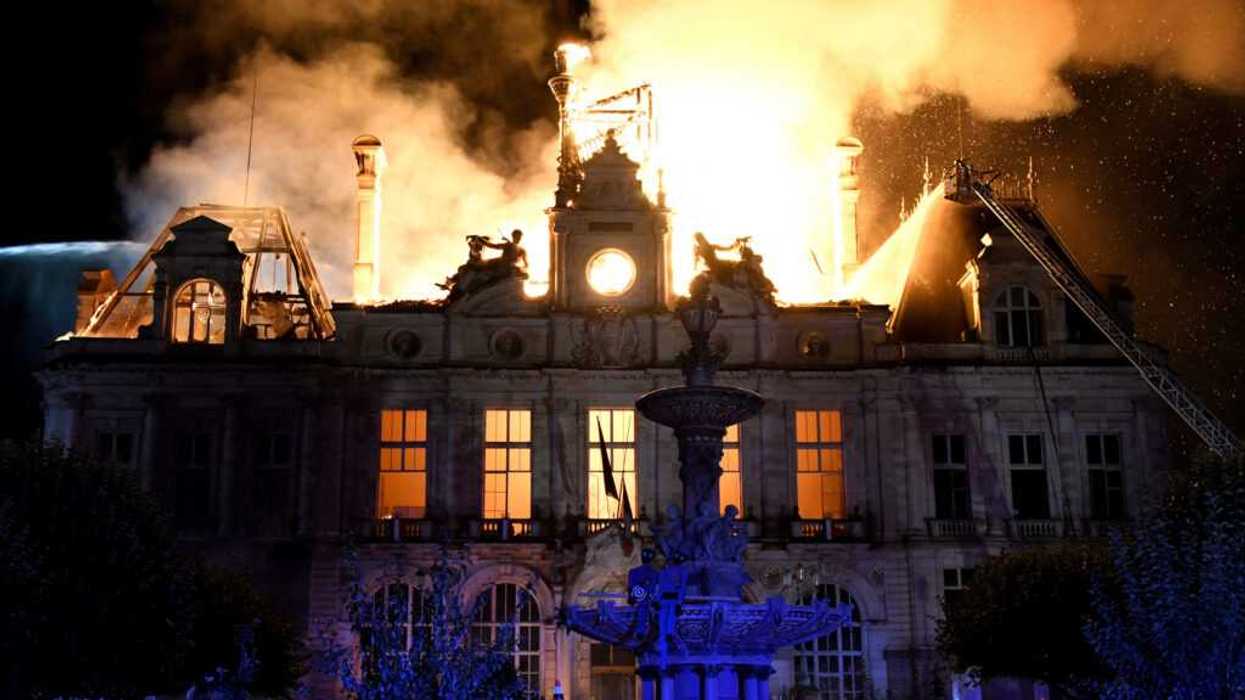
A ​fire burns and destroys the city hall  in Limoges, central France.

A fire burns and destroys the city hall after a group of individuals forced entry into the building during ongoing protest action against the "high cost of living," in Limoges, central France on Oct. 17, 2026.

Pascal Lachenaud/AFP/Getty Images/Tribune

On Monday, France’s Interior Minister Laurent Nuñez admitted that police have “lost control” as some cities continue to see massive waves of looting and mayhem. Social media brims with images of stores being ransacked, cars burning, and mask-wearing goons running wild. In Limoges, the beautiful Hôtel de Ville was burnt to the ground.

But the chaos, as is so often the case, began peacefully. And many supporters and leaders of the protests have condemned the violence. I think that violence has more to do with France’s miserable record of assimilating immigrants from North Africa and the Middle East than with budget cuts. Call me cynical, but I don’t believe the goons pillaging Louis Vuitton stores are planning to resell the handbags to buy better school supplies or to bolster their teachers’ salaries.


The initial protests were about budget cuts, primarily in education. As allied groups joined in — socialist and communist parties, labor unions, etc. — the argument expanded to generalized complaints about France’s “austerity” policies. In short, they argued, as they have for generations, that the government should spend more on pensions and other entitlements.

The problem is that France can’t afford it. It’s borrowed money to pay for its lavish government sector for a very long time. It has run consecutive budget deficits — i.e., took in less than it spent — for more than half a century. In 1974, public debt was around 15% of GDP. Today it’s at 116%. Government spending now makes up 57% of the GDP (compared with 23% of GDP for the U.S.), and France spends three times as much on “social protection” — including pensions and family benefits — as does the United States, and more than any other country in Europe and the OECD.

Naturally, the blame for this sorry state of affairs, according to some supporters of the protests, falls on capitalism. Famous French economist Thomas Piketty says the country’s woes are the result of the state pursuing the “capitalist logic” of underinvesting in the public sector and undertaxing the wealthy. In terms of personal income taxes alone — France has massive payroll and consumption taxes as well — the top 10% of French taxpayers provide 74% of the revenue. The top 1% provide a third. France also has the highest corporate tax rates of any country in the Organisation for Economic Co-operation and Development.

I’m hard-pressed to see how just a bit more taxing and spending will solve France’s problems.

I have real sympathy for the nonviolent French youth. Their economy is moribund in large part because retirees have a stranglehold on the state’s finances, consuming 14% of GDP. (Social Security and Medicare account for 9.4% of U.S. GDP. One reason education spending is so tight: A third of the education budget goes toward Education Ministry pensions.

I don’t think retirees should be thrown to the wolves, but such a system is objectively unsustainable. Yet in 2023, when French President Emmanuel Macron introduced reforms to bump the retirement age from 62 to 64, the resulting protests paralyzed the country (that modest reform was suspended last month). France is now caught in what economists call the “dependency trap,” producing too few workers to pay for the lifestyles of its older generations.

When protesters talk about feeling “hopeless,” what they often mean is that the gravy train will run out before they get to partake in it. I don’t blame them for being resentful, but it’s difficult to see how this is a failure of capitalism or “neoliberalism.” As Margaret Thatcher famously said, socialist governments “always run out of other people’s money.”

The most obvious answer to France’s problems is economic growth — much easier said than done, of course. The reason that’s so hard for France isn’t because the government is “unresponsive” to the people and their concerns. It’s because it’s too responsive. For decades, the French have demanded the economic policies that got them into this mess, and the government appeased them.

France is an outlier in its poor economic performance and lavish social spending, but its problems are recognizable across the West, including in America. The U.S. economy has grown twice as fast as France’s over the last quarter-century, but the demands for less “capitalism” from young Americans echo those protesting in Paris.

France has the sort of universal health insurance many insist would solve everyone’s problems here. It hasn’t spared France from political turmoil. Our own Social Security and Medicare aren’t far from insolvency, but demands for higher benefits and “Medicare for All” only grow louder.

The French canary in the coal mine is a good reminder that the best solution to some crises is to avoid them in the first place.

Jonah Goldberg is editor-in-chief of The Dispatch and the host of The Remnant podcast.

Read More

Hands raised in the air, holding each other.​

America’s polarization has closed us off to each other’s humanity. The Golden Rule and the churches may be the way back to common ground.

Getty Images, PeopleImages

Land of the Free, Home of the Brave? How Trump Is Destroying America's Soul

The recent actions by both some Jewish leaders and pro-Palestinian activists against NY mayor Zohran Mamdani are an example of just how far our nation has come from our ideals under the presidency of Donald Trump.

Even with Mamdani's consistent pro-Palestinian statements, he was called a "coward" and a "sellout" because he stood with the Jewish community in remembering the October 7 Hamas attack. Jewish leaders condemned him for his criticism of Israel and Palestinian sympathies expressed in the same breath as remembrance of the attack. But Mamdani understands the connection between the treatment by Israel of Palestinians and Palestinian treatment of Israel.

Keep ReadingShow less
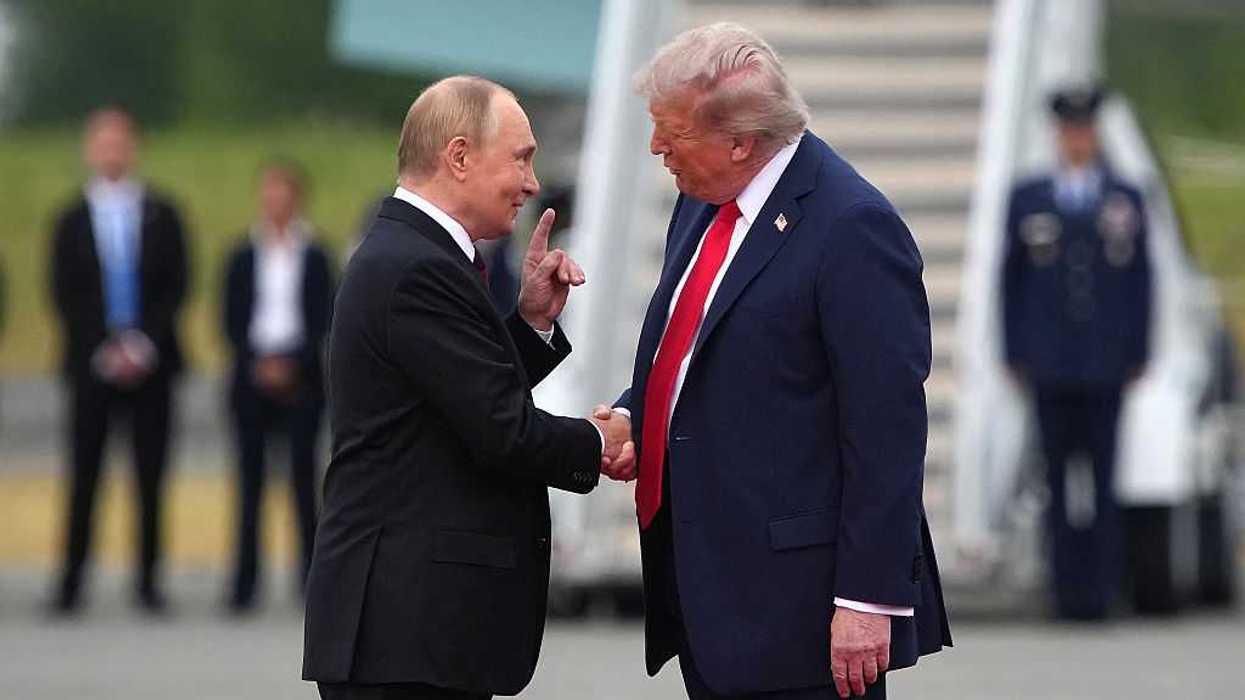
U.S. President Donald Trump greets Russian President Vladimir Putin in front of a landed airplane.

U.S. President Donald Trump (R) greets Russian President Vladimir Putin as he arrives at Joint Base Elmendorf-Richardson on August 15, 2025 in Anchorage, Alaska.

Andrew Harnik/Getty Images

What Would Putin’s Puppet Do Differently?

This winter, Russia plans to freeze Ukraine into submission. According to an intercepted Russian plan, Moscow intends to use hundreds of ballistic missiles, long-range drones, and glide bombs to strike Kyiv, Kharkiv, and Odesa with such intensity that they are cut off from power, heat, and water, slashing electricity and heat by up to 90 percent and crippling sewage systems. Russia hopes that with an energy system so thoroughly destroyed, millions of Ukrainian citizens would become so cold, sick, and desperate that their country might just surrender. Deliberately attacking the heat and water of civilians is a war crime, but Moscow thinks it can get away with it. Ukraine is running short on the Patriot interceptors it needs to stop ballistic missiles, and Putin is betting Trump will continue to betray Ukraine. It’s looking like a safe bet.

Trump shows no evidence to the contrary. On October 9, he got off a call with the Russian president and then immediately lifted U.S. sanctions on Russian diesel. The next day, after Russian strikes killed at least 17 people in Zaporizhzhia, Trump announced it was “time for Ukraine to get a new president.” Days later, the American-controlled satellite network Ukraine’s military depends on was throttled without warning, knocking out service to the drones Ukraine uses to chase down Russian attack drones. Trump denied giving the order, but The Telegraph reported that Musk pitched the idea and Trump agreed.

Keep ReadingShow less
Man wearing Trump hat watches Trump on TV

Trump’s 10-to-1 rule aims to cut red tape, but fewer regulations can mean weaker food safety, Head Start services, and checks on presidential power.

Wu Xiaoling/Xinhua via Getty Images

Trump’s 10-to-1 Rule Gives the Presidency Too Much Power

We only think about the plumbing in our homes when something goes wrong. The same is true for government bureaucracy. Rules, procedures, and bureaucrats operate largely out of sight, making sure food is safe, Social Security checks arrive, workplaces are safe, and children with disabilities receive the services promised to them by law. Yes, there is plenty of red tape in government, just as an old house can accumulate pipes that no longer serve much purpose. But ripping out pipes simply because there are too many of them is not much of a plumbing strategy. Yet the Trump administration has made the number of federal regulations it eliminates a measure of success. That raises a more important question: When does cutting bureaucracy stop making government more efficient and start making it less capable?

1. The Case for Cutting Red Tape

Keep ReadingShow less
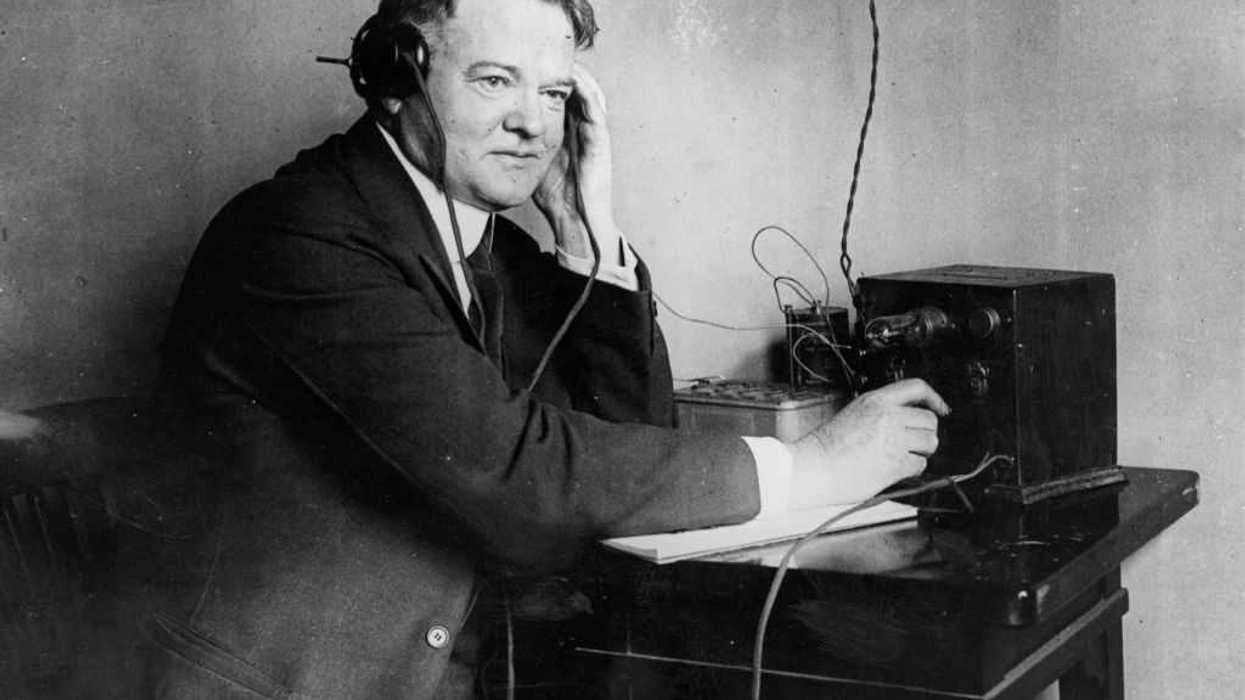
​Herbert Hoover  listening to a one valve radio set.

Herbert Hoover (1874 - 1964), Republican Party candidate for the Presidency of the United States of America, listening to a one valve radio set.

Topical Press Agency/Getty Images

A Second Axial Age Demands Global Leadership Rooted in Hoover’s Ideals

The time has come when we must take an enlarged vision of the future. (Herbert Hoover)

Our 31st President, Herbert Hoover, said this in 1926. Although one hundred years have passed since — and it is always time to take a larger view of the future — his proclamation rings truer now than ever.

Keep ReadingShow less