




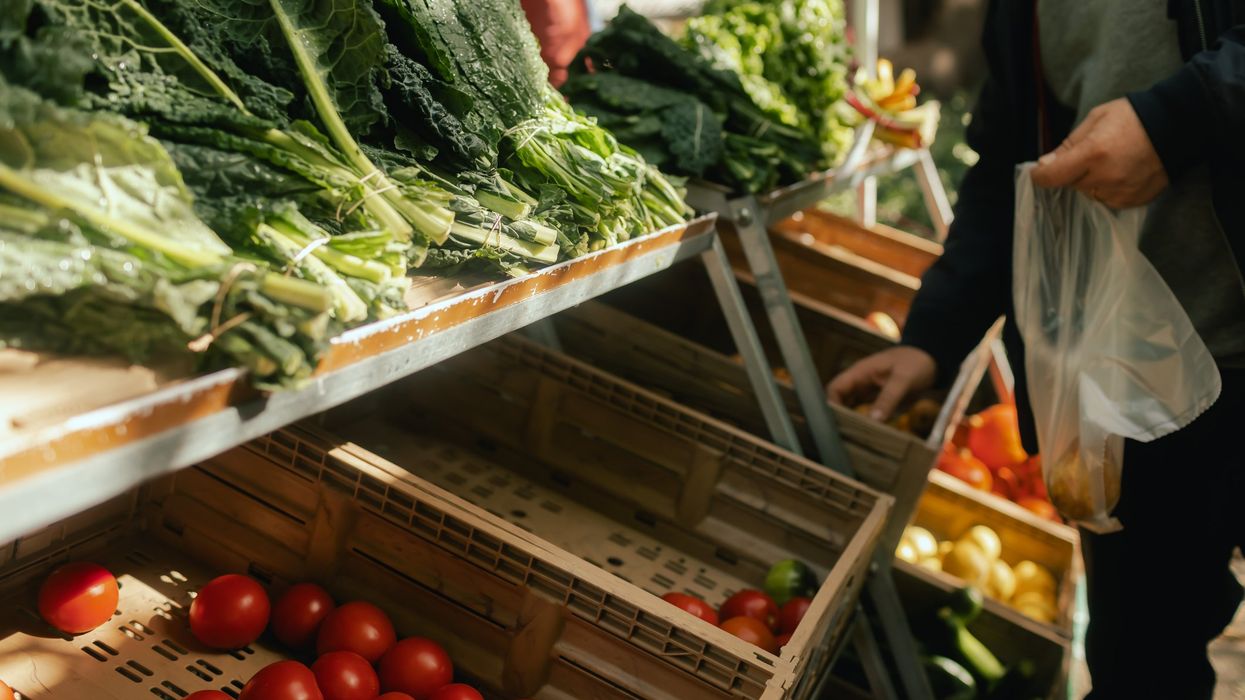

In Washington, D.C., where neighborhood lines often map onto life expectancies, food insecurity has become a pressing public health issue. Wards 7 and 8, with only three full-service grocery stores, sharply contrast with affluent Ward 3’s 15 outlets. That access disparity correlates with a staggering 15-year life expectancy gap between some ZIP codes east of the Anacostia River and wealthier areas to the northwest. This inequality reflects what public health experts refer to as the social determinants of health – non-medical factors, such as access to nutritious food, that influence physical well-being.
A recent survey by the Capital Area Food Bank found that food insecurity impacts 37% of D.C. Metro Area households, disproportionately affecting Black residents in D.C., where four in 10 residents have struggled to access adequate food. “Where you live in the city profoundly determines your food insecurity and, in turn, your health outcomes,” said Luisa Furstenberg-Beckman, manager for the Produce Rx program at the nonprofit DC Greens.
As federal nutrition aid is stalled by red tape and grocery deserts persist, local civic-minded organizations are responding with inventive, community-centered approaches. I had the opportunity to speak with two: DC Greens and FRESHFARM, each tackling the crisis from different angles with emerging evidence of impact.
Produce Rx: DC Greens’ Health Care Approach
Founded in 2009, DC Greens pioneered D.C.’s produce prescription model in 2012, integrating nutrition directly into health care. Under their Produce Rx program, providers at the 17 federally qualified health clinics DC Greens partners with prescribe fresh fruits and vegetables to Medicaid patients diagnosed with chronic diet-related illness. Participants receive debit-style cards, loaded monthly ($80–$120 based on their household size) for use at approved stores and markets across D.C.
The clinical framing is important: “We are at the intersection of health care and food access,” said Furstenberg-Beckman. “Food is medicine” in both preventing and treating conditions like diabetes and hypertension. A mid-year check-in enables providers to assess progress through A1C levels, BMI, and blood pressure readings.
Early results are encouraging: 35% of participants showed measurable improvement, according to internal clinical evaluation. In 2024 alone, 96% used their cards, collectively spending over $750,000 on fresh produce. After enrollment, 85% reported improved food security, and 83% felt more confident in affording healthy meals. The program also provided participants with the flexibility to incorporate various types of produce into their diets. “When people have the money to try new things, they’re able to increase the variety of what they choose,” Furstenberg-Beckman shared, describing a patient who tried kale for the first time – and loved it.
Besides direct impact, DC Greens advocates for systemic change. DC Greens Executive Director Eric Angel emphasizes that the organization uniquely combines advocacy with service, using participant data to push a Medicaid 1115 waiver that would fund produce prescriptions as reimbursable health services. “We have the infrastructure with debit cards and health care partners – we just don’t have the funds to scale it up,” Angel said, calling current federal support for such programs “an idea whose time is coming, but hasn’t fully come.” Until Medicaid pays for nutritious food, the program depends on grants and local philanthropy, both resources that limit the program’s scale.
Produce Plus: FRESHFARM’s Community Markets Model
Where DC Greens embeds nutrition within clinics, FRESHFARM embeds it within communities, focusing on farmers markets and local food economies. The nonprofit administers Produce Plus, a DC Health program that distributes $40 monthly electronic credits to 8,000+ eligible residents from June to September. Cards are accepted at 63 farmers markets and farm stands citywide, including many in low-access neighborhoods. This runs in parallel to federal programs like SNAP and the WIC/Senior Farmers’ Market Nutrition Program, which in D.C., offer just $30–$50 per year.
Nick Stavely, FRESHFARM’s director of incentive programs, describes Produce Plus as “a triple investment in nutrition, local farmers, and healthy food retail.” In 2024, participants redeemed $990,000 in benefits, a 13% increase over the previous year. A third-party evaluation showed that 98% participants reported healthier eating habits, echoing national research that links produce incentives to improved diet, blood pressure, and glucose control.
A key advantage is local economic impact. Farmers receive full reimbursement, providing a consistent revenue source that sustains and expands markets. FRESHFARM digitized the process in 2022, moving from paper tokens to prepaid cards. Stavely reported that 58% of families used at least 80% of their funds, and one-third used everything. The program’s value also lies in the user experience. Multilingual outreach, market staff referred to as “champions,” and participant feedback loops have fostered trust and seamless access.
Demand, however, outstrips funding. In 2024, 35% of eligible applicants (4,717 people) were placed on a waitlist. The program relies on D.C. council budget approvals each year, and while advocacy led to a modest increase in slots last year, many still go unserved. “More people want to participate every year, and the number we can serve is capped by funding,” Stavely acknowledged.
Overlapping Strategies, Shared Hurdles
Despite differing delivery methods, both DC Greens and FRESHFARM are addressing the same core challenge: unlocking equitable access to fresh food in neighborhoods that have been historically underserved. Their approaches, ranging from clinical integration to community markets, complement each other and underscore the broader truth that food insecurity is best addressed through multi-sector collaboration. Both programs partner with local government, healthcare systems, farmers, and vendors to build ecosystems of support.
However, policy and funding ceilings throttle their full potential. DC Greens awaits federal approval for D.C.’s Medicaid waiver, while FRESHFARM hinges on municipal budget cycles and year-to-year support. Neither program is fully benefiting from federal nutrition incentive programs, such as USDA’s GusNIP, where a more robust partnership could extend federal backing to local produce incentives and drive sustainability.
Why It Matters, and What Comes Next
Innovations in treating food as a core component of health are emerging nationwide. Research from Harvard Medical School shows that produce prescriptions can reduce clinical risk markers while reducing health care costs. Meanwhile, communities across the country are adopting nutrition incentive programs similar to Produce Plus. However, the success of local innovation depends on policy integration and stable funding.
In D.C., where structural inequity aligns with health disparities, data shows that these programs prove what’s possible. As Furstenberg-Beckman said, “When we support folks in accessing healthy food, we’re supporting so many health outcomes – physical, mental, emotional.” Stavely notes that local farmers also benefit, as these programs create jobs, reinvest money in underserved neighborhoods, and foster stronger connections between residents and food producers.
The challenge now is scaling these efforts beyond pilots and across seasons, zip codes, and demographic groups. Expanding Medicaid coverage for nutrition, securing multi-year funding for incentive programs, and integrating produce access into broader healthcare and wellness policy could bridge the gap between interventions and system-level change.
Conclusion: From Pilot to Policy
The stories of Produce Rx and Produce Plus are more than local innovations; they are building blocks for systemic change. By bringing fresh food into clinics and neighborhoods, embedding dignity into service delivery, and centering the economic well-being of local producers, these programs model what community-based solutions can look like at scale.
They also offer particularly civic value: when public resources, nonprofits, and healthcare systems align around a shared goal – ensuring that fresh produce is simply available and affordable – health inequities can begin to shift. D.C.’s experience provides a template for targeted, data-driven, human-centered policy that treats fresh food as a fundamental right rather than a luxury.
The work continues. Healthier grocery access, broader reimbursement structures, and expanded nutritional incentives must now flow from demonstration to mainstream. If these models succeed, they could not only narrow life expectancy gaps in D.C. but also reshape how cities nationwide address the vital connection between food, health, and equity.
Bennett Gillespie is a student at Duke University and a council member of the Duke Program in American Grand Strategy. He is also an intern with the Fulcrum.
The Fulcrum is committed to nurturing the next generation of journalists. To learn about the many NextGen initiatives we are leading, click HERE.