

Richard Neal, the congressman representing Massachusetts’ 1st district, is concluding his 19th congressional term this year. In many ways, Neal is a typical long-tenured congressperson. However, Congressman Neal is distinguished by having been elected to Congress uncontested more times than anyone in post-civil rights American history.
Neal owes his long tenure in part to the uncompetitive elections in western Massachusetts where so-called “silent elections” are common. Some would be challengers may be put off by the fact that he has won seven of his eight contested congressional races by more than 20 points. More often than not, Neal has been uncontested in the Democratic primary as well, however, this year he has competition in both the primary and general election.
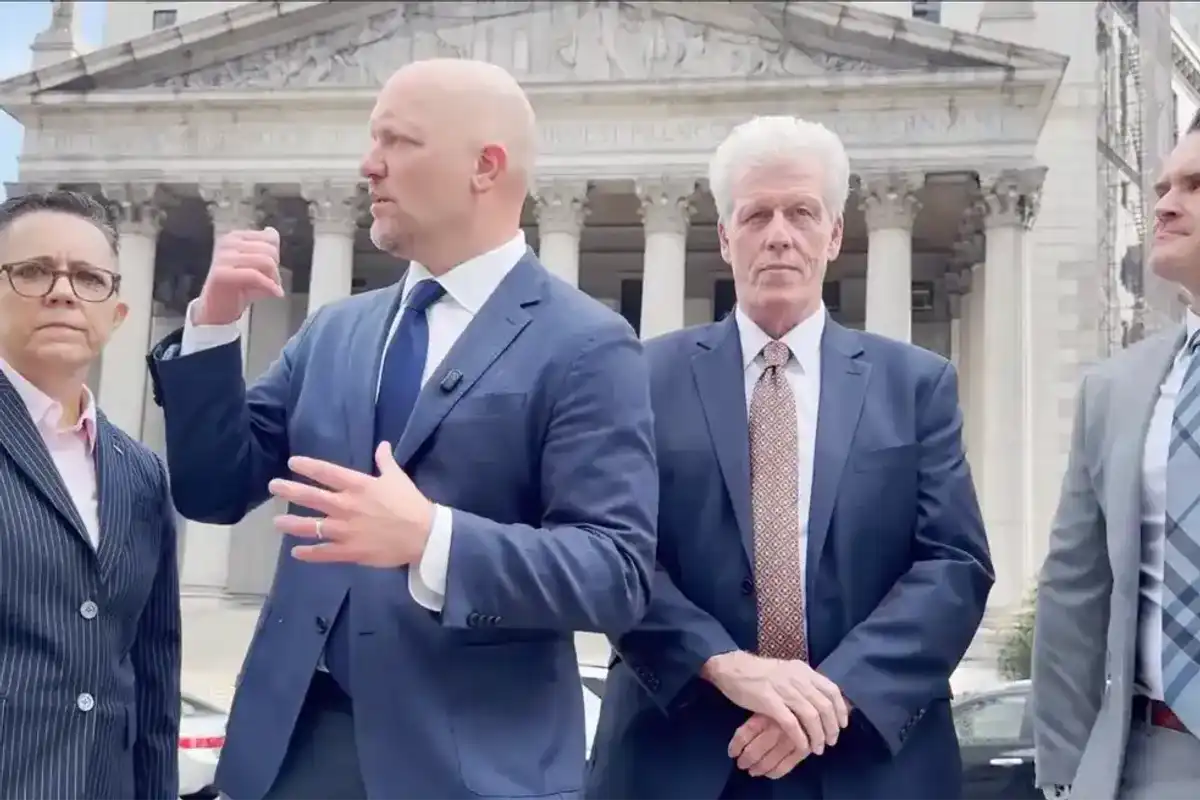
Jeromie Whalen, a local high school teacher, is challenging Neal for the Democratic nomination in the district, and Nadia Milleron, a lawyer, activist, and political independent, will face the winner. When I spoke with Whalen in February, six months into his campaign against Neal, he relayed a series of frustrations around Neal’s lack of transparency, excessive PAC use, and failure to support progressive causes. To Whalen, Neal epitomizes everything wrong with the Democratic Party. “We've drifted farther and farther from the party that I grew up with and I knew and I loved.”
Per the Pew Research Center, 75% of Americans share Whalen’s frustration with America’s federal government. This country has plenty of people with strong opinions, and yet it is lacking candidates.
In 2024, 22 congressional races were uncontested. At the state level, they are even more common, with 40% of all state legislator elections being uncontested in 2024, part of an upward trend. Including local elections, 70% of all races in America’s 2024 elections had only one candidate on the ballot. Silent elections have been trending up internationally too, including in Austria, Italy, and Japan. The problem is particularly severe in Japan, where 40% of mayoral elections were uncontested in 2023. However, this rate is still far behind America, where 71% of mayors were elected uncontested in 2024. Canada, a country with which America shares many similarities, has had only one “win by acclamation” at the provincial level this century and none at the federal level.
The most basic reason for our abundance of silent elections is that America holds so many elections—500k elected positions at the state and local level. Most attract little attention and few candidates. In 2024, city council members and commissioners were uncontested in 70% of races. Niche positions like treasurers, clerks, and judges are uncontested in 90% of races. In 2024, 10,000 elections had no candidates appearing on the ballot at all, primarily in city legislature, school board, and judge elections.
The problem isn’t just the number of elected positions, but also that many come with responsibilities that exceed compensation. Most school board positions come with little or no pay. City council members earn $31k on average. Low pay can be workable if elected positions are done concurrently with another job, but they often can’t be due to the workload required and/or the inflexibility of a potential candidate’s primary employer.
Though little discussed, many elections advocates recognize the problem and hope to fix it. Last spring, I spoke with Jen Johansen, an elections advocate. She relayed to me that candidate support mechanisms outside of political parties are rare in American politics. That means many candidates rely on party support to run their campaign. However, party leaders are reluctant to provide money and resources to candidates they expect to lose—as is the case in Massachusetts’ 1st district, where the Republican Party has participated in fewer than half the congressional elections this century.
In races they expect to win, party leaders discourage multiple candidates from running. This means that candidates not favored by their party are asked to “wait their turn” and support more senior (or better-connected) candidates instead. The turn system and culture of backroom dealing have massively influenced Western Massachusetts, where, in 1988, Ed Boland—a long-time Massachusetts congressman—gave Richard Neal advance notice of his planned retirement, allowing Neal to ready funds and resources before anyone knew he would retire. Thanks to this, Neal went unchallenged in the primary and faced only a Marxist third-party candidate in the general election.
I also spoke with Rob Booth, an elections advocate who works for GoodParty. “People don’t lack opinions or views,” he told me. “They lack a clear on-ramp or credible plan.”
Researchers have found that higher fundraising expectations lead to fewer candidates running for office. These expectations also warp the behavior of candidates who do run. Whalen told me that early in his campaign, a political consultant friend told him he needed to spend days “sitting in a room and calling random people and begging for money." That wasn’t the campaign Whalen wanted to run, and so he didn’t. Consequently, with two weeks to go until the September 1st primary, Whalen’s campaign has spent just $300k, well short of Neal’s 2.1 million—and the 2.1 million Alex Morse, Neal’s last primary challenger, spent in 2020. Not all candidates share Whalen’s willingness to run at such a financial disadvantage; without strong funding, many candidates simply don’t run.
Ballot access is another barrier that can kill campaigns. In most places, ballot access is determined by some combination of filling forms, paying fees, and proving eligibility, but in some places these tasks are particularly onerous. For example, in Georgia, candidates must pay $5220 to run for the US House of Representatives. Non-party affiliated candidates must also collect signatures from 5% of eligible voters in a district. For state house districts, that is typically ~5000 signatures, and for US house districts, typically ~25,000. Georgia’s rules are strict enough that in 2021, a judge declared them unconstitutional. However, this decision was overturned by a federal appeals court the following year.
Even in states with relaxed signature requirements, candidates sometimes have to ensure their signatures include sufficient representation from across their district and that each signer is eligible to sign. “Petition drives can be a place where a lot of campaigns die,” Booth tells me.
No single factor is to blame for the epidemic of silent elections in America. However, the sheer number of elections, the challenges of holding elected office, the power of the two-party system, the need to raise money, and the logistical challenges of running have together brought far too many American elections to a standstill.
Rafael Gonzalez is an MPP student at the Yale Jackson School of Global Affairs. Before graduate school, he worked for Boston Consulting Group, the World Food Programme, and the International Atomic Energy Agency. He has previously been published by Public Seminar for an article on industrial agriculture.