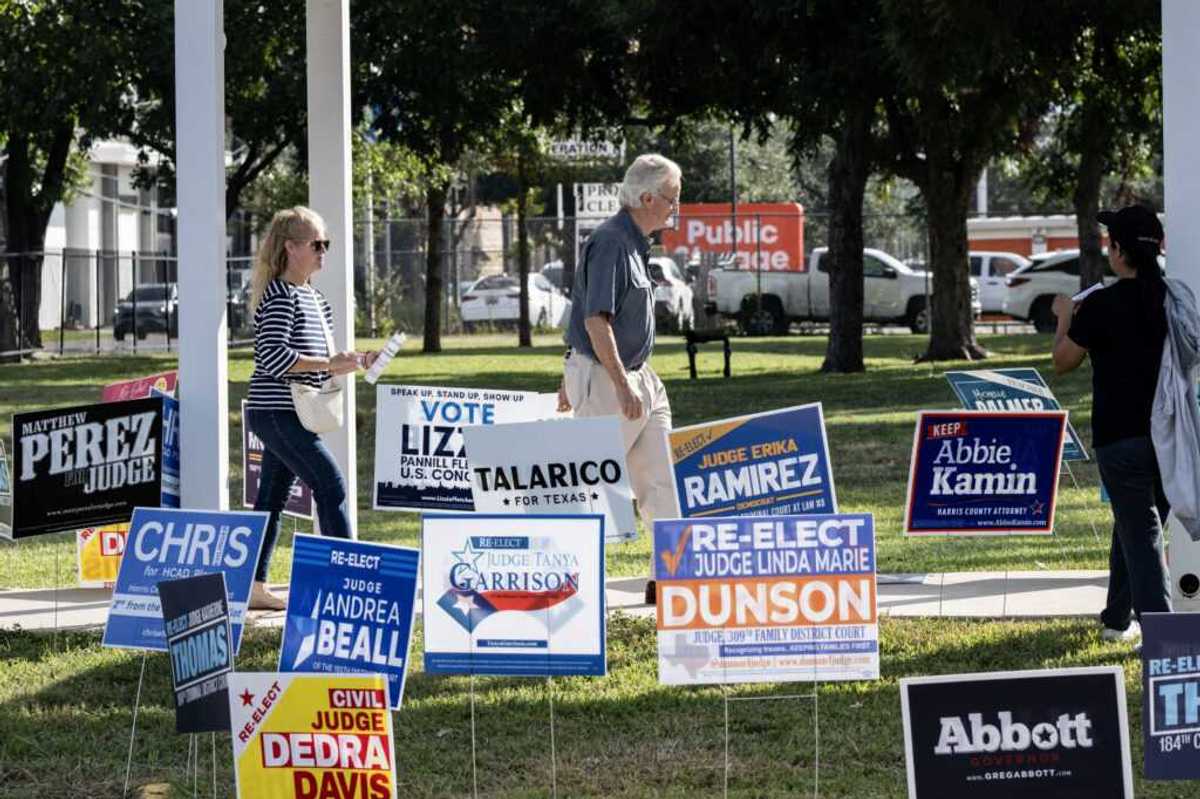





Politics nerds have many ideas about how to strengthen American democracy; however, few directly address silent elections. For example, ranked-choice voting does nothing to encourage more candidates to run if there are not enough. Term limits increase turnover, but even newcomers can frequently run uncontested in general elections if they have won competitive primaries.
Fortunately, the cause isn’t hopeless. For one, tightening campaign finance laws would put potential challengers on more even footing with corporate-backed politicians, encouraging more candidates to run. Independent redistricting would also help. The Cook Political Report, a poll aggregator, considers only 69 of America’s 435 House districts competitive. Fair redistricting means more competitive districts and therefore more contested elections.
However, independent redistricting can only help so much. In Massachusetts, where registered Democrats outnumber registered Republicans 3-1, it is impossible to draw many competitive districts. It is therefore unsurprising that Massachusetts has the highest rate of uncontested congressional elections despite receiving an A grade for district fairness from the Princeton Gerrymandering Project.
Fortunately, uncontested elections are not inevitable. Direct interventions that focus on the problem can reduce their occurrence. One often-overlooked proposal is open primaries. With open primaries, a single primary occurs for all parties from which two or more of the highest vote-getters—regardless of party affiliation—advance to the general election. Open primaries ensure that the important electoral decisions occur in general elections—where they receive more turnout and attention—instead of primaries.
Alaska implemented open primaries in 2022 and enjoyed its most competitive election season in a decade: only 12% of state legislature elections were uncontested. California has adopted the system as well, and in 2024, only one California state assembly election was uncontested, and no state senate seats were, suggesting that open primaries can create electoral competition.
California has more ideas to offer than just open primaries. One is district size. California’s state assembly has only 80 seats, creating constituencies 2.5x the size of any other state house district in America. And with one million people per district, California’s state senators represent more constituents than US Representatives. More people means more potential candidates.
California’s competitive elections are buoyed by California’s generous benefits for elected officials. State legislators in California are the highest paid in the country and receive a strong benefits package. California’s system is not perfect. Many barriers to entry, especially for working-class individuals, still exist. However, it’s enough to consistently produce contested elections for the most important offices.
Another potentially impactful reform is multi-member districts, where multiple elected officials represent one district. Studies show that multi-member districts can greatly reduce the rate of uncontested elections. Competitive elections require fewer total candidates with multi-member districts because a district of 30k people needs only four candidates to competitively elect three legislators (four candidates for three spots), whereas three districts of 10k people need six candidates total to competitively elect one legislator each (two candidates for one seat in each district). Multi-member districts also help new candidates by letting them challenge multiple incumbents simultaneously and get elected by beating just one.
Multi-member districts are already used in parts of the United States, including for state house elections in Arizona, South Dakota, and Washington, all of which had relatively few silent elections in 2024, when they last elected their state houses.
Institutional reforms can help increase the number of candidates who run, but some barriers are innate to the political process, or at least to the political culture. Political office is often a demanding, underappreciated job where politicians struggle to make the change they want. What’s more, aspiring politicians must invest massive amounts of time into a campaign before they can start doing the job—and often, they lose.
Tahirah Amatul-Wadud knows what it’s like to lose an election better than most. In 2018, Amatul-Wadud challenged incumbent Richard Neal for the Democratic nomination in Massachusetts’ 1st congressional district and lost. A lawyer and long-time district resident, she was motivated to run because she felt the country was moving in the wrong direction and that Neal was letting it happen.
Outspent 21-1 by Neal, then running for his 16th congressional term, Amatul-Wadud was always a long shot. “Sometimes we romanticize these David and Goliath moments,” she told me, “but it's very risky to be David.” Ultimately, she lost by a 70-30 vote margin. When I asked her about her now eight-year-old loss, Amatul-Wadud spoke with hints of nostalgia as she told me she is proud to have run. “People got to see an African-American woman, in hijab, on television,” she says. “It mattered that my pictures were in the newspaper. It mattered that I was on the television, debating the congressman. And it didn't just matter to little black girls and boys and little Muslim girls and boys. It mattered to every young person.”
No single reform can guarantee quality contested elections, but a cultural change can. In Canada’s 1867 parliamentary elections (the country’s first), 25% of seats were won by “acclamation”. Silent elections remained common for several decades, but eventually—and not due to any specific policy—the practice faded: no Canadian parliamentary seat has been won by acclamation since 1957.
Canadian democratic institutions and culture promote contested elections. For one, Canada has four national parties, helping ensure at least two parties run a candidate in every district. Additionally, election season in Canada is short and doesn’t include a primary, meaning that candidates need not invest nearly as much time as they do in America.
One of Canada’s minor parties, the Rhinoceros Party, demonstrates the difference between Canadian and American political culture. Founded in 1967, the satirical Rhinoceros Party has advocated for filling the Canadian Senate by lottery and putting more green cars on the street (as in painted green). The party had its best year in 1980, when it captured 1% of the popular vote, and more recently ran 29 candidates in 2025. Though deeply unserious, Canada’s Rhinoceros Party makes politics fun and encourages politically disillusioned voters to engage.
Amatul-Wadud is a big believer in the importance of culture. “We have to raise the dignity of being an elected leader, by encouraging people to run who we think have not only the skills, but the moral compass to do so and to support them financially and with our time.” If America can create that cultural shift, American democracy will be all the better.
We may be witnessing the start of such a shift. Amatul-Wadud’s opponent, Neal, is now finishing his 38th year in Congress. In total, he has won 11 general elections and 13 primaries uncontested, but in 2026, he faced a primary challenger, and in November he will face a general election challenger. This shift may be underway, not because of an institutional reform, but because we are in an urgent political moment that is inspiring unconventional candidates to run small campaigns whose impact is anything but. America must use that energy to sustain a cultural shift before it runs out of longshot candidates.
Rafael Gonzalez is an MPP student at the Yale Jackson School of Global Affairs. Before graduate school, he worked for Boston Consulting Group, the World Food Programme, and the International Atomic Energy Agency. He has previously been published by Public Seminar for an article on industrial agriculture.