

Skip to content
Search

Latest Stories

Follow Us:
Top Stories

Idaho Voters Will Weigh In on One of the Strictest Abortion Bans in the Country

A 2026 ballot measure certified Monday gives voters the chance to establish “reproductive freedom” in the state.

News

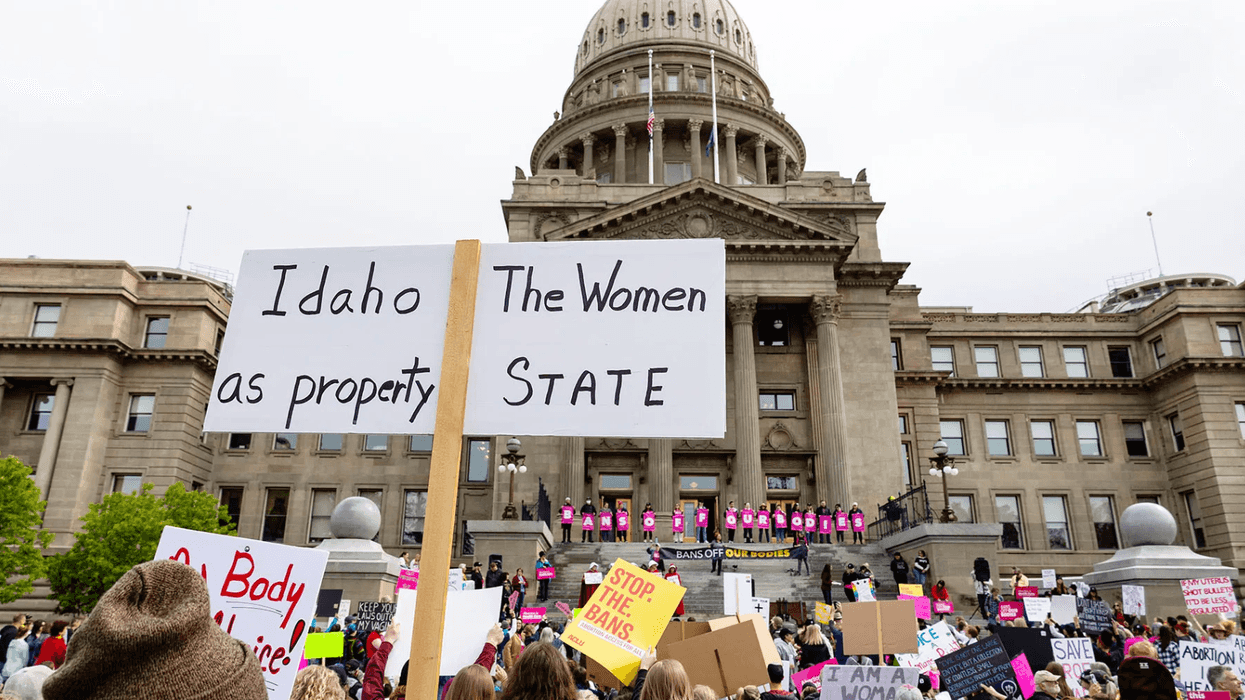
Protestors holding signs outside of the Idaho statehouse.

Protesters rally for abortion rights outside of the Idaho Statehouse in downtown Boise, Idaho, on May 14, 2022.

Sarah A. Miller/Idaho Statesman/AP

Idaho voters will weigh in on their state’s abortion laws this November. The secretary of state’s office certified a ballot measure that could, if passed, overturn one of the strictest bans in the country, the campaign to restore abortion rights in Idaho confirmed on Monday.

The measure would enact a new law establishing a state right to “reproductive freedom,” which it defines as allowing residents to make their own decisions in areas including fertility treatment, contraception and abortion. But it would not amend the state’s constitution, meaning it could still be overturned by the state’s Republican legislature. Currently, Idaho bans abortion in nearly all circumstances, with a narrow exception if staying pregnant threatens someone’s life.


Abortion rights dominated the 2024 elections, but have since taken a political backseat to concerns over the economy. But polling shows voters — including conservatives — oppose near-total prohibitions like Idaho’s.

Supporters gathered more than 100,000 signatures from Idaho residents in support of adding the measure to the state’s November ballot — well above the state’s requirement, which is 70,725 signatories spread across at least half of Idaho’s legislative districts.

Medical professionals say that Idaho’s exception has been incredibly difficult to navigate. Doctors specializing in pregnancy-related health care have left the state in droves, citing the law’s harsh penalties and saying it made it impossible for them to provide proper medical care. Some residents have moved away after struggling to get medical care when experiencing pregnancy-related complications.

Idaho’s ban has already been subject to legal challenges. In 2023, seven plaintiffs — including four women who sought abortions in Idaho after experiencing pregnancy complications — sued the state, seeking to both broaden and clarify the medical exceptions in the law.

Last year, a state court ruled that doctors should interpret the law’s exceptions broadly, and that patients could receive abortions if they had health conditions or complications that meant staying pregnant could threaten their lives. But the court also said patients could not receive abortions if they discovered fatal fetal anomalies in their pregnancies or if they had a mental health condition that made pregnancy dangerous.

More than a dozen states have had abortion-related ballot measures since the 2022 Supreme Court decision that overturned Roe v. Wade. In most of those cases, abortion rights supporters have won, including in many states that lean conservative.

Idaho is not the only state where voters will get to address their state’s abortion law. In Virginia and Nevada — states where the procedure remains legal — residents will consider ballot measures that would amend their state constitutions to protect abortion rights.

And in Missouri, voters turned out two years ago to amend their constitution in favor of abortion rights. But this fall, they will be asked once more to weigh in, considering a measure that would amend the constitution once more to overturn those same protections.

Though Idaho has consistently supported Republicans — who largely oppose abortion — a January survey from Boise State University found that 60 percent of Idahoans supported the language in the abortion rights measure. Polling conducted by Idahoans United for Women and Families, the organization spearheading the ballot campaign, has similarly found majorities opposing the state’s abortion law.


Idaho Voters Will Weigh In on One of the Strictest Abortion Bans in the Country was originally published by the 19th and is republished with permission.


Read More

People wearing vests with "ICE" and "Police" on the back.
The latest shutdown deal kept government open while exposing Congress’s reliance on procedural oversight rather than structural limits on ICE.
Getty Images, Douglas Rissing

Where Can Immigration Enforcement Take Place?

This nonpartisan policy brief, written by an ACE fellow, is republished by The Fulcrum as part of our partnership with the Alliance for Civic Engagement and our NextGen initiative — elevating student voices, strengthening civic education, and helping readers better understand democracy and public policy.

The Origins: The Clinton Administration

Keep ReadingShow less
The Iran war could shape American policy for decades

U.S. forces patrol the Arabian Sea near M/V Touska on April 20, 2026, after firing upon the Iranian-flagged vessel that the U.S. accused of attempting to violate the U.S. naval blockade of Iranian ports near the Strait of Hormuz.

(U.S. Navy/Getty Images/TNS)

The Iran war could shape American policy for decades

The war with Iran that never really ended is back on. Like everybody else, including the Trump administration and the Iranian regime, I have no idea how it will end. But it eventually will, and how it will be remembered will matter enormously.

Politics is about many things, but whether you call it “spin,” “framing” or “narrative competition,” storytelling is never far from the heart of it. As the philosopher Richard Rorty observed, “Competition for political leadership is in part a competition between differing stories about a nation’s self-identity, and between differing symbols of its greatness.”

Keep ReadingShow less
Presidential powers: Corporate abuses big concern after SCOTUS move

An oil production operation is shown in North Dakota. With the U.S. Supreme Court granting more presidential powers to the executive branch, environmental groups warned key agencies will have a harder time going after polluters.

(Adobe Stock)

Presidential powers: Corporate abuses big concern after SCOTUS move

A U.S. Supreme Court opinion issued last month expands presidential power over independent federal agencies, prompting warnings from environmental advocates about potential implications for states such as North Dakota.

The court’s conservative majority said President Donald Trump had the authority to fire a former Federal Trade Commission member without cause. Legal observers countered the opinion nullifies longstanding precedent involving the role of Congress in insulating certain federal agency officials from direct presidential control.

Keep ReadingShow less
Private Prisons and ICE Exploit Loopholes, Harm Communities

Delaney Hall Detention Facility, Newark, New Jersey.

(Photo by Andrew Lichtenstein/Corbis via Getty Images)

Private Prisons and ICE Exploit Loopholes, Harm Communities

While Immigration and Customs Enforcement (ICE) terrorizes Black and brown communities with racial profiling, kidnappings, inhumane treatment, fatal abuse, and killings, private prison investors are asking how ICE can detain more people to increase their profits. Private prison corporations have long profited from immigration enforcement, but they are expecting a financial windfall under the current administration. These corporations are politically and financially situated to rapidly increase detention capacity and cash in on the president’s goal of deporting one million people per year. Stopping these corporations from lining politicians’ campaign coffers is a necessary first step in ensuring that our government is accountable to the people it serves, rather than the corporations it contracts with.

ICE and private prison corporations have long had a symbiotic relationship. Ninety percent of ICE's detainees were already being held in facilities owned or operated by private prison corporations before President Trump began his second term. CoreCivic and GEO Group, two of the largest private prison corporations that lead the multi-billion dollar industry, have been contracting with immigration enforcement for decades. By 2023, ICE contracts accounted for 43 percent of CoreCivic’s revenue and 30 percent of GEO Group’s revenue. The majority of each corporation’s lobbyists have held government positions, and GEO Group’s board of directors “has extensive links with ICE.” The relationship between private prisons and ICE is the embodiment of the “'revolving door’ between the federal government and the private sector.”

Keep ReadingShow less