

Skip to content
Search

Latest Stories

Follow Us:
Top Stories

Video: America's vulnerable elections

America's Vulnerable Elections
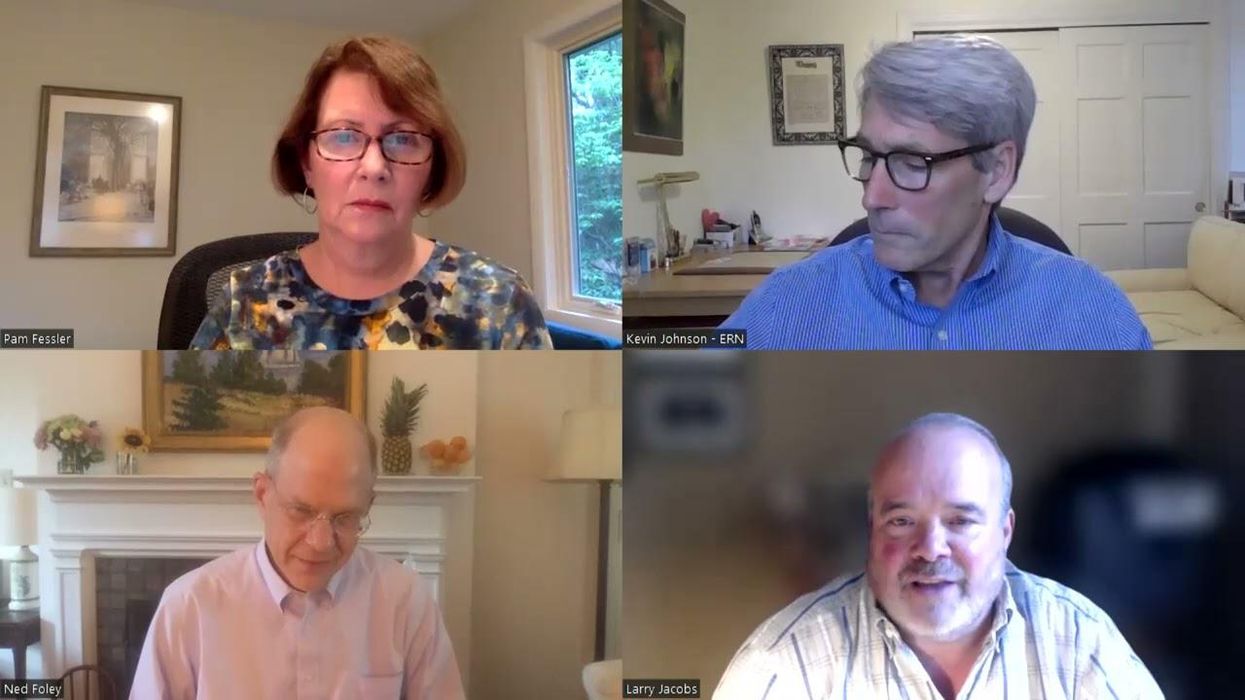
In this session, the Network for Responsible Public Policy takes a look at the challenges facing our elections, particularly at the structures the country has used for many generations that in an era of hyperpartisanship have become sources of national vulnerability.


Read More

Where Do Territorial Courts Fall in Our Constitutional Framework?

Black and white sketch of a courtroom in session.

illustration provided

Where Do Territorial Courts Fall in Our Constitutional Framework?

The Supreme Court’s recent decisions in Trump v. Slaughter and Trump v. Cook have understandably been read as cases about presidential control over executive officers. But they may have implications for a different and largely overlooked question lurking in a pending Supreme Court case: Who may exercise the judicial power of the United States in the territories?

This question made a cameo appearance in the Slaughter case. The majority noted in a footnote that “a justice of the peace in the District of Columbia” exercises “the judicial power of the District, just as territorial judges exercise the judicial power of their respective territories” — not the executive power. Therefore, the court went on, “the fact that Congress may prohibit the President from firing the District’s judges (who do not exercise his power) says nothing about whether Congress may prohibit the President from firing his subordinates (who do).”

Keep ReadingShow less
Affordability Crisis - Role of Non-Popular Vote President’s  SCOTUS Appointees

Silhouette of a hand holding a vote putting in a ballot box in front of the national flag Stars and Stripes of USA.

Getty Images

Affordability Crisis - Role of Non-Popular Vote President’s SCOTUS Appointees

The 21st-century Supreme Court Justices appointed by presidents who did not win the popular vote have fundamentally reshaped the affordability crisis by dismantling federal regulatory authority, weakening consumer protections, and expanding landlords' and local governments' property rights over renters.

Specifically, five current justices fit this description: Chief Justice John Roberts and Justice Samuel Alito (appointed by George W. Bush following the 2000 election), alongside Justices Neil Gorsuch, Brett Kavanaugh, and Amy Coney Barrett (appointed by Donald Trump following the 2016 election). This conservative supermajority has heavily influenced cost-of-living metrics through historic rulings in administrative, housing, and financial law.

Keep ReadingShow less
The Long Tradition of Lawyers Defending U.S. Democracy

women in a courtroom

Getty Images

The Long Tradition of Lawyers Defending U.S. Democracy

For centuries, lawyers have been leaders in establishing and protecting our democracy and its cornerstone, the rule of law. They have challenged tyrants, whether it be King George III in our nation’s founding or President Trump, a wannabe king, today.

Lawyers swear to do this in an oath, which is a condition of admission to the bar, to “support the Constitution of the United States.” This sworn duty continues a centuries-old tradition.

Keep ReadingShow less