

There is an increasingly common belief that Gen Z (aged 18-29) are disengaged from politics or civic life. This generation has lived through a major recession, a pandemic, and a decade of Donald Trump as the ubiquitous public figure, leaving them disillusioned and disconnected from our democracy. The reality is a bit more complicated.
“Youth are not disengaged, they’re just engaged in a different way,” says Rachel Janfaza, founder of the research firm Up-and-Up, which focuses on Gen Z political and cultural attitudes. Her research suggests that youth simply engage in non-institutional ways. She points to the recent election of Zohran Mamdani as New York City mayor, who extensively used social media to reach voters, as an example of a politician who connected with Gen Z voters.
The Bridge Alliance sought to explore this question in a novel civic engagement experiment recently. We recruited two members of Congress from both parties, Rep. Don Bacon (R-Nebraska) and Rep. Chrissy Houlahan (D-Pennsylvania), to a telephone town hall meeting to focus on youth engagement. And only 18–29-year-old constituents of the representatives’ district were invited to attend. One metric captured was willingness to attend the meeting. More than 40,000 constituents were called to attend, and 15 percent of those asked, almost 6,000 people, joined the meeting – the exact percentage of a typical congressional telephone town hall meeting. This suggests this generation is just as engaged in this format of civic engagement as the general public.
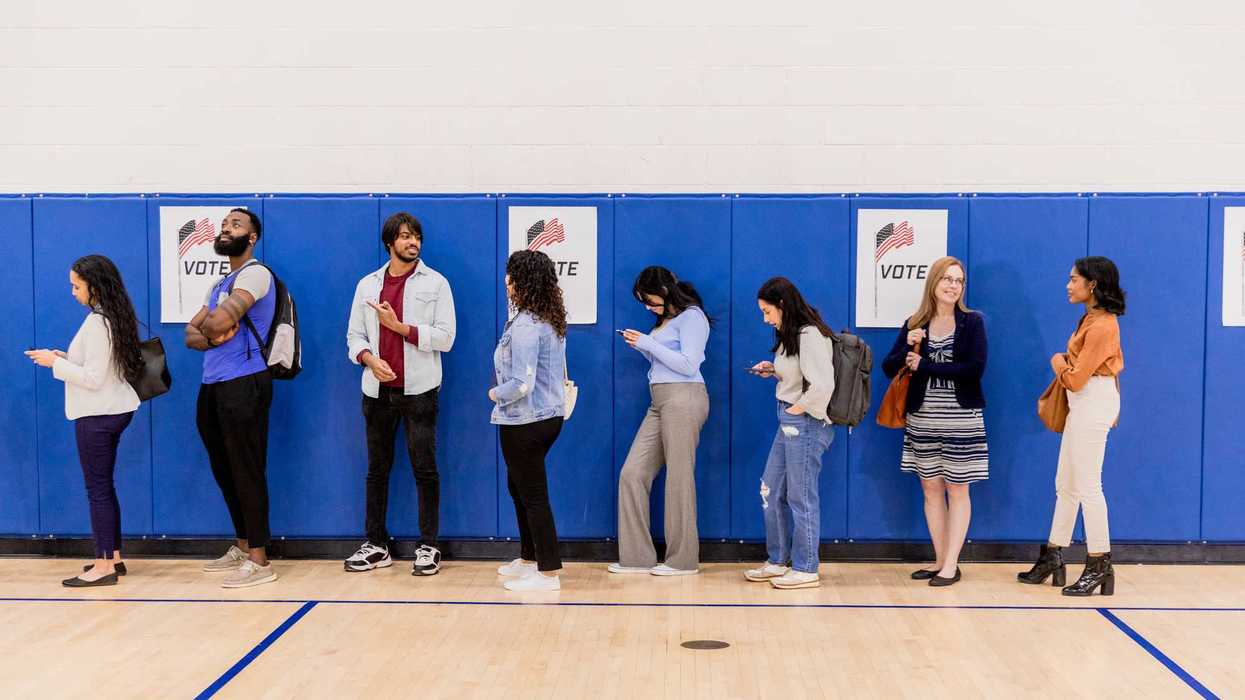
While voting is often cited as a youth engagement metric – and younger voters generally do vote in fewer numbers than older voters – when the election seems consequential, they’ll turn out. Just over 50 percent of Gen Z voted in the election of 2020, the fourth-highest turnout number for that generation since 18-year-olds got the vote in 1972.
And this is not just an American phenomenon. “While youth disillusionment with established modes of governing may be real, the potential power of youth mobilization to challenge entrenched power is equally evident,” said Erica Chenoweth and Matthew Cebul in their Journal of Democracy article, “Why Gen Z is Rising.” “Youth mobilization has been a primary feature of recent efforts to bring change and accountability to ineffective governments around the world,” they wrote. Youth protests were central to the recent toppling of the India Education Minister after nationwide demonstrations erupted over critical competitive exam paper leaks, high youth unemployment, and systemic education flaws.
The research seems to be clear: youth engage in politics and democracy when they have a REASON to participate, and their participation is meaningful. I got a first-hand view of this phenomenon when working as a congressional staffer in the 1998. An exciting state legislator was seeking to make history: State Representative Tammy Baldwin (now, U.S. Senator Baldwin) ran in the Democratic primary for the U.S. House of Representatives seat around Madison, Wisconsin, defeating the Democratic National Committee-backed county executive. Her campaign energized University of Wisconsin students in a way not seen since in recent years in part because, if elected, she would be (and is) the first LGBTQ person elected outright to the U.S. House. In the six student-heavy voting wards around campus, Baldwin secured more than 70 percent of the vote, and some estimates suggest that half of the student body voted in that election. (Note: it helped that Baldwin is an outstanding politician and that Wisconsin has same-day registration.)
I would suggest three factors drove this youth engagement in Baldwin’s election. First, young people like making history. Whether it’s challenging the American war in Viet Nam or electing the first Black president, the thrill of making one’s mark in the history books attracts a young heart. Second, youth want to make a difference. They want their engagement to mean something, which means the cause or candidate must have a fighting chance to win. Third, to quote the song from the School of Rock musical, they want to “stick it to the man.” The unconventional idea of electing a gay or lesbian to the U.S. House was just a fun way of disrupting the established order.
There is a tendency in America to be cynical about the future. And to be sure, we’re up to our eyeballs in societal problems. Yet I believe that the generation coming to power will surprise the cynics. A 2024 survey showed that 79 percent of Gen Z say “they have a great future ahead.” In a very short time, we’ll find out if they’re right.
Bradford Fitch is a Senior Advisor to the Bridge Alliance, former CEO of the Congressional Management Foundation, and author of “Citizen’s Handbook for Influencing Elected Officials."










The President Invited Iran to Bomb My Home