
In the lead-up to our country’s 250th anniversary, Errin Haines is writing a series of columns to contemplate the complicated expansion of our democracy. Subscribe to The Amendment newsletter.
Nearly three months before the signing of the Declaration of Independence, Abigail Adams had a warning for her husband, John, one of its authors: Remember the ladies.
She wrote: “In the new code of laws which I suppose it will be necessary for you to make I desire that you would Remember the Ladies, and be more generous and favorable to them than your ancestors. … Remember, all men would be tyrants if they could. If perticuliar care and attention is not paid to the Ladies we are determined to foment a Rebellion, and will not hold ourselves bound by any Laws in which we have no voice or Representation.”
In her March 31, 1776, letter, Abigail Adams articulated a concern that is at the root of a contradiction America has wrestled with since its founding: The Declaration of Independence promised equal rights to all — but shaped access to power as a privilege bestowed on only a few.
Abigail Adams’ assertion linking basic human rights and shared power is a way to think about the American project and the paradox underlying a persistent critique of our democracy, said Harvard University political philosopher Danielle Allen, author of “Our Declaration: A Reading of the Declaration of Independence in Defense of Equality.”
What does it mean to be revolutionary today?
As the nation marks its 250th year, The 19th is asking a central question: What does it mean to be revolutionary today — and who should we recognize as the revolutionaries still fighting to have that question answered on equal terms? Explore this series.
“Respect for the dignity of others isn’t just about singing ‘Kumbaya,’” said Allen, whose teachings on the Declaration of Independence to university and night school students center on deepening their understanding of their own connection to our democracy. “It is about sharing power with others.”
There is perhaps no group of Americans who have been denied power in our democracy more than Native Americans. They are explicitly identified in the Declaration of Independence’s list of grievances as “inhabitants of our frontiers,” “merciless Indian savages” and “domestic insurrectionists” loyal to the King of Great Britain — the enemy, the oppressor.
 Sharice Davids, who is also Kansas’ first LGBTQ+ member of Congress, is in her fourth term. (Michael Brochstein/SIPA/AP)
But Native American nations like the Catawba, Delaware and Oneida fought and scouted for the 13 colonies during the American Revolution. Their tribes practiced democracy on the land that would become America long before the existence of our country and its system of government.
They also served and sacrificed for our country well before the United States recognized them as citizens — and long before they were given their share of power.
In 2018, Sharice Davids, a member of the Ho-Chunk Nation, and Deb Haaland, who is part of the Laguna Pueblo tribe, became the first two Native American women elected to Congress. They are trailblazers from a long lineage of women whose ancestors were original inhabitants of the land that became America.
Their families follow in a tradition directly tied to the origin story of our nation’s independence and founding. Haaland’s father, a 30-year Marine combat veteran, received a Silver Star for his service in Vietnam and her mother worked for 25 years in the Bureau of Indian Affairs after serving in the Navy. Davids’ grandfather served in the Army for 23 years and her mother joined the Army after graduating from high school.
Since the Revolutionary War, Native Americans have served in every major U.S. conflict, even before they were recognized as citizens in 1924. Today, they serve in the United States Armed Forces at five times the national average — and have a higher concentration of women service members than all other demographic groups.
Davids said Native Americans have a “complex” relationship with the federal government. At home, her mother made sure she understood that and also embraced this country as her own. She used to say, “You can be mad about the past or have thoughts or opinions about it, but we all have to live here now; we’re all American,” Davids recalled.
“The biggest lesson from that was that you can be of service, and being of service doesn’t mean being oblivious. If there are things that I want to change, I have the opportunity to do that,” Davids said.
Davids, who is also Kansas’ first LGBTQ+ member of Congress, is in her fourth term. Haaland was the first Native American secretary of the Interior, and if elected in New Mexico this year, she would become the country’s first Native American woman governor.
Haaland said her journey to public service has been shaped by the legacy of her ancestors, one that has guided her to lead “with my values and my commitments to my community,” she said. As a congresswoman, she held the first House hearing on murdered and missing Indigenous women, who are three times more likely to be sexually assaulted during their lifetime. As Interior secretary, she ordered an investigation into federal Indian boarding schools, forcing the federal government to reckon with its painful history of policies designed to erase Native culture.
 Deb Haaland was the first Native American secretary of the Interior, and if elected in New Mexico this year, she would become the country’s first Native American woman governor. (Drew Angerer/Getty Images)
Davids’ approach to governing is also rooted in those who came before her and inspired in part by her time doing economic and community development work on the Pine Ridge Reservation in South Dakota, where she lived among a tribe that was not her own. The experience “actually taught me a lot about what it means to build trust,” Davids recalled.
“It doesn’t just come from being able to identify with each other in terms of experiences. It’s also about showing up over and over and showing up ready to learn,” she said. “In my role as a member of Congress, my job is a lot of listening and not dictating to people what it is they should want or need. Instead, it’s more of building up trust.”
What Davids and Haaland have done is use their power in government — power that has long been denied to Native Americans in this country — to expand power for others.
“When you look at what service means,” Davids said, “it is like, how do I make the highest and best use of the skills and knowledge and time that I have to be of service to my community and my country?”
It is a practice built on endurance, even in the face of the federal government’s relentless efforts over decades to eradicate Native Americans — by taking their land, by taking their children to boarding school often miles away from their homes, by annihilating tribes.
“We’re still here,” Haaland said. “Nothing that the federal government did to break us apart and eradicate our tribes worked. Everything they tried to do to get rid of us failed.”
At the nation’s 250th anniversary, Native Americans, Haaland added, will “likely be out there celebrating the anniversary of our country with everyone else, right? Because this is our land, and they can’t separate us from it.”
Now is a moment for us to recognize Native Americans as revolutionaries — then and now — who are still the keepers and inhabitants of our democratic frontier.
The first Indigenous women in Congress carry a legacy older than American democracy itself was first published on The 19th and republished with permission.
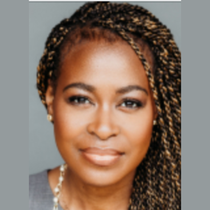
Errin Haines is the editor-at-large at The 19th.









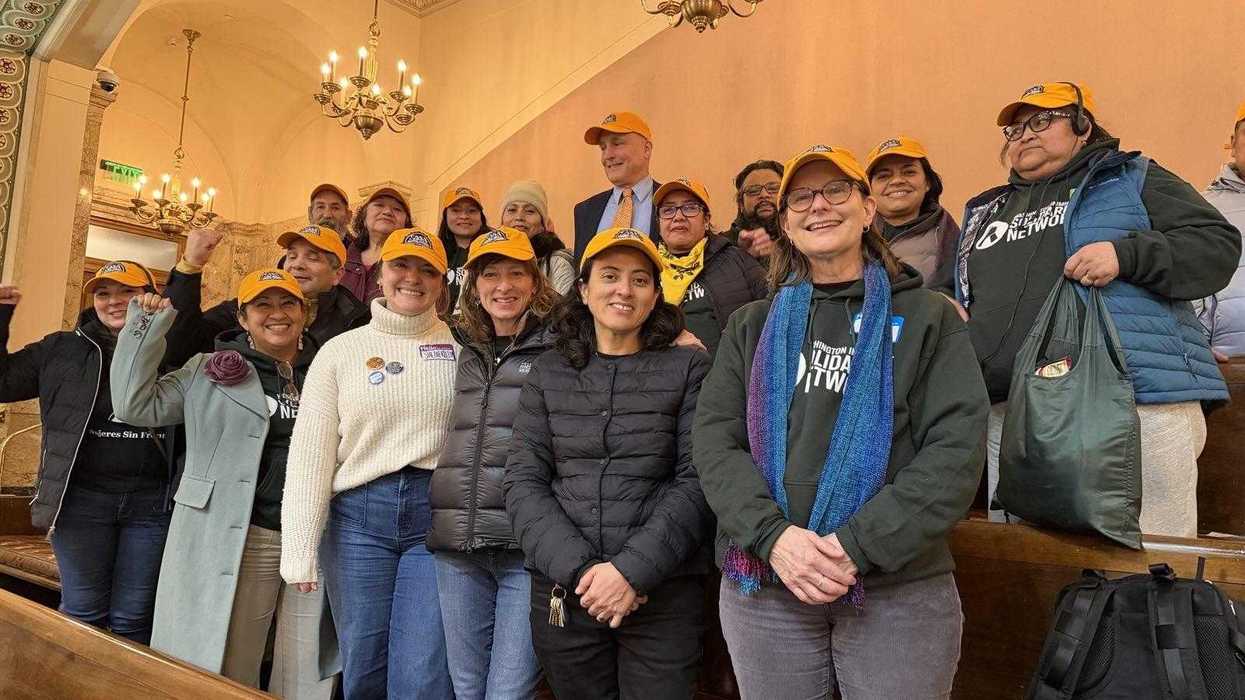
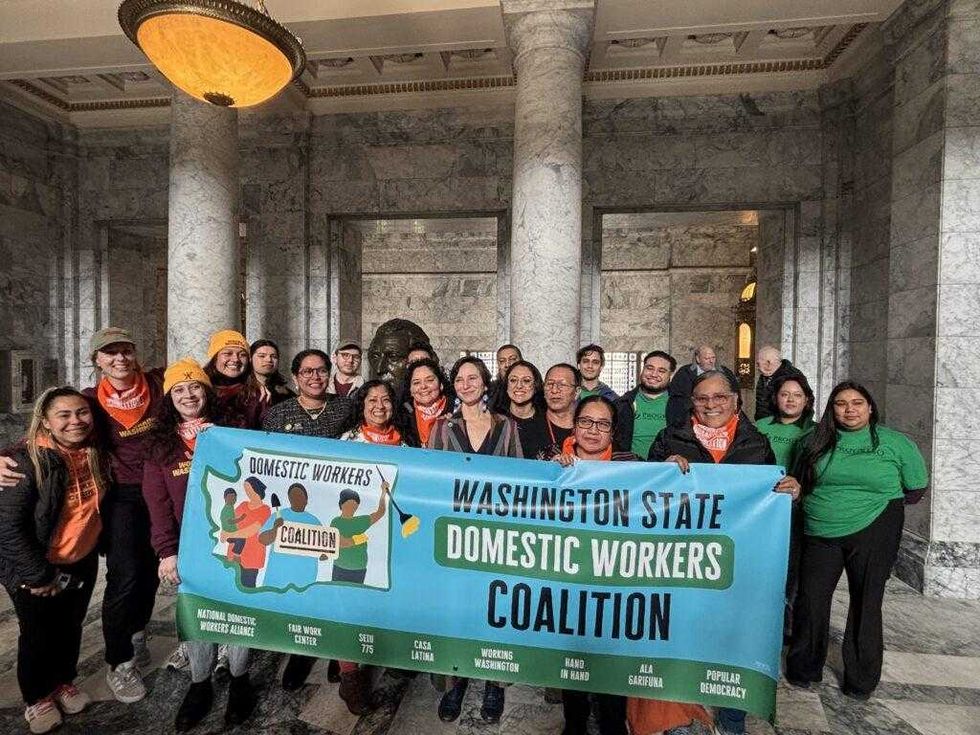 State Sen. Rebecca Saldaña, center, stands with members of the Washington State Domestic Workers Coalition at the state Capitol on Feb. 28, 2026. The Domestic Workers Bill of Rights passed in the House that day, before being signed into law in March. (Photo courtesy of Casa Latina)